
Royal Wound Care was founded with a commitment to advancing the standard of wound care.
Royal Wound Care is a dedicated wound care center located in West Hills, California, specializing in advanced, comprehensive wound treatment. Founded by Dr. Moaddel, Royal Wound Care was born from his commitment to improve the way patients experience wound care. After witnessing the need for more compassionate, personalized care, Dr. Moaddel opened his own center to ensure that every patient receives the attention and expertise they deserve.
After witnessing the shortcomings in traditional wound care settings, Dr. Moaddel set out to create a better experience—one where patients receive the focused, attentive care they truly deserve. That vision became Royal Wound Care.

Our Mission
To deliver exceptional, accessible wound care tailored to the individual—whether in our state of-the-art clinic, at a skilled nursing facility, or in the comfort of a patient’s home. We treat the wound, but we also care for the whole person.
Why Choose Royal Wound Care?
Ongoing Education & Certification
For staff, families, and partner facilities, including wound in-services and professional training opportunities

Expert-Led Care by Board-Certified Providers
With years of hands-on experience managing chronic and complex wounds

Advanced Modalities
Including negative pressure therapy, mist ultrasound, debridement, Doppler studies, grafts, and more

Survey-Ready Documentation
That keeps facilities compliant and families informed

Truly Personalized Care Plans
Tailored to each patient’s condition, lifestyle, and healing goals

Mobile Services That Come to You
Care delivered at home, in clinics, or within partner facilities

A Team That Cares And The Results To Prove It
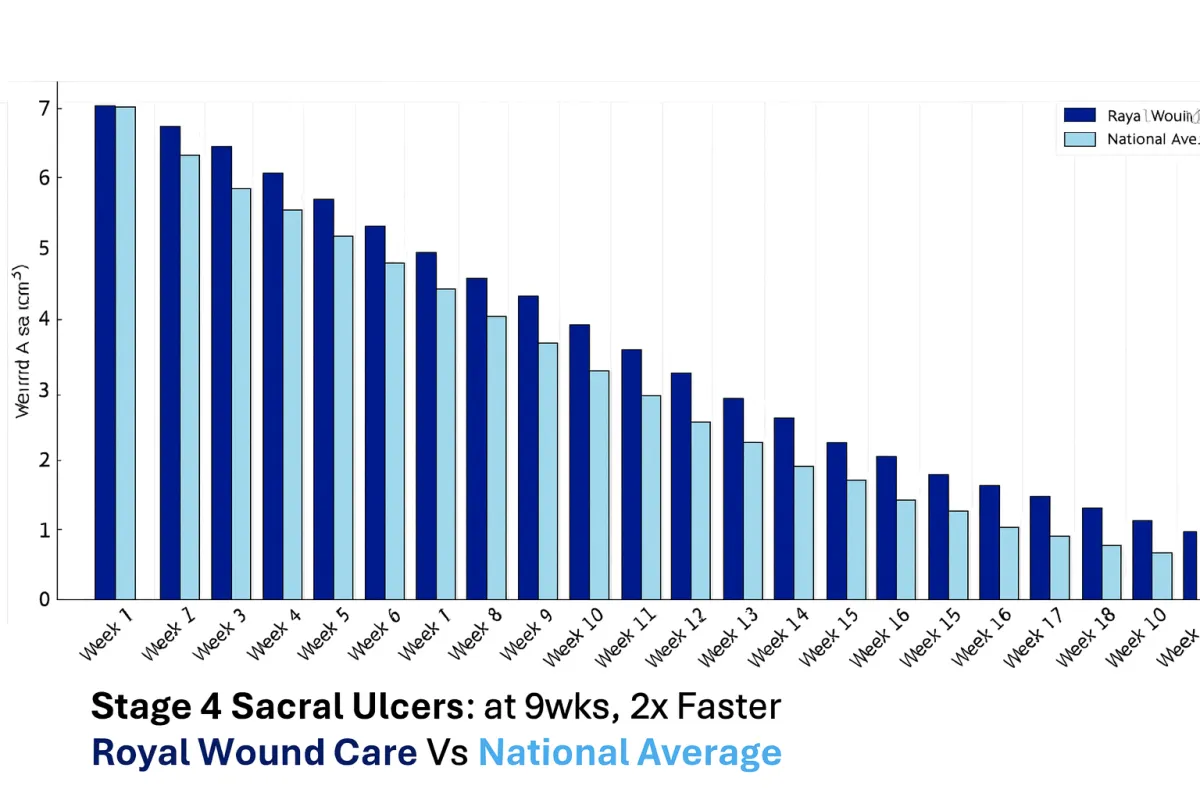
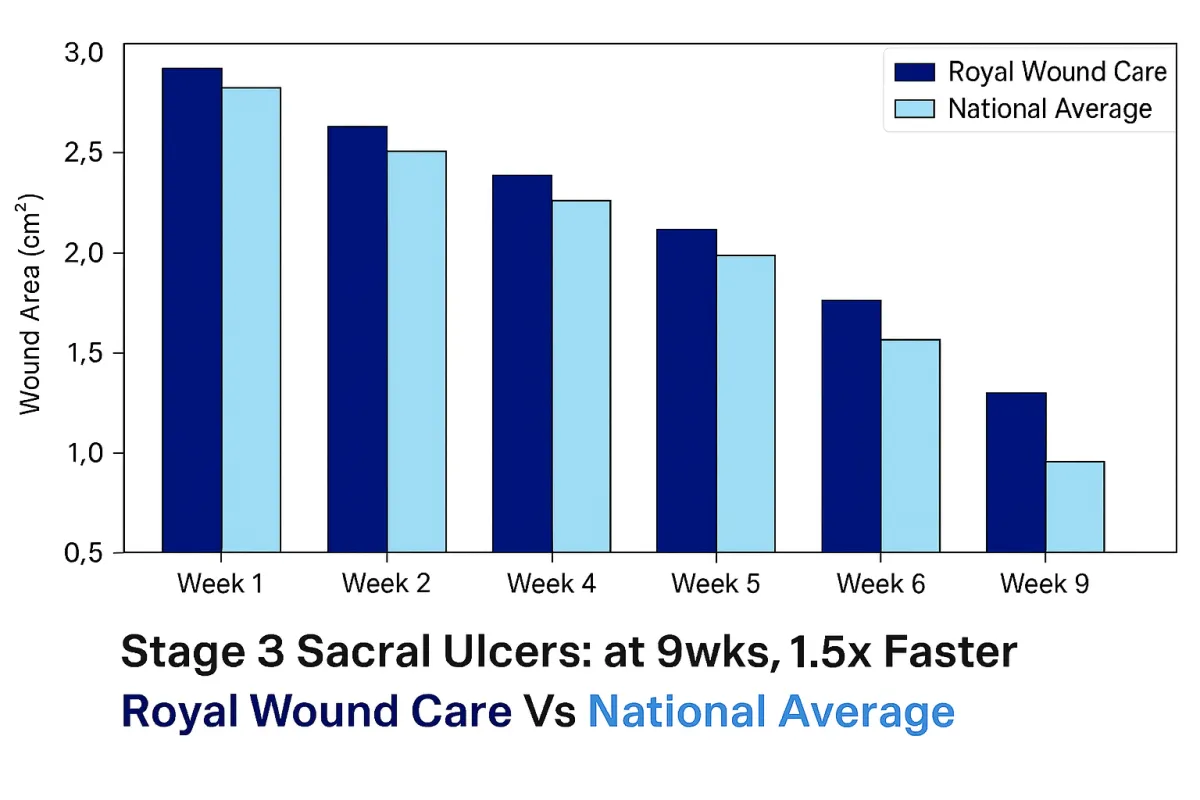
At Royal Wound Care, we deliver results that consistently outperform the national average. Our advanced healing process combines evidence-based treatments, personalized care plans, and direct physician oversight to ensure optimal outcomes. Unlike many clinics, every patient is managed by a board-certified wound care physician who evaluates their condition and customizes treatment from day one.
Our Stage 3 Sacral ulcer graph demonstrates how our approach leads to significantly faster healing compared to the national average. While traditional care results in gradual wound size reduction over several months, patients treated at Royal Wound Care experience more rapid progress through targeted therapies, aggressive infection control, and ongoing physician-directed adjustments to their care plan. Our proactive methods allow us to close even complex wounds weeks earlier than national trends, improving patient mobility, reducing pain, and preventing further complications.
Stage 4 sacral ulcers are among the most complex wounds to treat, yet our outcomes set us apart. Patients at Royal Wound Care heal twice as fast as the national average by leveraging advanced biologic grafts, comprehensive infection management, and customized care protocols. These results highlight our proactive, physician-led care model, allowing us to manage even the most challenging cases successfully while improving long-term patient outcomes.
What Our Partners Experience
86% lower infection rates

47% faster healing compared to others

88% fewer wound-related rehospitalizations

58% faster pressure ulcer healing times

Ready to Heal with Royal Wound Care?
How to Describe a Wound: A Step-by-Step Clinical Guide
How to Describe a Wound: A Step-by-Step Clinical Guide
Whether you’re a nurse documenting patient care or a healthcare professional performing a wound assessment, understanding how to describe a wound is a critical skill. Beyond ensuring accurate medical records, proper wound description also helps guide treatment planning, track healing progress, and improve communication between healthcare providers.
Without a structured approach, it’s easy to unintentionally miss clinical details and misinterpret circumstances—especially when proper terminology is lacking. And even if unintended, misidentifying a wound can make it more challenging to determine the level of medical attention an injury needs. Fortunately, however, describing a wound doesn’t have to be difficult or intimidating.
At Royal Wound Care, one of the nation’s few board-certified wound care clinics, patient and provider education is the foundation of our practice. That’s why, below, we’re sharing a guide on how to describe a wound accurately, what the different types of wounds are, and how to properly identify them. With this information, you can provide more meaningful wound descriptions that better support clinical decisions.
How to Describe a Wound: A Step-by-Step Clinical Guide
Healthcare professionals rely on structured wound descriptions to communicate injury severity, monitor healing progression, and determine appropriate interventions. Whether documenting an open wound, a post-op incision, or a diabetic foot ulcer, consistency is crucial. It’s the first and most important step to ensuring everyone involved in the patient’s care is on the same page.
Inaccurate or incomplete wound descriptions involve far more than needing to redo documentation, however. It can ultimately contribute to delayed healing, misdiagnosis, poor treatment planning, and missed signs of infection. By mastering clinical accuracy, healthcare teams can make more informed care decisions over time.
Are you a patient or provider interested in the wound management process? Royal Wound Care, proudly serving West Hills, Woodland Hills, Canoga Park, Calabasas, Chatsworth, and the greater San Fernando Valley, is here to support you. Visit our West Hills office or review our advanced educational resources online to learn more about wound management, healing, and treatment options.
How Many Types of Wounds Are There?
Healthcare providers group wounds into two distinct categories: open wounds and closed wounds. Open wounds are injuries in which the skin is broken, exposing underlying tissues. Closed wounds, on the other hand, are those where the skin is intact but the tissue beneath is damaged.
Within those categories, there are generally five major types of wounds, including abrasions, lacerations, puncture wounds, avulsions, and incisions. At times, they can demonstrate similar symptoms. For example, abrasions and lacerations are similar in that they are both open wounds. However, they differ considerably in severity, interventions, and healing timelines.
Ultimately, understanding the differences in wound types helps healthcare professionals provide more personalized, evidence-based care. They’re better equipped to perform more accurate wound assessments, anticipate potential complications, and select appropriate treatment strategies.
Related: What Does it Mean to be Board-Certified in Wound Care?
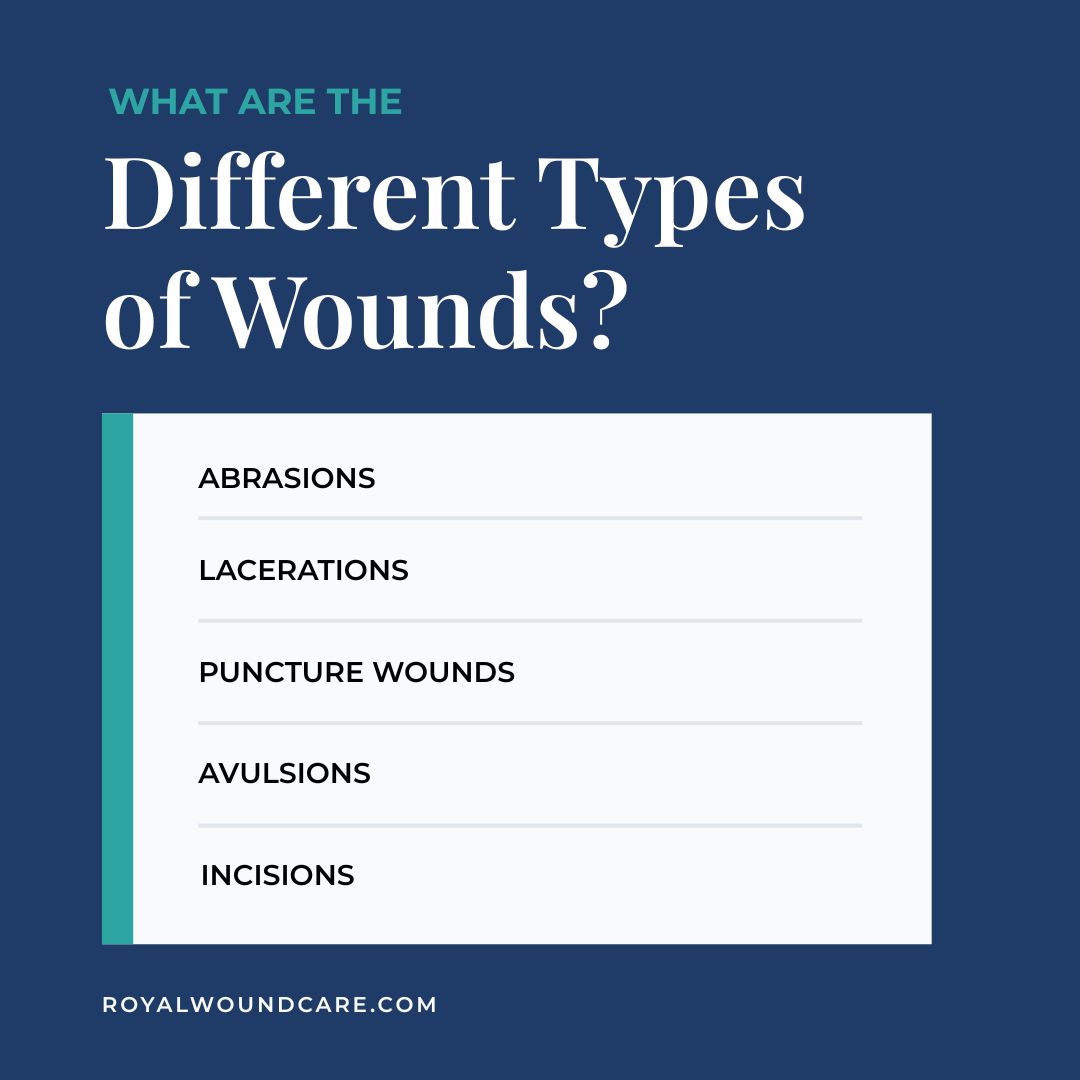
What Are the Different Types of Wounds?
Abrasions
An abrasion is a superficial wound where the outermost layer of skin is rubbed or scraped off. Often, this wound type is among the most common—and least severe. Common causes include falling on a tough surface, friction burns, and animal scratches.
While abrasions are often minor, appropriately caring for them is just as important. Proper cleaning, controlled bleeding, and sterile dressing application can help prevent infections while creating an environment that supports healthy healing.
Lacerations
A laceration is a jagged or irregular tear in the skin and, depending on the severity, the underlying tissue. Unlike a “clean cut,” lacerations will have irregular wound edges. Beyond this, even if there is a wound gap, nerves, blood vessels, and muscles generally remain intact.
However, wound depth can considerably impact treatment interventions. Some lacerations only involve superficial skin layers, whereas others may extend into deeper muscle structures. Depending on the severity, lacerations may require anything from stitches and adhesives to surgical intervention.
Related: How to Treat a Laceration: Proper Wound Care and Healing Tips
Puncture Wounds
Puncture wounds are deep, narrow injuries caused by a pointed object penetrating the skin, including needles, dog or human teeth, or even splinters. And here’s why puncture wounds are notoriously tricky: their depth is considerably greater than what you see on the surface.
To a patient, a puncture wound may not seem all that severe. After all, they rarely bleed heavily and look much smaller than similar wounds. However, severity isn’t always a matter of what you can see. Because puncture wounds are deep and narrow, depending on the cause, they can carry an increased risk of infection.
Avulsions
An avulsion is a wound in which the skin, tissue, or body part has been partially or completely torn away from the body itself. This is often the result of a machinery accident, severe fall, or similar traumatic injuries. Generally, healthcare providers categorize avulsions by the type of tissue damage involved and the extent of the injury. For example:
Skin/Soft Tissue Avulsion: Underlying tissue and skin layers have been torn away, exposing muscle and/or bone.
Avulsion Fracture: Tendon or ligament breaks off a small piece of bone due to a strong pulling force.
Nerve/Vascular Avulsion: Nerves and/or blood vessels have been torn away from their main pathways.
Because tissue loss can be significant, avulsions often require specialized wound management, advanced dressings, or reconstructive procedures. Nonetheless, evaluation is essential for preserving healthy tissue and reducing the risk of infections or complications.
Related: When to Go to Urgent Care vs. ER for Wound Care
Incisions
An incision is an intentional clean cut through skin and soft tissues to perform a surgical procedure. It’s important to note that, within wound care, the term “incision” will always refer to an intentional wound. Additionally, because the wound features neat edges, the healing timeline is often straightforward and predictable.
While designed to heal predictably, incisions still require careful observation throughout recovery. More specifically, providers often monitor incision sites for drainage, separation, redness, swelling, and other potential signs of an infection that could delay healing.
Related: When Should Sutures Be Removed? Types, Timing, and Care
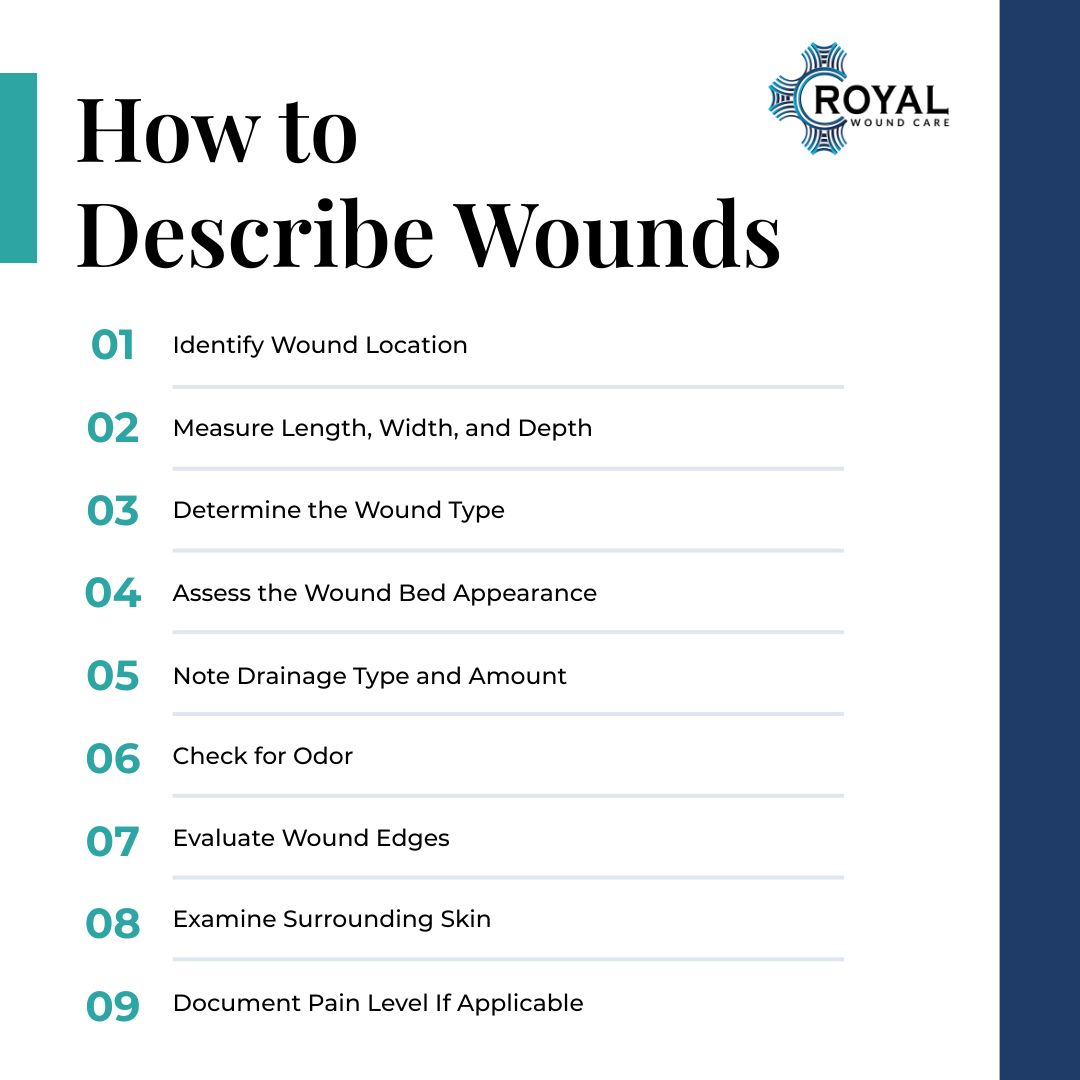
How to Describe Wounds
Identify Wound Location
Start by documenting the exact anatomical location of the wound. It’s important to avoid using broad descriptions, such as “leg” or “arm.” Instead, be as specific as possible. Common examples include “left lateral lower leg” or “right plantar foot.”
For wound care specialists, documenting the wound location helps them identify the underlying cause and keeps every provider on the patient’s care team focused on the same area. This can be especially important for patients with multiple wounds, chronic ulcers, or recurring injuries.
Measure Length, Width, and Depth
Wound measurements are one of the clearest indicators of healing progress. More specifically, most open wounds heal from the bottom up, as granulating tissue forms first, followed by collagen remodeling that gradually fills the wound before the surface closes. By documenting wound size throughout the healing process, providers are better able to determine if healing is efficient.
To do this, measure the greatest length from head to toe, the widest point perpendicular to the length, and the deepest portion of the wound. When multiplying these numbers, care teams can determine the rate at which a wound is improving.
Related: How Long Does It Take for a Wound to Heal: What Every Nurse and Patient Should Know
Determine the Wound Type
Next, determine the type of wound you’re managing. This directly identifies the root cause, helping formulate a treatment plan. Common examples include pressure injuries, diabetic foot ulcers, lacerations, and venous ulcers.
Correct identification helps guide dressing choice, cleaning methods, and infection prevention. More specifically, chronic wound management may focus on improving blood flow and supporting long-term healing. Conversely, a standard laceration may require providers to control bleeding and determine whether sutures or wound closure techniques are necessary.
Properly identifying the wound type provides crucial information regarding healing patterns, potential complications, and appropriate treatment methods.
Assess the Wound Bed Appearance
Now, carefully evaluate the appearance of the wound bed. Healthy healing wounds often contain bright pink or red granulating tissue, which indicates new blood vessel formation and tissue growth. At the same time, a yellow, tan, black, or brown appearance can indicate dead tissue, which may prevent closure and act as a breeding ground for bacteria.
Properly assessing and describing the wound bed can reveal considerable information about healing and appropriate interventions. More specifically, accurate identification allows wound care specialists to address dead tissue or current infection as quickly as possible, helping lower the risk of complications.
Note Drainage Type and Amount
Drainage provides valuable insight into the wound’s condition. In many cases, wound exudate (drainage) acts as a “storyteller” for how the wound is healing. For example, thick, green fluid can indicate a bacterial infection, while clear, watery fluid is a normal part of wound healing.
Common drainage descriptions in wound care include: serous (clear), serosanguineous (pink), sanguineous (bright red), purulent (thick and milky), and seropurulent (cloudy). Additionally, note whether drainage is absent, minimal, moderate, or heavy.
Changes in drainage can sometimes indicate improved healing or developing complications. Properly documenting and tracking this is an essential step in every wound assessment.
Related: How to Know If a Wound Is Infected and When to Seek Treatment
Check for Odor
Assess whether any odor is present after you or a wound specialist has thoroughly cleaned the wound. As we discussed in our guide, “What Does a Healing Wound Smell Like?”, odor isn’t inherently bad. More specifically, non-offensive odors can result from trapped moisture beneath dressings, accumulation of tissue fluid, and the body’s natural immune response.
However, a persistent or strong odor may be associated with bacterial growth, tissue breakdown, or similar underlying concerns. While odor alone doesn’t confirm an infection, it’s essential to document alongside other findings.
Evaluate Wound Edges
Wound edges provide important context regarding healing progression. Healthy wound edges often appear well-defined and gradually migrate inward as healing occurs. However, as you may note, clean edges aren’t always the case. You may describe wound edges such as:
Rolled Edges: Edges curl under themselves like a folded rug, stopping skin cells from crossing the wound
Undermining: Skin is separating from the bed, creating a hidden pocket that can hide bacteria
Thick/Hard Edges: Border feels rigid or callused, indicating a physical block in skin growth
Macerated Edges: Surrounding skin is soggy, white, or wet, indicating the wound is too moist, and skin is breaking down
Diffuse Edges: Borders blur into the skin, indicating inflammation or infection
Consistent documentation helps healthcare providers and wound care teams monitor subtle changes during follow-up visits. Additionally, it ensures the patient is receiving appropriate care to prevent complications.
Examine Surrounding Skin
A complete assessment extends beyond the wound itself. In fact, the skin surrounding a wound can be a significant indicator of how the wound is healing. Inspect the surrounding area for redness, swelling, warmth, discoloration, excessive moisture, dryness, or skin breakdown.
The condition of the surrounding tissues can play an essential role in general healing. It may even indicate early signs of infection or pressure-related damage before serious complications develop.
Document Pain Level If Applicable
If the patient is able to communicate their symptoms, evaluating pain is always a vital step in describing a wound. Ask the patient to rate their pain on a pain scale and document the timing, quality, and location of discomfort. New or worsening pain may signal changes that the wound needs further evaluation.
Additionally, if the wound is fresh or the patient is experiencing reinjury, first aid is essential. This allows healthcare providers to stop bleeding, sterilize the injury, and, if necessary, apply dressings. First-aid can play an important role in reducing general discomfort.
Describing a wound is one of the first and most important steps to successful healing.
A well-documented wound assessment serves a much greater purpose than completing a patient’s medical record. It creates a reliable, clinical resource that helps providers evaluate healing progress, identify complications early, and make informed decisions throughout the course of care.
Royal Wound Care, a proud provider of care to patients throughout the San Fernando Valley, takes a compassionate, patient-first approach. Whether analyzing standard abrasions or managing complex chronic wounds, we will be here from diagnosis to recovery. Contact the Royal Wound Care team for personalized guidance, support, or to schedule an appointment.
In addition to caring for patients, we strive to support SNFs and independent nurses in providing the best possible care. For those interested, visit our website to learn more about advanced educational certification opportunities and professional partnership. Together, we can reduce hospitalizations, lower facility costs, and provide optimal care across the board.

WEST HILLS
7230 Medical Center Dr. Suite 100
West Hills, CA 91307
(818)–660–2977
BEVERLY HILLS
9735 Wilshare Blvd #210B
Beverly Hills, CA 90212
(818)–660–2977
Request an Appointment at a Royal Wound Care Facility near you.
Royal Wound Care is the expert in wound healing. Our board-certified wound care specialists are ready to help you begin your healing journey. Click the button below to request an appointment at a Wound Care Center near you—no referral needed
© 2025 Royal Wound Care, LLC. All rights reserved.
site by Growth Partners Marketing