Pressure Ulcer Stages Prevention and Treatment in Nursing Homes
Pressure Ulcer Stages: Prevention and Treatment in Nursing Homes
Pressure ulcers are a frequent and common health concern in nursing homes, affecting nearly 29% of residents. And while pressure injuries can impact anyone, they’re most prevalent in those with limited mobility, restricted circulation, and chronic health conditions. Without proper care, they can develop quickly and worsen rapidly, significantly impacting a resident’s comfort, mobility, and, ultimately, their overall health.
Fortunately, it’s fairly easy to treat and prevent pressure ulcers. However, not all injuries are the same. As these wounds progress through different stages, the risk of infection, tissue damage, and other complications increases. Because of this, early recognition and intervention are essential.
Below, we will discuss how to identify pressure ulcer stages in nursing home residents. We will cover what they are, how they develop, what can contribute to their progression, and how to treat and prevent them effectively. With proper education, nursing homes can avoid severe complications and help patients heal safely and quickly.
Royal Wound Care is committed to serving patients, skilled nursing home facilities, and independent nurses throughout the greater San Fernando Valley. With patient-centered care and board-certified-level expertise, our teams provide comprehensive wound management solutions designed to support healing and improve quality of life. If you’re interested in partnership opportunities, contact the Royal Wound Care team today!
Pressure Ulcer Stages: Prevention and Treatment in Nursing Homes
As a medical professional working in a nursing home facility, understanding the stages of pressure ulcers is the most important step in determining an appropriate treatment plan. This can impact everything from proper dressing usage and moisture management to infection control and pressure offloading.
Beyond this, proper prevention, early detection, and timely intervention are particularly important for nursing home residents. Unlike many other wound types, pressure sores are largely preventable when professionals can identify risk factors and address them early.
Routine skin assessments, regular repositioning schedules, nutritional support, and prompt treatment can make all the difference in recovery. To help guide this process, we will outline prevention and treatment strategies below.
Related: Wound Dressing for Pressure Dressing: Best Practices and Uses
What Is a Pressure Ulcer?
A pressure ulcer is an area of skin and underlying tissue that becomes damaged due to prolonged pressure, friction, or shear forces. Also referred to as bedsores and pressure injuries, these ulcers typically develop in bony areas of the body where blood flow is restricted for extended periods.
More specifically, pressure ulcers often affect residents who spend long periods sitting or lying in the same position. Without adequate circulation, skin and tissue begin to break down, resulting in varying degrees of tissue damage. This can range from minor skin discoloration to extensive wounds involving muscle and tendon structures. Ultimately, however, without proper oxygen and nutrients, cells begin to experience hypoxia and face irreversible damage or death.
Related: How Long Does It Take for a Wound to Heal?
Where Are Pressure Ulcers Likely to Develop?
Pressure ulcers can develop in any bony area of the body that has experienced prolonged pressure, friction, or shear. Moreover, their prevalence can vary depending on whether the resident is sitting in a wheelchair, lying on a bed, or resting on their side. Here are the areas where pressure ulcers are most likely to develop:
Tailbone and sacrum
Heels
HIps
Ankles
Elbows
Shoulder blades
Back of the head
Knees
Under prosthetics, if artificial limbs don’t fit properly
Spine
Feet
While less common, pressure ulcers can also develop in areas where medical equipment persistently presses against the skin. This includes glucose monitors, wearable insulin patch pumps, and cardiac monitors. It’s important to monitor those with thin skin and adjust equipment frequently.
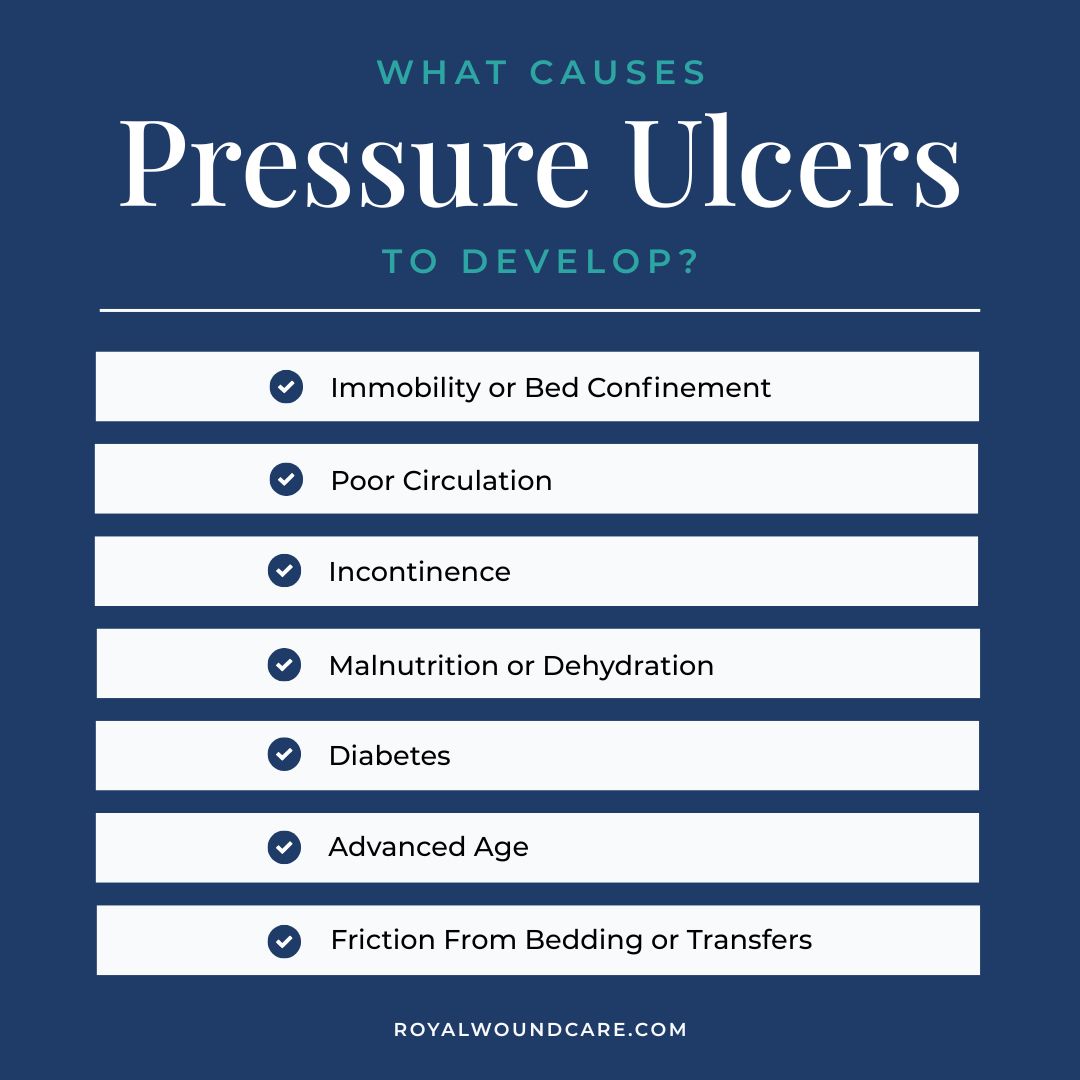
What Causes Pressure Ulcers to Develop?
Immobility or Bed Confinement
Residents who are unable to reposition themselves independently face the highest risk of developing pressure ulcers. Remaining in one position for extended periods of time places continuous pressure on vulnerable tissues, reducing circulation and increasing the likelihood of skin breakdown. As the skin breaks down and cells die, they release inflammatory toxins that trigger a cycle of fluid buildup (edema) and localized tissue death (necrosis).
Poor Circulation
Healthy blood flow is essential for maintaining tissue health. For nursing home residents with poor circulation, the tissues can slowly become weak, vulnerable, and prone to slow-healing wounds. As a result, the skin becomes particularly susceptible to tearing, infection, and ulceration from cumulative damage. Beyond this, because poor circulation can reduce feeling, many residents may not even realize an ulcer is developing.
Incontinence
Incontinence is commonly associated with increased risk of pressure ulcers, particularly full-thickness injuries. Both urine and stool contain harsh digestive enzymes that can alter the skin’s natural pH, especially if a resident is exposed to them for extended periods. At first, this can result in inflammation, redness, and irritation. However, more frequent occurrences can lead to skin maceration—soft, soggy, and swollen skin that easily tears—which can quickly lead to ulceration.
Malnutrition or Dehydration
As discussed in our guide on nutrition and wound healing, nutrients provide the building blocks necessary for healthy skin. Not only does malnutrition physically weaken the skin, but it also reduces the natural padding that protects bony areas. Combined with compromised immune function and reduced skin elasticity, nursing home residents become particularly vulnerable to pressure ulcers.
Beyond proper nutrition, hydration is equally important in healing. Adequate hydration supports skin elasticity, blood volume for oxygen delivery, and the transport of nutrients to the wound site. For residents experiencing dehydration, the skin becomes much more susceptible to inflammation, slow-healing wounds, and tearing.
Diabetes
Diabetes is a condition that can affect both circulation and nerve function, increasing the risk of pressure injuries while simultaneously making them more difficult to treat. However, various factors contribute to this. Chronically high blood sugar, for example, can damage nerves (diabetic neuropathy), resulting in muscle weakness and loss of sensation. Individuals with diabetes are also more susceptible to peripheral artery disease (PAD) and impaired immune function, both of which can increase ulceration risk.
Related: Edema and Diabetes, and Slow Healing Wounds
Advanced Age
Aging naturally causes skin to become thinner, less elastic, and more fragile. While these changes are entirely normal, they also cause older adults to become more susceptible to pressure-related injuries. The skin loses its protective subcutaneous fat layer, blood vessels become less efficient, and sensory perception becomes hindered.
It’s increasingly important that nursing facilities review our guide, “Wound Care for Elderly Thin Skin.” Through this, you can better understand contributing factors and helpful treatments necessary for healing.
Friction From Bedding or Transfers
Repeated rubbing against sheets, wheelchairs, or transfer equipment can ultimately damage the outer layer of skin. While seemingly minor, this repeated friction causes superficial skin damage and breaks down the skin’s moisture barrier. As a result, this movement generates mechanical forces that can cause deep-tissue shearing. Friction-reducing devices and creating a healthy skin environment quickly become non-negotiable.
What Does a Pressure Ulcer Look Like?
Early recognition can make all the difference when treating pressure ulcers. To help you better understand pressure ulceration appearance, this is what you can commonly expect:
Persistent redness or discoloration
Warm or cool skin patches
Tenderness or pain
Swelling
Skin that feels firm or spongy
A shallow open wound with a red or pink crater
Skin breakdown
A filled blister in areas exposed to pressure
An open wound or visible tissue exposure
Beyond appearance, pressure ulcers can develop a distinct foul smell. This can indicate that the injury has become infected and/or has dead tissue. You can learn more in our comprehensive guide, “What Does a Healing Wound Smell Like?”
How Many Stages of Pressure Ulcers Are There?
There are four primary stages of pressure ulcers, each based on the depth and severity of tissue damage. However, healthcare professionals have also recognized additional classifications, including unstageable pressure injuries and deep tissue injuries. These terms are commonly used in care settings when the professional cannot accurately determine the extent of the damage.
What Are the 4 Stages of Pressure Ulcers?
Stage 1: Non-Blanchable Erythema
Non-blanchable erythema, the first pressure ulceration stage, presents as persistent redness or discoloration that doesn’t fade when pressed. For example, those without pressure ulcers can press their heel, see that it blanches, and watch it slowly return to its normal color. For residents with pressure injuries, the area remains red, blue, or purple.
Additionally, the affected area of skin may feel noticeably warmer, cooler, firmer, softer, or tender. At this point, sustained friction has compressed blood vessels, restricting oxygen and nutrient supplies. However, it’s entirely possible to reverse a Stage 1 pressure injury with prompt action.
Stage 2: Partial Skin-Thickness Loss
Stage 2 pressure ulcers involve partial-thickness skin loss affecting the epidermis and part of the dermis. At this stage, appearance can vary among residents. For example, some individuals may experience a shallow, open ulcer with a small red or pink wound bed. For others, a Stage 2 pressure ulcer can present as a ruptured blister.
In general, this stage of pressure ulceration appears shiny, without slough or bruising, both of which indicate deeper tissue damage. When focusing on recovery, moisture-retentive dressings and pressure offloading prove crucial for preventing worsening of injuries.
Stage 3: Full-Thickness Skin Loss
Stage 3 pressure injuries, also known as full-thickness skin loss, involve damage that extends through the epidermis and into the underlying fatty tissue. The underlying muscle and bone have not been affected, but subcutaneous fat may be visible. Because of this, the pressure ulcer appears as a deep crater-like hole that presents the yellow fatty tissue underneath.
Beyond appearance, a stage 3 pressure ulcer may show sloughing, tunneling, or foul odor. Unlike the initial two stages, healthcare professionals must consider advanced treatments such as specialized moisture-balancing dressings, pressure redistribution, and debridement.
Related: How to Wrap a Wound: Steps to Protect Skin and Prevent Infection
Stage 4: Full-Thickness Tissue Loss
A stage 4 pressure ulcer is the most severe, featuring full-thickness skin and tissue loss. More specifically, the injury has extended through all layers of the skin. In many cases, due to its severity, the ulcer commonly exposes underlying muscle, tendon, ligament, or even bone. Beyond this, these structures may also be equally damaged.
Not only can healing be more complex, but a stage 4 pressure ulcer is significantly more susceptible to bone infections, blood infections, and life-threatening complications. These wounds often require comprehensive wound management, infection control, and multidisciplinary care.
How to Stage Pressure Ulcer
Skin Integrity
The first step to staging a pressure ulcer is to analyze skin integrity. Many times, healthcare professionals do so using the “5-Point Physical Assessment,” which evaluates temperature, color, moisture, turgor, and integrity. In other cases, they may use the T.I.M.E.R.S. framework, assessing tissue viability, infection or inflammation, degree of exudation, selecting regenerative treatments, and evaluating overall health.
Tissue Depth
Generally, pressure ulcers are staged based on the severity of tissue damage. To determine this, specialists will identify the deepest layer of tissue that is damaged, destroyed, or affected. This is exactly what we discussed above—less severe ulcers may simply experience blanching, whereas stage 3 and 4 pressure ulcers may reveal subcutaneous tissue and bone. Not only does this analysis help determine progression, but it also helps with treatment planning.
Drainage and Odor
Drainage and odor are two of the most common indicators that a wound may be infected. In the first two stages, residents generally will not experience drainage (exudate), as the skin has not broken. Similarly, they won’t often have a foul odor. However, both are fairly common in pressure ulcer stages 3 and 4, as the wound has extended through the tissues, increasing the risk of bacterial growth and infection.
Undermining or Tunneling
Both undermining and tunneling indicate that a pressure ulcer has extended beyond the wound bed, creating narrow pockets or tunnels that extend from it. This is particularly important to monitor, as both can occur even when the skin’s surface remains relatively intact. If you’re interested in learning more, we implore you to read our guide, “How Long Does a Tunneling Wound Take to Heal?”
Pressure Ulcer Treatments in Nursing Homes
Comprehensive Wound Assessment
Every treatment plan should begin with a comprehensive wound assessment performed by a qualified wound care professional. During this evaluation, clinicians will assess the wound’s size, depth, location, stage, drainage levels, and surrounding skin condition. Consistent monitoring helps create an individualized treatment plan that addresses both the wound itself and the underlying causes.
Related: The Difference Board-Certified Physician Leadership Makes in Nurse Wound Care Education
Regular Wound Cleaning and Dressing Changes
Wound care does not end after the comprehensive evaluation. It’s important to cleanse the area with appropriate cleansing solutions, such as sterile saline solution, mild soap, or antimicrobial formulas. Following this, physicians will often apply a specialized dressing to keep the wound bed moist and protect the surrounding skin from maceration. For pressure ulcers specifically, dressings can offer additional padding for sensitive, bony areas.
Related: Types of Foam Dressings and When to Use Each One
Debridement of Nonviable Tissue
Debridement, the process of removing nonviable (dead or infected) tissue, is essential in the management of pressure ulcers. Dead tissue essentially acts as a breeding ground for bacteria, creating a barrier that prevents healthy tissue from growing. By removing it, this process can help accelerate healing while simultaneously reducing the risk of infection.
Pressure Redistribution and Offloading
In order to effectively treat and prevent future pressure ulcers, pressure redistribution and offloading are non-negotiable. Even during treatment, continuous weight can suffocate the wound and slow healing. Tools such as specialized cushions and mattresses, positioning devices, and turning schedules can be an incredibly effective method for treating ulcers.
Advanced Wound Care Management
In many cases, such as for residents with stage 3 or 4 pressure ulcers, advanced wound care is critical. More complex cases can benefit from treatments such as negative pressure wound therapy (NPWT), biological dressings, skin substitutes, or other similar specialized interventions. These therapies help manage wound drainage, promote healthy tissue growth, and support faster healing in wounds that may not respond to conventional treatment alone.
Related: Skin Substitutes for Wound Healing: What Patients Need to Know
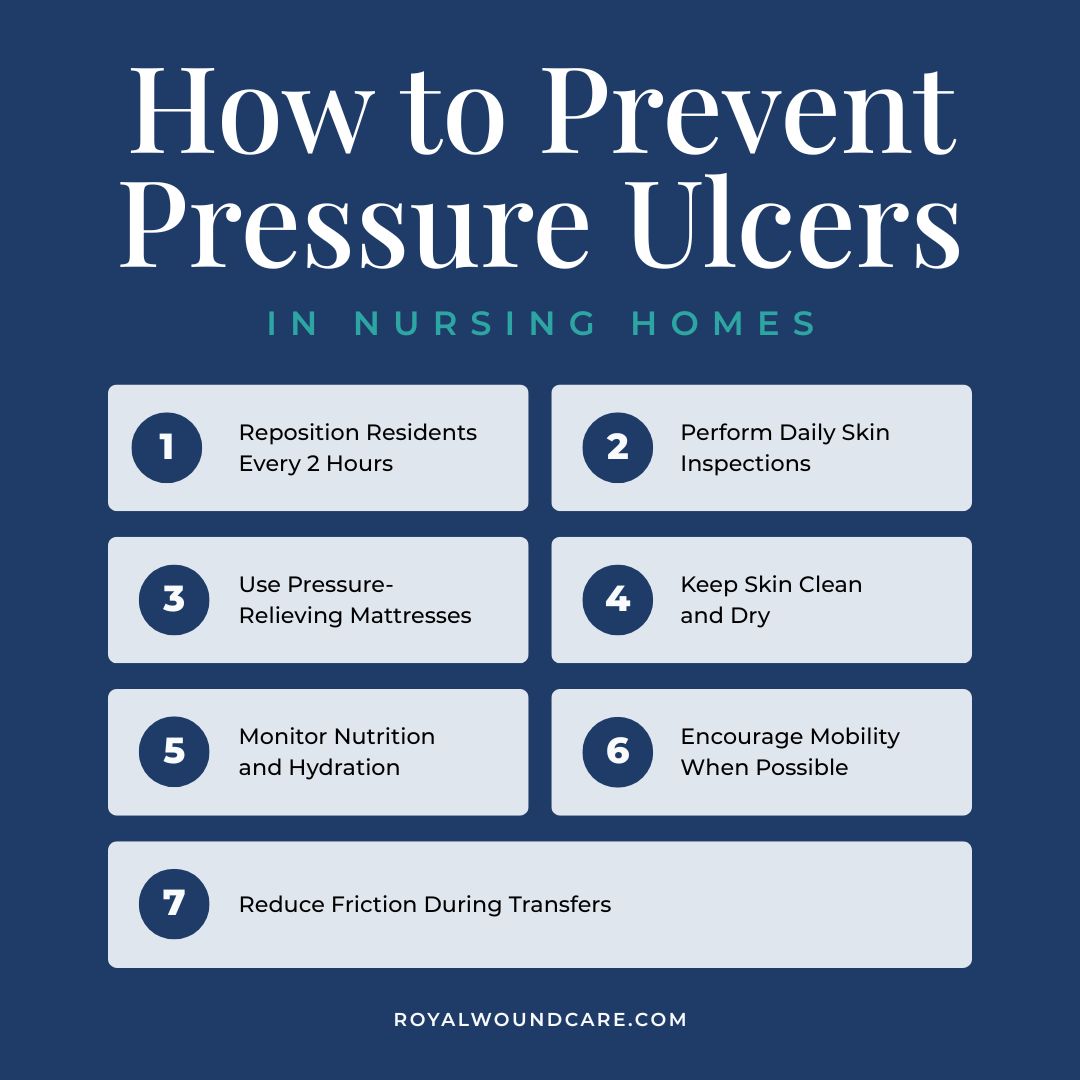
How to Prevent Pressure Ulcers in Nursing Homes
Prevention is always easier than correction—especially in more advanced cases that can lead to life-threatening complications. Below, we will outline key strategies nursing home facilities can follow to prevent future pressure ulcers in residents:
Reposition Residents Every 2 Hours
Routine repositioning remains one of the most effective prevention strategies for reducing prolonged pressure exposure. By repositioning residents frequently, you can effectively ensure that they are not experiencing sustained pressure on bony areas. While the guideline is often every 2 hours, it’s important to tailor each schedule to a resident’s unique needs.
Additionally, for those in wheelchairs or chairs, pressure redistribution should ideally happen every 30 minutes to avoid prolonged pressure.
Perform Daily Skin Inspections
Frequent skin checks are a primary way nurses can identify early signs of pressure injury before significant tissue damage occurs. More specifically, monitor for redness, discoloration, swelling, temperature changes, tenderness, or skin breakdown. These can be key indicators that a patient has been in a similar position for far too long, allowing you to intervene quickly and prevent progression.
Related: Wound Care Training for Nurses: Courses and Certifications
Use Pressure-Relieving Mattresses
Pressure-relieving mattresses can be highly effective for residents who spend extended periods of time in bed or have limited mobility. These specialized support surfaces help redistribute pressure across the body, reducing stress on vulnerable areas such as the heels, hips, and sacrum. While they aren’t a substitute for regular repositioning, they can play an important role in preventing pressure ulcers.
Keep Skin Clean and Dry
Maintaining a proper skin environment helps minimize moisture-related damage while also preserving skin integrity. Excess moisture from perspiration, wound drainage, or incontinence can weaken the skin barrier, making residents more susceptible to pressure injuries. Regular cleaning, prompt care, and the use of moisture-management products can help protect vulnerable, thin skin.
Related: Caring for Your Wound
Monitor Nutrition and Hydration
As discussed earlier, nutrition and hydration are crucial factors in wound healing and injury prevention. Residents who receive adequate protein, calories, vitamins, minerals, and fluids are generally better equipped to maintain healthy skin and tissues. Beyond this, as a professional in a nursing home, it’s important to provide frequent nutritional assessments. Doing so can help identify deficiencies early, ensuring that residents receive the support they need to stay healthy.
Encourage Mobility When Possible
For residents who are able to do so, mobility can be one of the most effective treatments for preventing pressure ulcers. Even small increases in movement can help relieve prolonged pressure, improve circulation, and reduce the risk of skin breakdown. Depending on the resident’s ability, this may include walking, standing, shifting weight, or participating in physical therapy.
Reduce Friction During Transfers
Using proper transfer techniques, lift devices, draw sheets, and other assistive equipment helps minimize shear forces and protect fragile skin. Even small adjustments during routine repositioning and transfers can go a long way towards reducing unnecessary stress on the skin and underlying tissues. When combined with other preventive strategies, these measures can work wonders in reducing the risk of pressure ulcers.
With the right education, strategies, and techniques, pressure ulcers can be extremely easy to treat and prevent.
Pressure ulcers are incredibly common, especially in nursing homes and facilities. However, the truth is that they’re often easy to spot, prevent, and treat effectively. When you understand what to look for and which strategies to implement, you can better care for residents and their overall skin health.
Royal Wound Care, providing specialized services to patients in West Hills, Woodland Hills, Canoga Park, Calabasas, and Chatsworth, understands the unique challenges of caring for complex injuries. That’s why, as one of the nation’s few board-certified wound care clinics, we provide compassionate, consistent, expert care. For those with questions or concerns, don’t hesitate to schedule a visit to our West Hills office.
Beyond helping patients, we’re also leading the advancement of wound care through our partnership opportunities and advanced educational resources. Whether you’re a skilled nursing facility or an independent nurse, you, too, can benefit from reduced wound-related hospitalizations, lower facility costs, and faster healing. The future of proper wound care starts with us.
