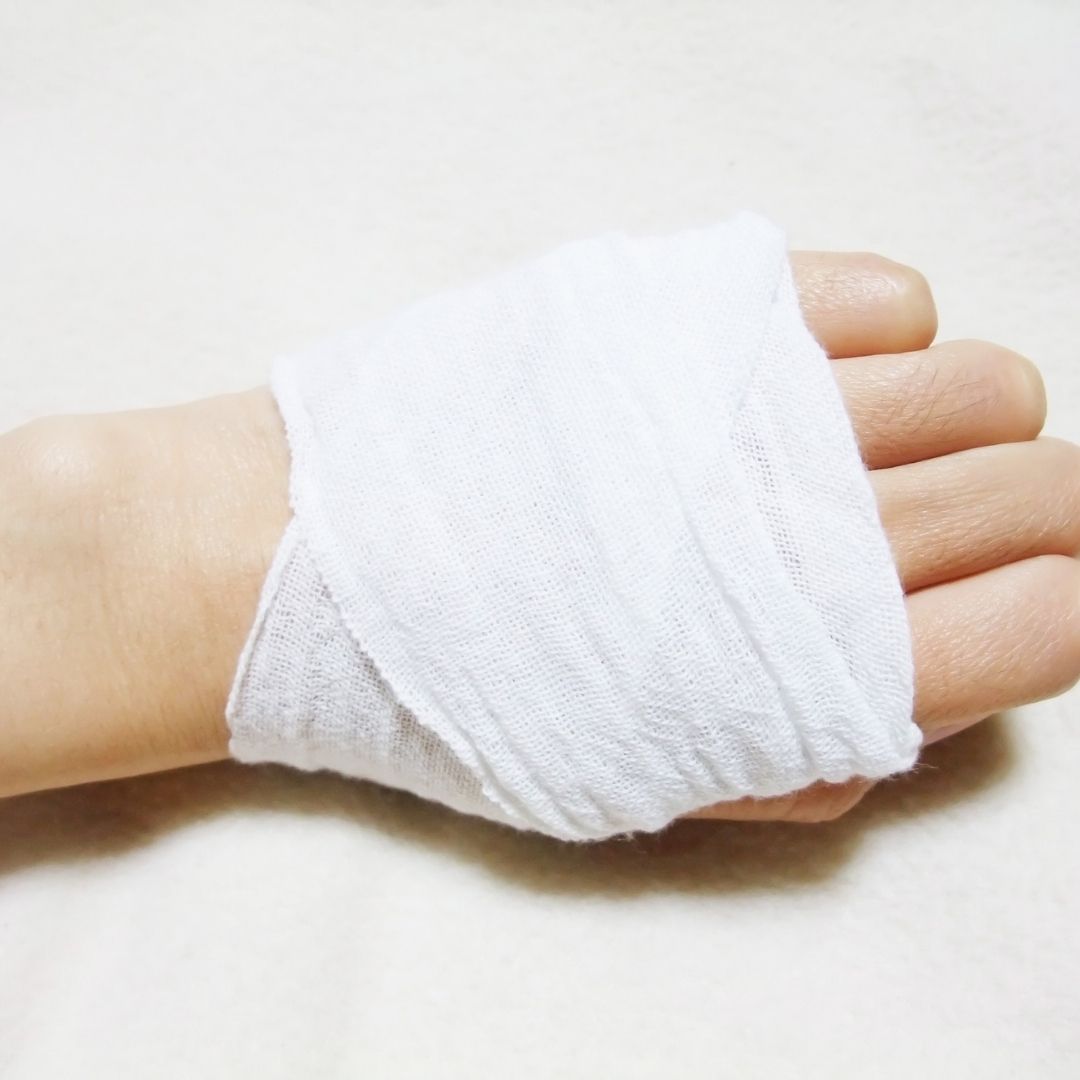
How to Wrap a Wound: Steps to Protect Skin and Prevent Infection
How to Wrap a Wound: Steps to Protect Skin and Prevent Infection
Knowing how to wrap a wound is a key step in learning proper first-aid skills. More importantly, it’s not a skill reserved for healthcare professionals alone. Injuries can happen at any time, and understanding how to respond in those first moments can affect how well the skin heals afterward.
Proper wound care helps prevent infection, protect injured skin, and promote faster healing. While certified wound care specialists can assist patients with more complex treatments, such as diabetic foot ulcers and tunneling wounds, minor injuries—such as cuts, scrapes, and abrasions—can often be safely addressed at home.
In this guide, we’re discussing exactly how to wrap wounds for safe, optimal healing. We’ll discuss which materials to use, how long wraps should remain on the skin, and provide a step-by-step guide to effective wrapping techniques. With this, patients and caregivers can feel more confident in managing minor injuries right from home.
How to Wrap a Wound: Steps to Protect Skin and Prevent Infection
While it may sound intimidating, learning how to wrap a wound is surprisingly easy! More importantly, it’s a simple skill that can make a significant difference in how quickly an injury heals. When done correctly, wound coverage creates a moist healing environment, which research shows supports faster, higher-quality skin repair.
Beyond this, wound wrapping prevents cell death and protects the injury against dirt and debris, reducing the likelihood of infection. This is why keeping a first-aid kit nearby and understanding how to use it is essential for confidently responding to everyday injuries.
At Royal Wound Care, one of the nation’s few board-certified wound care clinics, we proudly serve patients throughout the West Hills, Woodland Hills, Canoga Park, Calabasas, and Chatsworth areas. However, no matter where care begins, we believe that education is a critical part of effective healing. That’s why below, you will find a simple, patient-focused guide on how to care for and wrap minor wounds.
Should You Wrap a Wound?
It depends! Not every wound requires wrapping. Some wounds, such as small cuts and scratches, may not require wrapping—especially if they’re superficial. However, there are many situations where wrapping is beneficial.
More specifically, covering a wound helps stop bleeding, protects it from bacteria, and reduces irritation from potential friction. This is particularly important for injuries located on joints, areas prone to movement, wounds that continue bleeding during early healing, or those with thin, elderly skin.
Ultimately, if a wound is open, irritated, or at risk of frequent movement, wrapping it can help create a more supportive healing environment.
Related: Wound Care for Elderly Thin Skin: Best Practices and Treatments
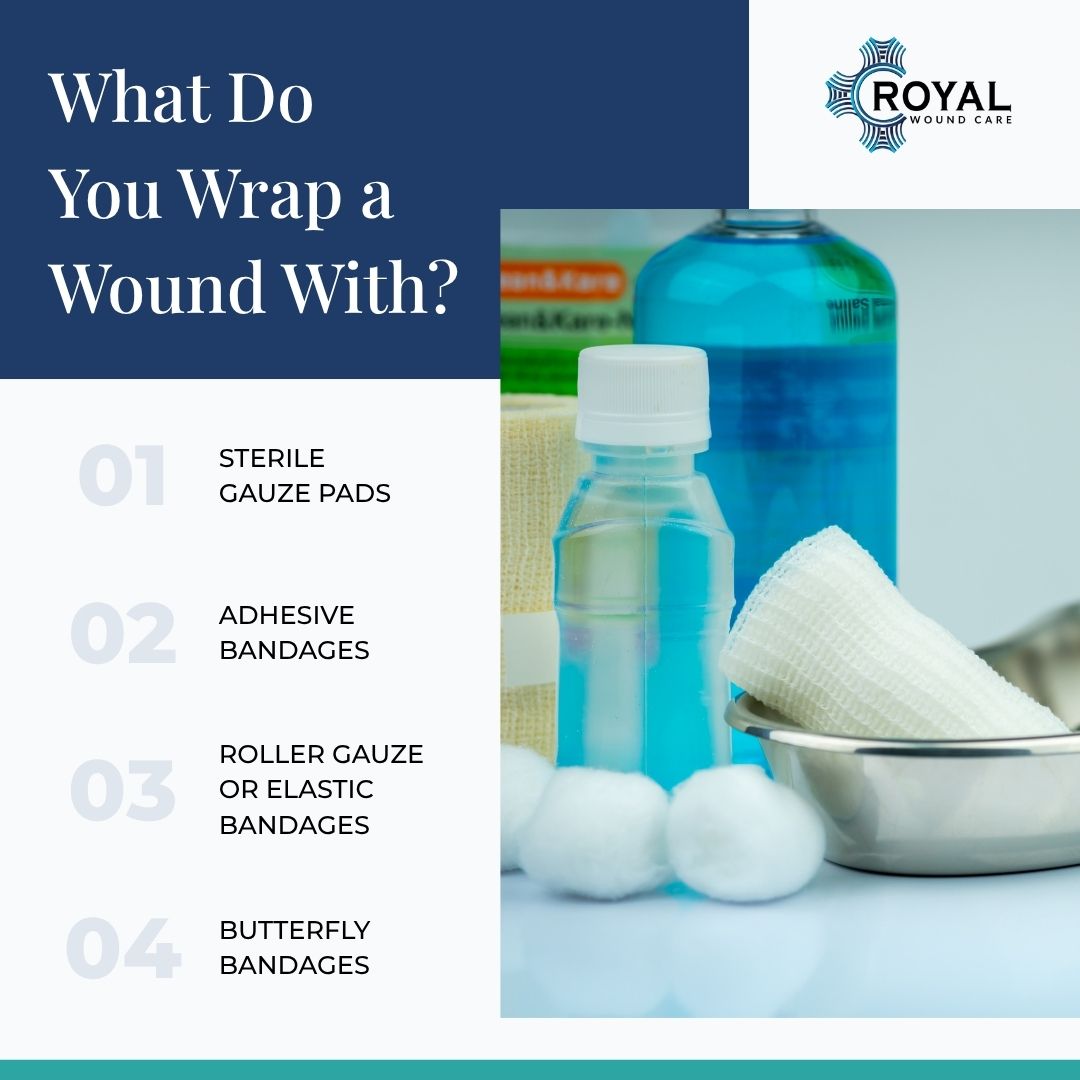
What Do You Wrap a Wound With?
Sterile Gauze Pads
Sterile gauze pads, typically made from cotton or nonwoven fiber blends, can manage wound exudate while preventing skin maceration. Because they’re highly absorbent, this wrap choice is most ideal for open wounds, second-degree burns, or blisters.
Additionally, sterile gauze pads effectively eliminate microorganisms, protecting the wound from dirt, debris, and bacteria. Even though this material covers the entire wound, it’s still extremely breathable, allowing oxygen to reach the injury and prevent excess bacterial growth.
Adhesive Bandages
An adhesive bandage is best for small cuts and scrapes that are often exposed to bacteria or friction. They provide a sterile environment, protecting the wound bed from infection while promoting cell migration for faster healing.
Adhesive bandages, while typically smaller, also protect the wound from friction and pressure. They are easy to apply and remove, making them efficient for frequent wrap changes. However, for those with punctures or frail skin, it’s important to be mindful of adhesive damage.
Related: How to Remove Gauze Stuck to Wound Without Pain
Roller Gauze or Elastic Bandages
Roller gauze is a sterile, flexible, and breathable fabric used to hold wound dressings in place and provide minimal compression. Elastic bandages, on the other hand, are stretchy fabric that provides compression and support. In many cases, people use roller gauze and elastic bandages together as part of a two-step process.
Together, roller gauze and elastic bandages are best for wrapping larger areas, such as arms, legs, or joints. They effectively protect the area from bacteria, promote optimal healing, and keep the wrap in place while still allowing flexibility.
Butterfly Bandages
Butterfly bandages, also known as butterfly closures, are small, specialized adhesive strips that help close small cuts or incisions by pulling wound edges together. You simply place the strip directly onto the cut, ensuring the non-stick center is over the gap rather than on the skin.
For most, butterfly bandages are a non-invasive alternative to traditional stitches. While they don’t treat deeper wounds or punctures, they can be highly effective for shallow wounds that have distinct edges. In some cases, however, patients will use butterfly bandages for deeper wounds until they can receive professional medical care.
Related: Royal Wound Care At Home: A Nurse’s Step-by-Step Checklist
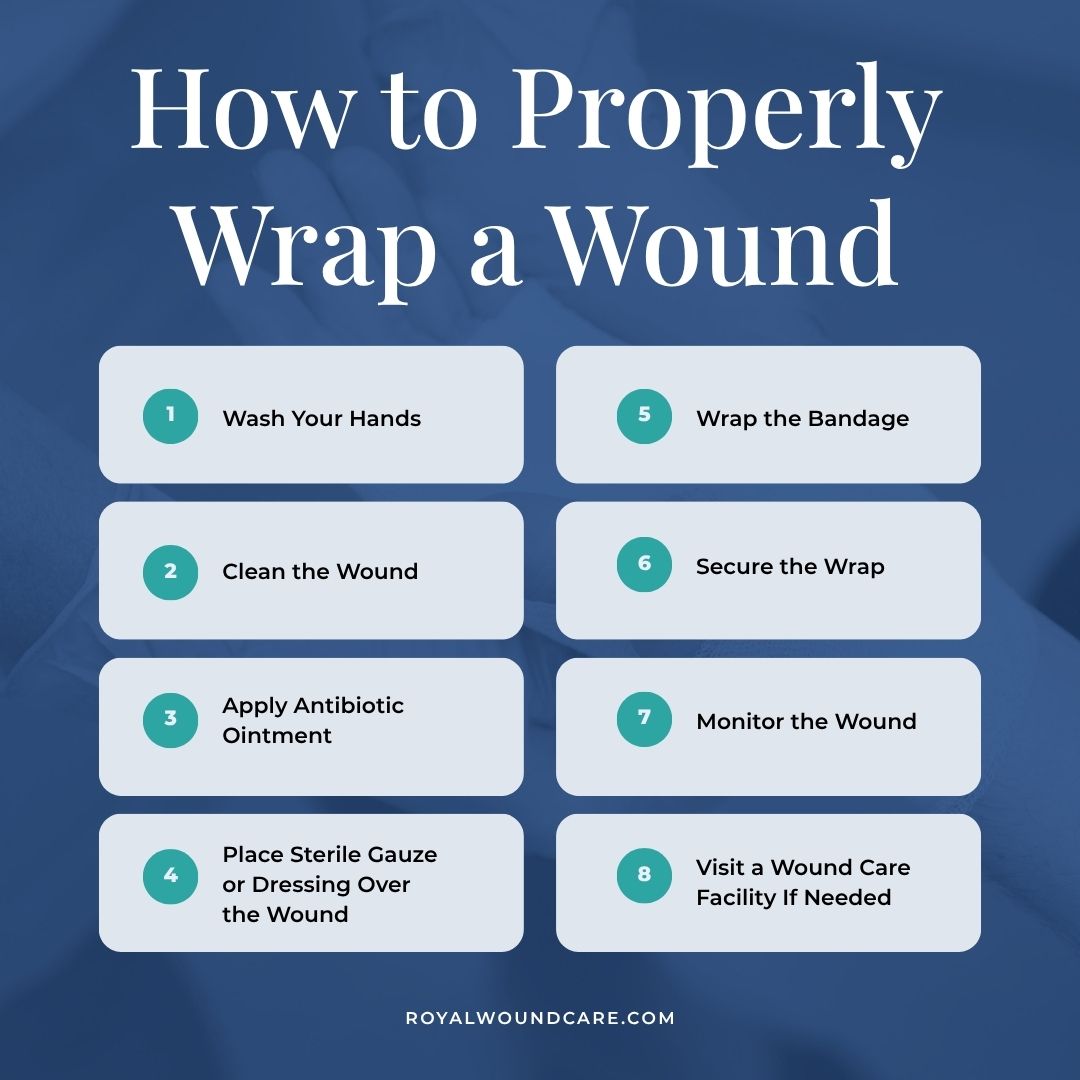
How to Properly Wrap a Wound
Step 1: Wash Your Hands
Before touching a wound, it’s essential to thoroughly wash and clean your hands. The hands are a primary source of bacteria that can easily transfer to open wounds and potentially cause infections. To reduce the risk, ensure you wash your hands with soap and water and, if necessary, put on sterile latex gloves.
Step 2: Clean the Wound
With clean hands, gently rinse the wound with cool, clean water to remove dirt and debris. Afterward, pat the area around the wound with mild, antibacterial, unscented soap, avoiding getting it directly into the wound. Rinse the area with cool water once again, then pat dry. Avoid rubbing, as this may reopen the wound and risk reinjury.
Most importantly, avoid using harsh antiseptics, such as alcohol or hydrogen peroxide. While commonly assumed to be effective, research shows that antiseptics can actually reduce fibroblasts, damaging healthy tissue and slowing wound closure.
Step 3: Apply Antibiotic Ointment
Following proper cleansing, apply a thin layer of antibiotic ointment to the wound. While not always necessary, it can be a proactive step for creating a moist environment that accelerates healing. Additionally, ointments act as a barrier, helping limit bacterial growth while shielding the wound from external contaminants.
For minor scrapes, particularly on thin skin, non-antibiotic ointment or petroleum jelly can be just as effective. Even though they don’t deliver medicine directly to the wound, they can maintain moisture and prevent additional bacterial growth.
Related: Skin Prep for Wound Care: Best Practices for Proper Healing
Step 4: Place Sterile Gauze or Dressing Over the Wound
After cleaning and applying ointment, place a sterile gauze or appropriate wrap over the entire wound. This protects the injured area, helps maintain moisture, and shields it from pressure and friction.
However, ensure you don’t apply adhesive directly to the wound edges, as this could irritate the tissue after removal. Additionally, for injuries with excessive wound exudate, change the wrap frequently to avoid infection and skin maceration.
Step 5: Wrap the Bandage
When using sterile gauze or elastic bandages, it’s essential to wrap the material to keep it in place. When doing so, use light pressure and only overlap layers slightly. If the wrap is too tight, it can restrict blood flow, reduce circulation, and slow healing. The wrap should feel snug, but not so tight as to cause swelling or numbness.
Additionally, ensure that if you’re using gauze, you apply a thin layer of ointment before wrapping. Even minor cuts and scrapes can cause gauze to stick to dried exudate, leading to painful removal and potential reinjury.
Step 6: Secure the Wrap
Once both the bandage and wrap are in place, use medical tape, clips, or fasteners to secure them. This helps keep the dressing from shifting throughout the day, ensuring consistent coverage and protection.
Moreover, be mindful not to apply tape too tightly or directly over sensitive skin, as it can potentially cause irritation. The goal is to keep the wrap stable and intact while still allowing for movement and flexibility.
Step 7: Monitor the Wound
Minor wounds, fortunately, heal much more quickly than more complex injuries. Nonetheless, it’s still important to monitor the wound as it continues to heal. Doing so ensures there isn’t further injury, potential infection, or irritation.
If necessary, you can keep the wound wrapped for multiple days. In most cases, though, it’s important to change the wrap frequently—which we will discuss further below.
Related: How to Treat a Laceration: Proper Wound Care and Healing Tips
Step 8: Visit a Wound Care Facility If Needed
If you notice your wound isn’t healing as quickly or effectively as expected, it may be necessary to seek medical care. A wound care specialist can examine the area, monitor healing, and develop a personalized treatment plan based on your unique needs.
For those in the San Fernando Valley, we encourage you to schedule a visit to Royal Wound Care. Dr. Moaddel, the practice’s founder, guarantees that each patient receives compassionate, personalized care. Our board-certified providers combine evidence-based treatments with direct oversight to customize treatment from day one.
Review our Mobile Wound Care, In-Clinic Wound Care, and Home Health Care options to learn more. And if you’re still unsure, read our guide, “When to See a Wound Care Specialist.”
Related: When to Go to Urgent Care vs. ER for Wound Care
How Long Should You Keep a Wound Wrapped?
Truthfully, there is no one-size-fits-all timeline for how long a wound should remain wrapped. Ultimately, it depends on severity of the injury, quality of the skin, and how well the wound progresses through the healing process. While wounds should remain wrapped in the early stages, you can also promote faster healing by:
Changing the dressing once or twice per day
Replacing bandages whenever they become wet, dirty, or loose
Continuing to cover the wound until it forms a protective scab, or new skin begins to form
Maintaining proper coverage directly impacts how effectively wounds heal. For any questions or concerns, don’t hesitate to reach out to the Royal Wound Care Team.
Wrapping a wound is an effective first step to support optimal healing and protect against bacteria.
Wrapping a wound is a simple but important step in supporting proper healing. With the right techniques and materials, many minor injuries can be safely managed at home. However, if a wound shows a sign of infection, delayed healing, or increased discomfort, seeking professional medical care is essential for proper recovery.
And the team you seek help from matters. At Royal Wound Care, we commit to serving the San Fernando Valley community through compassion, support, and evidence-based strategies. From the first appointment to the last, we strive to provide personalized, adaptable care and an environment that feels as supportive as it does professional.
For SNFs and independent nurses, review our educational opportunities and professional partnerships! With board-certified leadership, you can experience faster healing times, lower infection rates, and fewer wound-related hospitalizations. We can improve patients’ lives, one expert step at a time.
