The Difference Board-Certified Physician Leadership Makes in Nurse Wound Care Education
The Difference Board-Certified Physician Leadership Makes in Nurse Wound Care Education
For nurses in wound care, Board-Certified physician leadership can truly move the needle on healing rates and patient recovery. Beyond continuing education, this specialized knowledge enables clinicians to prioritize evidence-based practices, manage complex injuries, and provide higher-quality care.
The field of wound care is vast, spanning minor lacerations, post-surgical care, delicate elderly skin wounds, and slow-healing ulcers. Each setting presents unique challenges that differ in approach and treatment, therefore requiring nurses to maintain a broad, comprehensive skillset. This is where board-certified physician leadership becomes particularly valuable.
In this post, we’ll explore the difference that board-certified physician leadership makes in nurse wound care education. We’ll also discuss what it is, why it’s important, and best practices learned throughout the program. At Royal Wound Care, as one of the nation’s few board-certified wound care clinics, we lead through education. This post can help every healthcare professional understand how physician leadership strengthens clinical practice and improves patient outcomes.
The Difference Board-Certified Physician Leadership Makes in Nurse Wound Care Education
As a nurse practitioner, there are many training programs required to become a professional in wound care. Board-certified physician leadership enhances previous training by providing the knowledge and skills necessary to ground expertise in both science and clinical accountability.
Additionally, board-certified physician leadership serves many other unique purposes. For example, it helps reduce treatment costs, educate clinicians, and set the standard for a higher level of care. However, it’s important for healthcare organizations to understand why these values remain critical in wound care. So in this post, we’ll discuss why investing in wound care education led by experts isn’t a business expense—it’s a strategic investment.
Related: Wound Care Training for Nurses: Courses and Certifications
What Is Wound Care Education for Nurses?
Wound care education is a structured learning process that covers wound healing physiology, assessment, treatment plans, prevention strategies, documentation, and patient care. For nurses specializing in the field, continuing education is often the first and most important step after earning a Bachelor of Science in Nursing (BSN).
In addition to broadening the skill set, wound care education is essential for providing evidence-based treatments and improving patient outcomes. Moreover, it enhances clinical decision-making, accelerates wound healing, and prevents life-threatening complications.
However, while similar, board-certified physician leadership isn’t a form of training; it’s a recognized subspecialty program. Most commonly, it’s recognized by the American Board of Medical Specialists as the “Certified Wound Specialist Physician” (CWSP) designation. And although it’s voluntary, it demonstrates a true commitment to ethical standards, clinical mastery, and operational excellence.
Below, we will discuss specific reasons why board-certified physician leadership can make a significant difference in nurses’ wound care education.
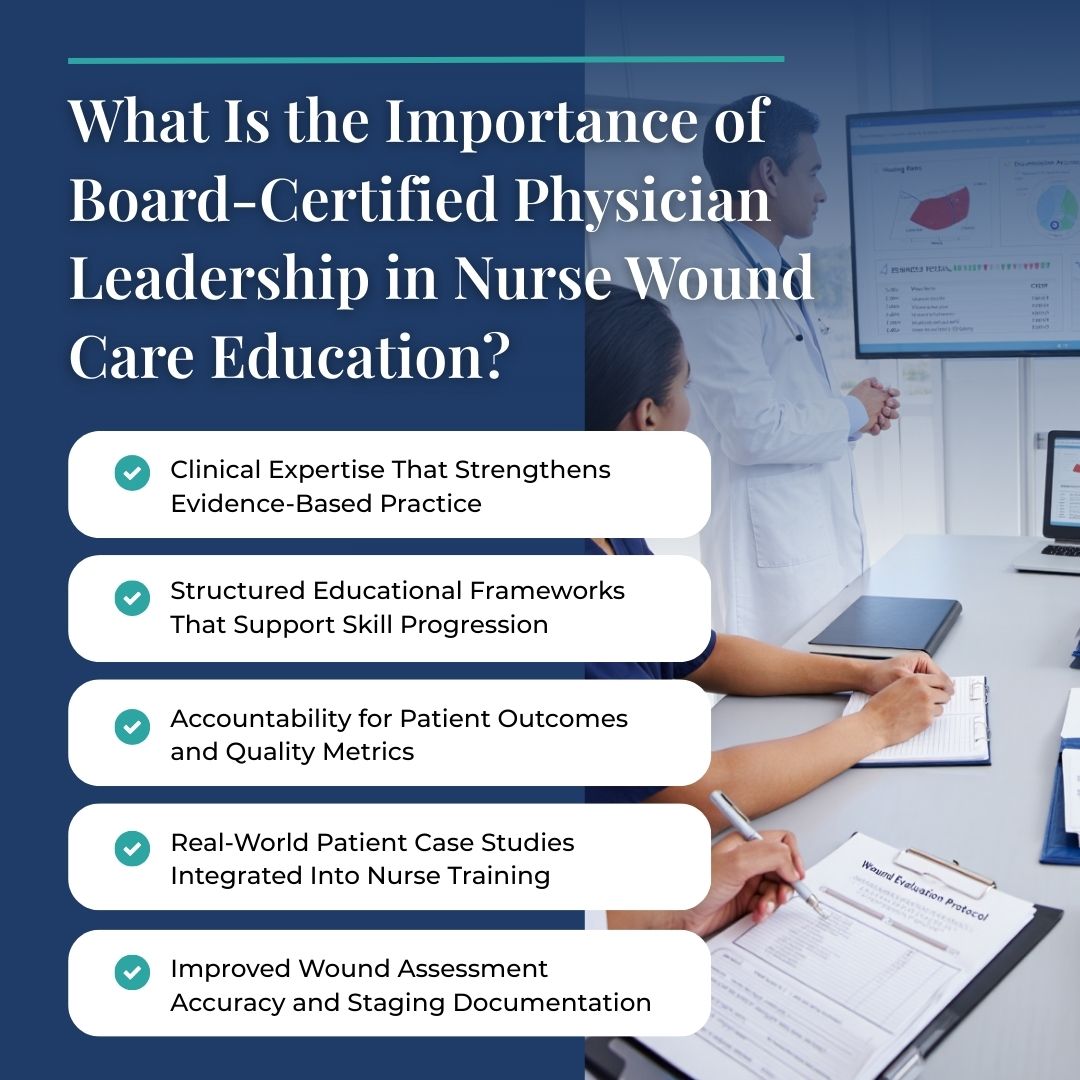
What Is the Importance of Board-Certified Physician Leadership in Nurse Wound Care Education?
Clinical Expertise That Strengthens Evidence-Based Practice
The more data a nurse has access to, the better they can understand how wounds develop and progress. That said, under board certification, nurses learn the advanced skills necessary for clinical authority within the wound care profession. And with a rise in chronic wounds within both the younger and elderly population, advanced research is increasingly important.
The goal isn’t solely to heal slow, non-healing wounds—it’s to prevent them when possible. When a nurse understands how to apply evidence-based practices during wound assessment, they can better serve their patients and their clinic.
Related: Chronic Wounds: When Healing Stalls
Structured Educational Frameworks That Support Skill Progression
Improving patient care is top priority, whether you’re managing a minor surgical incision or a more complex tunneling wound. However, the first step to proper care is the appropriate educational frameworks. The education programs and wound care certifications that a nurse commits to play a direct role in leadership, team management, and quality improvement.
Board-certified physician leadership, for example, prioritizes self-awareness, emotional intelligence, conflict resolution, and interpersonal communication. These skills allow nurses to improve efficacy in the field while collaborating more effectively behind the scenes.
Together, these factors ensure better care environments, communication between healthcare professionals, and more consistent patient-centered approaches across all settings.
Accountability for Patient Outcomes and Quality Metrics
Long-term care is not one-size-fits-all; it’s often complex and deeply personal. And it’s the accountability of the healthcare professional that ultimately shapes the quality, consistency, and safety of patient care. In light of this, board-certified physician leadership allows nurses to feel confident in executing evidence-based, patient-centered treatment options.
Because successful recovery isn’t a stand-alone process, it requires clinical protocols, qualified physicians, and a high-quality skill set. The more clinics can apply data-driven techniques, the more effectively they can measure patient outcomes, safety, and treatment success.
This process becomes significantly more productive when clinics prioritize advanced knowledge and exceptional expertise.
Real-World Patient Case Studies Integrated Into Nurse Training
Everything we do in wound care is the result of years of research, clinical education, and evidence-based practice. And in modern certification programs, much of the clinical expertise relies on a blend of theoretical knowledge and real-world experiences.
It’s the progress and success of previous wound care nurses that lay the foundation for the standards, protocols, and best practices used today. Board-certified physician leadership prioritizes real-world patient care into nursing training modules to strengthen patient safety, evidence-based approaches, and critical thinking.
In a field that experiences unpredictable changes in healing progress, it’s essential that nurses are able to rely on clinical judgement, data-driven decision-making, and prompt action.
Improved Wound Assessment Accuracy and Staging Documentation
Wound assessment is one of the most critical aspects of patient care. This is what drives treatment plans, dressing selection, and advanced healing approaches. Board-certified physician leadership enhances this process through advanced training, specialized knowledge, and comprehensive assessment skills.
In fact, research shows that clinics that prioritize board-certified physician leadership actually reduce diagnostic delays. As a result, patients receive better care, physicians experience fewer wound-related rehospitalizations, and healing times significantly increase.
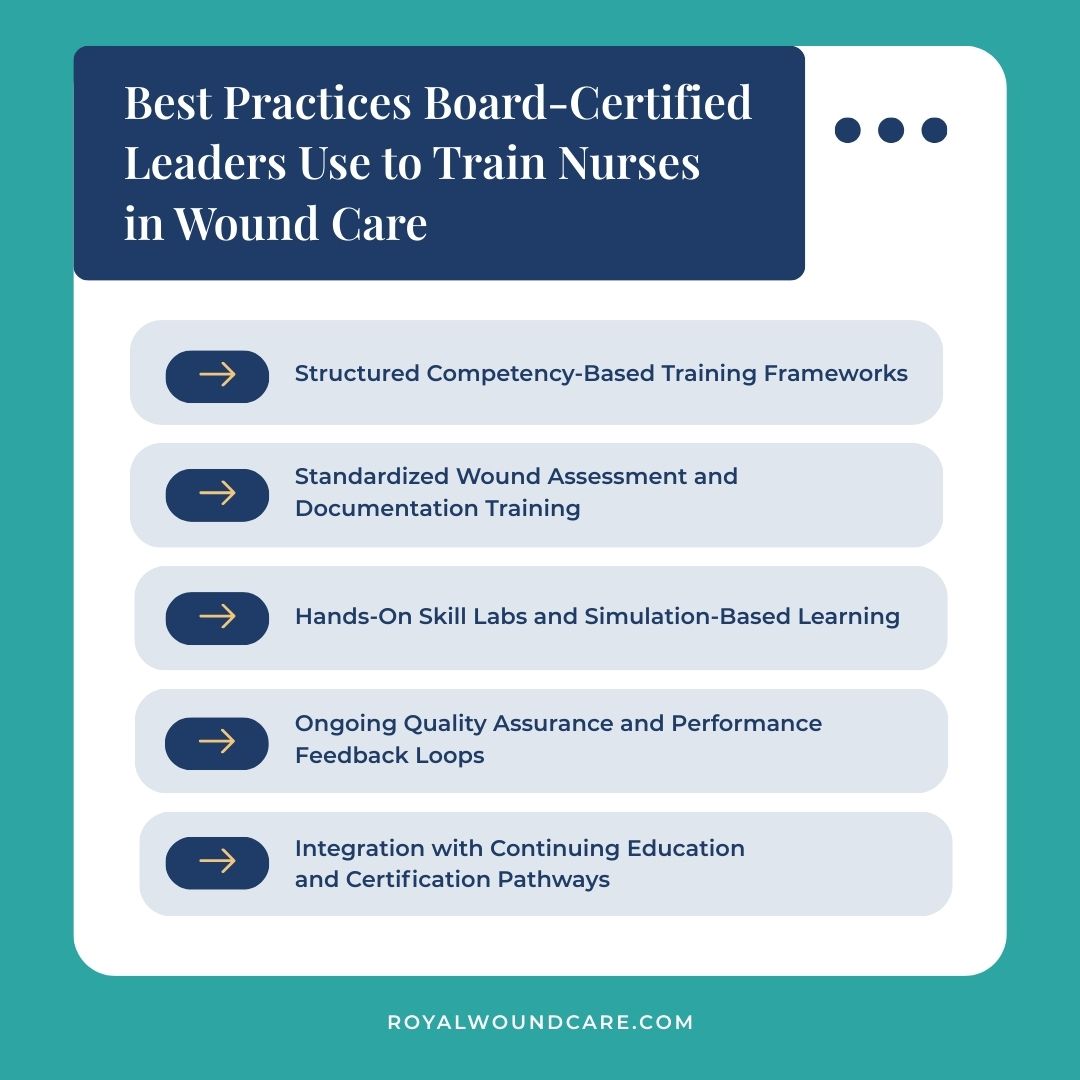
Best Practices Board-Certified Leaders Use to Train Nurses in Wound Care
Structured Competency-Based Training Frameworks
A board-certified physician leadership program will commonly define competencies. For example, nurses may focus on wound, ostomy, and continence care as distinct yet interrelated areas of practice. This level of precision is what separates board-certified leaders from general clinicians.
More specifically, these programs prioritize evidence-based protocols and best practices to foster regulatory compliance and consistent treatment. As a result, nurses are better able to standardize care, reduce complications, and improve healing outcomes.
Related: How Do You Become a Certified Wound Care Nurse?
Standardized Wound Assessment and Documentation Training
Proper assessment and documentation are critical components of effective wound care. As discussed previously, assessment is what encourages safe, effective, and optimal healing. Documentation, on the other hand, ensures that additional healthcare professionals, such as physical therapists or general surgeons, can track healing progress and support continuity of care.
With consistent assessment and documentation under board-certified physician leadership, nurses can ensure each patient continues to receive optimal care.
Hands-On Skill Labs and Simulation-Based Learning
Both hands-on skill labs and simulation-based learning are commonly integrated directly into board-certified physician leadership programs. This is an important addition, as these environments allow nurses to develop necessary skills without directly impacting patient care.
Additionally, the repetition in labs encourages muscle memory and clinical competence. This leads to reduced anxiety, higher confidence, and successful application of data-based knowledge.
Ongoing Quality Assurance and Performance Feedback Loops
While wound care specialists can track healing and identify potential complications, they can’t always guarantee a specific outcome. Board-certified physician leadership promotes identifying actionable factors rather than relying on reactive, symptom-driven interventions.
This includes applying standardized, evidence-based treatment approaches, tracking healing and infection rates, and collecting outcome-driven data to continuously refine care strategies. The more data the wound care field can track, the better equipped clinicians are to continuously improve treatment.
Integration with Continuing Education and Certification Pathways
Physician-led programs align with continuing education requirements and professional certification pathways to support both long-term career growth and specialization. This is an essential aspect in ensuring that clinics don’t view continuing education as a basic requirement, but a fundamental step towards comprehensive care and continued excellence.
Board-certified physician leadership is the cornerstone of improved patient outcomes, clinical excellence, and evidence-based decision making.
In today’s complex health environment, effective wound care education is an essential step in improving patient recovery. Through data-driven techniques, evidence-based approaches, and strategic training, nurses are better equipped to handle everything from minor abrasions to complex pressure ulcers. And, as a result, clinics can offer standardized, accessible, and personalized care.
At Royal Wound Care, we combine medical expertise, thoughtful treatment, and compassionate support for every patient and every stage of healing. And, as one of the few board-certified wound care clinics in the nation, we aim to set the standard. Through educational opportunities and professional partnerships, SNFs, independent nurses, and clinics can improve the world of wound care—together.
