Skin Substitutes for Wound Healing: What Patients Need to Know
Skin Substitutes for Wound Healing: What Patients Need to Know
Many assume that wounds naturally heal with time, rest, and basic wound care. And while this is the case for minor injuries, more complex wounds require a different level of care. This is where advanced treatments, such as skin substitutes, become invaluable.
Skin substitutes are innovative medical therapies designed to support wound healing when the body cannot repair damaged tissue as effectively on its own. More specifically, skin substitutes are commonly used in the treatment of chronic wounds, diabetic foot ulcers, and severe burns—complex injuries for which traditional wound care may not be enough.
To help patients better understand what to expect during treatment, we are dedicating this post to skin substitutes for wound healing. We will discuss what they are, how they work, and what benefits they offer. When managing complex wounds, education is just as important as the care you receive.
At Royal Wound Care, we’re committed to providing compassionate, expert-guided care—both throughout the San Fernando Valley and through our trusted educational content. As one of the nation’s few board-certified wound care clinics, we’re proud to combine advanced treatment options with honest guidance, helping patients feel cared for at every stage of healing.
Skin Substitutes for Wound Healing: What Patients Need to Know
Chronic and non-healing wounds impact around 6.5 million Americans annually, often referred to as the “silent epidemic.” Not only can they be frustrating for patients to deal with, but they can also pose significant risks if left untreated. When wounds remain open for extended periods of time, they’re more likely to become infected, experience tissue damage, and, in severe cases, require amputation.
However, with proper care, chronic wound management is extremely effective. Some cases experience improvement with standard treatments, such as debridement and pressure relief. In other cases, the wound bed requires biological support, which is where skin substitutes become highly beneficial. These advanced therapies accelerate healing and improve outcomes, especially when standard care isn’t as effective.
While seemingly intimidating, skin substitutes are exceptionally efficient—and straightforward. Below, we will discuss how they work, what they cost, and what you can expect during treatment. With this information, patients can make informed decisions and feel more confident about the care they receive.
What Are Skin Substitutes for Wound Healing?
Skin substitutes are advanced medical products designed to replace, reinforce, or support damaged skin and underlying tissue during wound healing. They are not the same as bandages, dressings, or gauze, which generally cover and protect wounds as they heal. Skin substitutes act as scaffolds for new tissue growth, promoting regeneration and cellular activity.
Ultimately, not all wounds heal the same. For example, we offer significantly different guidance in our post, “How to Treat Venous Ulcers,” than we do in “Wound Care for Elderly Thin Skin.” However, it’s important to understand why that is.
Healthy skin has multiple layers, including the epidermis and the deeper supportive tissues beneath it. When a wound disrupts this structure, the body may struggle to rebuild tissue effectively—especially for those with underlying conditions that impact their immune system. Skin substitutes help bridge that gap.
Depending on the product, these advanced therapies may mimic portions of the natural dermis matrix, provide structural support, deliver growth factors, or create a biologically active environment. More specifically, some skin substitutes (Class II/III) contain living cells, such as fibroblasts, mesenchymal stem cells (MSCs), and keratinocytes, which are essential for wounds that fail to heal with conventional care. Others, such as Class I (acellular) skin substitutes, do not include live cells. However, they continue to provide a structural scaffold that’s necessary for tissue repair.
Ultimately, your wound care specialist will determine the severity of your wound and the most appropriate skin substitute for your unique needs. To help you better understand what to expect, we provide an overview of the different types of skin substitutes below:
The Different Types of Skin Substitutes
Allograft Skin Substitutes
Acellular Dermal Matrix: Biological materials derived from human tissue, or, in some cases, animal-derived sources, that create a scaffold for the patient’s own cells and blood vessels to grow into. They’re often used in full-thickness skin defects.
Cadaveric Skin Allografts: Temporary biological dressings sourced from deceased human donors that help protect the wound, reduce fluid loss, and support healing. They commonly act as a bridge until patients can receive a more permanent solution.
Placental-Based Allografts: Biomaterials derived from donated placental tissue that contain structural proteins and naturally occurring growth factors that support tissue repair, reduce inflammation, and encourage healing.
Xenografts
Porcine (Pig) Skin Grafts: Temporary biological dressings derived from pig skin that help protect the wound bed, reduce moisture loss, and create a supportive healing environment. They’re ideal for severe burns and chronic wounds.
Bovine (Cow) Collagen/Dermal Matrices: Collagen-based wound scaffolds that promote tissue regeneration, rapid vascularization, and wound closure. Some products are classified as dermal regeneration templates, helping support new tissue growth in more severe wounds.
Synthetic Skin Substitutes
These engineered wound coverings are made from biocompatible materials that mimic some of the protective functions of skin. They help maintain moisture balance, shield wounds from contaminants, and support the healing process.
Types of Wounds That Need Skin Substitutes
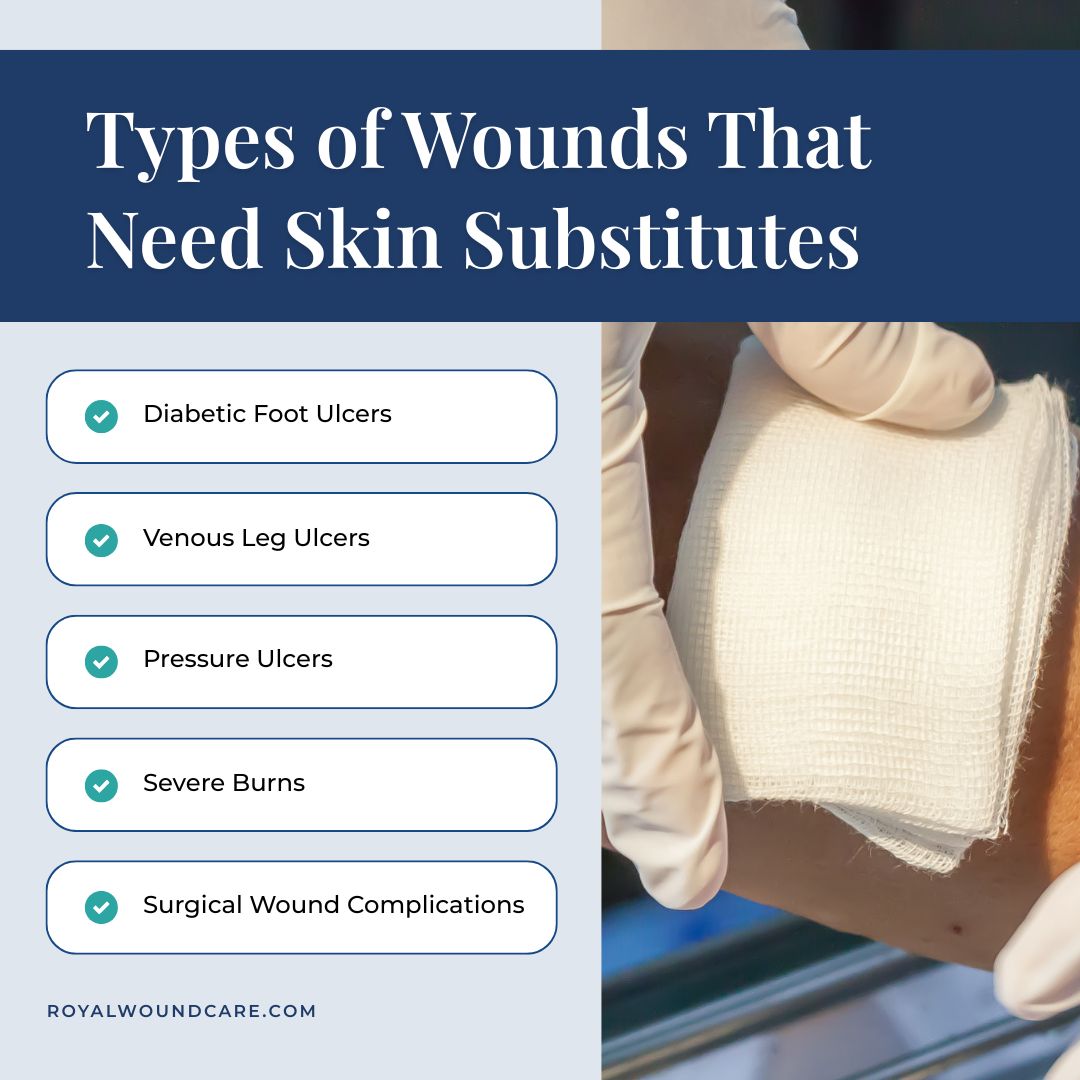
Not every wound requires advanced treatment. Skin substitutes are particularly helpful for slow-to-heal wounds that don’t respond to traditional wound care methods or are at risk of complications. Below, we will discuss the common types of wounds that skin substitutes treat:
Diabetic Foot Ulcers
As discussed in “Wound Care for Diabetic Foot Ulcers,” this is a common—and serious—complication of diabetes. Most patients often experience symptoms such as reduced circulation, delayed immune response, and slow tissue repair. However, with proper attention and board-certified specialists, DFUs are generally highly treatable.
That said, in some cases, standard wound care does not encourage sufficient granulation tissue formation or wound closure. In these cases, skin substitutes promote healing, provide a protective barrier, and deliver growth factors to stimulate tissue regeneration. This additional support may be the missing piece to safe, optimal healing.
Related: Diabetic Foot Ulcer Treatment in West Hills, California
Venous Leg Ulcers
Venous leg ulcers affect between 500,000 and 2 million Americans annually, accounting for over 50% of leg ulcer cases. This slow-healing, shallow sore is generally due to damaged vein valves, poor circulation, and chronic venous insufficiency. As a result, this leads to symptoms such as persistent swelling, skin breakdown, poor oxygen delivery, and delayed healing.
Skin substitutes are an incredibly valuable treatment option for VLUs. Ultimately, they protect the wound from fluid loss and bacteria, while simultaneously maintaining a moist environment and reducing pain. Not only does this accelerate healing, but it also improves a patient’s quality of life.
Pressure Ulcers
Pressure ulcers, also commonly referred to as bedsores or pressure injuries, develop when prolonged pressure reduces circulation to vulnerable tissue. More specifically, most patients experience pressure ulcers on bony areas, such as the heels, hips, elbows, and tailbone. Common risk groups include bedbound patients, wheelchair users, and individuals recovering from surgery.
Even though PUs are often considered high-risk, skin substitutes can be highly effective treatments. In addition to protecting against infections, this advanced therapy also helps reduce inflammation, stimulate the wound bed, and regenerate lost tissue.
Related: Wound Dressing for Pressure Ulcers: Best Practices and Uses
Severe Burns
If a burn is severe enough, it can damage both superficial and deeper tissue layers. Not only is this extremely painful for patients, but it can also lead to severe complications, such as infections and loss of limbs. In these cases, the body may be unable to efficiently rebuild the epidermal layer, making skin substitutes essential.
Skin substitutes ultimately serve as protective, moisture-retaining barriers that mimic natural skin. When used, they can significantly decrease the risk of infection, fluid loss, and scarring. Additionally, for extensive burns where an autograft isn’t immediately possible, substitutes provide immediate coverage to minimize inflammation and reduce pain.
Related: Wound Care Los Angeles: Why Skilled Nursing Facilities Trust Royal Wound Care
Surgical Wound Complications
Most surgical wounds heal predictably with few complications. However, this doesn’t mean surgical wound complications aren’t common—every individual is different. Infection, tissue separation, poor circulation, or delayed healing may all require more advanced treatment methods.
Skin substitutes can support tissue repair by acting as a temporary bridge, or, in some cases, a functional dermal layer. Depending on the severity, wound specialists may apply a living-cell substitute to stimulate the growth factors necessary for healing. However, it’s an essential step to protect the reopened wound from bacteria and fluid loss.
Related: When Should Sutures Be Removed? Types, Timing, and Care
How Do Skin Substitutes Work for Wound Healing?
Provide a Protective Barrier Over the Wound
Regardless of what type of skin substitute you have, it essentially forms a protective barrier over the injury. This is the case for both synthetic polymers and bioengineered tissues. By doing so, the material acts as an artificial epidermis, preventing infections, accelerating healing, and reducing fluid loss.
Each factor mentioned is incredibly important for optimal healing. Moreover, these treatments reduce the need for autologous skin grafts—treatment using the patient’s own skin to cover the area—reducing the number of surgeries.
Promote Cell Growth and Tissue Regeneration
Both synthetic and bioengineered skin substitutes provide the structure for new cells to grow into. This technique is incredibly promising in cases where patients have severe burns or wounds, for which the body can’t effectively repair tissue on its own.
Additionally, by stimulating the production of growth factors, substitutes can also accelerate regeneration for chronic wounds and damaged tissues. They do so through processes of cell migration, proliferation, and vascularization—all of which are critical components of the healing process.
Help Retain Moisture for Healing
At one point, you were probably advised to leave wounds undressed to allow them to “air out.” However, modern research shows that maintaining moisture is key to accelerating wound healing. This process reduces pain, promotes faster cell migration, minimizes scarring, enhances nutrient delivery, and stimulates fibroblasts.
Skin substitutes help maintain a moist environment by acting as semi-permeable or impermeable barriers that reduce evaporative fluid loss. At the same time, they manage wound exudate to prevent skin maceration. You can learn about similar processes in our guide, “Types of Foam Dressings and When to Use Each One.”
Reduce Risk of Infection
When wounds are left untreated, remain open, or are improperly cared for, they’re at a significantly increased risk of infection. While specialists can generally easily treat infections with antimicrobial cleansers and prescribed antibiotics, it’s much easier to prevent them when possible.
Skin substitutes are a highly effective solution in preventing infections. By acting as a sterile, protective barrier, they reduce the amount of time wounds are vulnerable to bacteria. Additionally, some substitutes, such as collagen-based matrices, may contain antimicrobial agents, further reducing infection risk and promoting healing.
Benefits of Skin Substitutes for Wound Healing
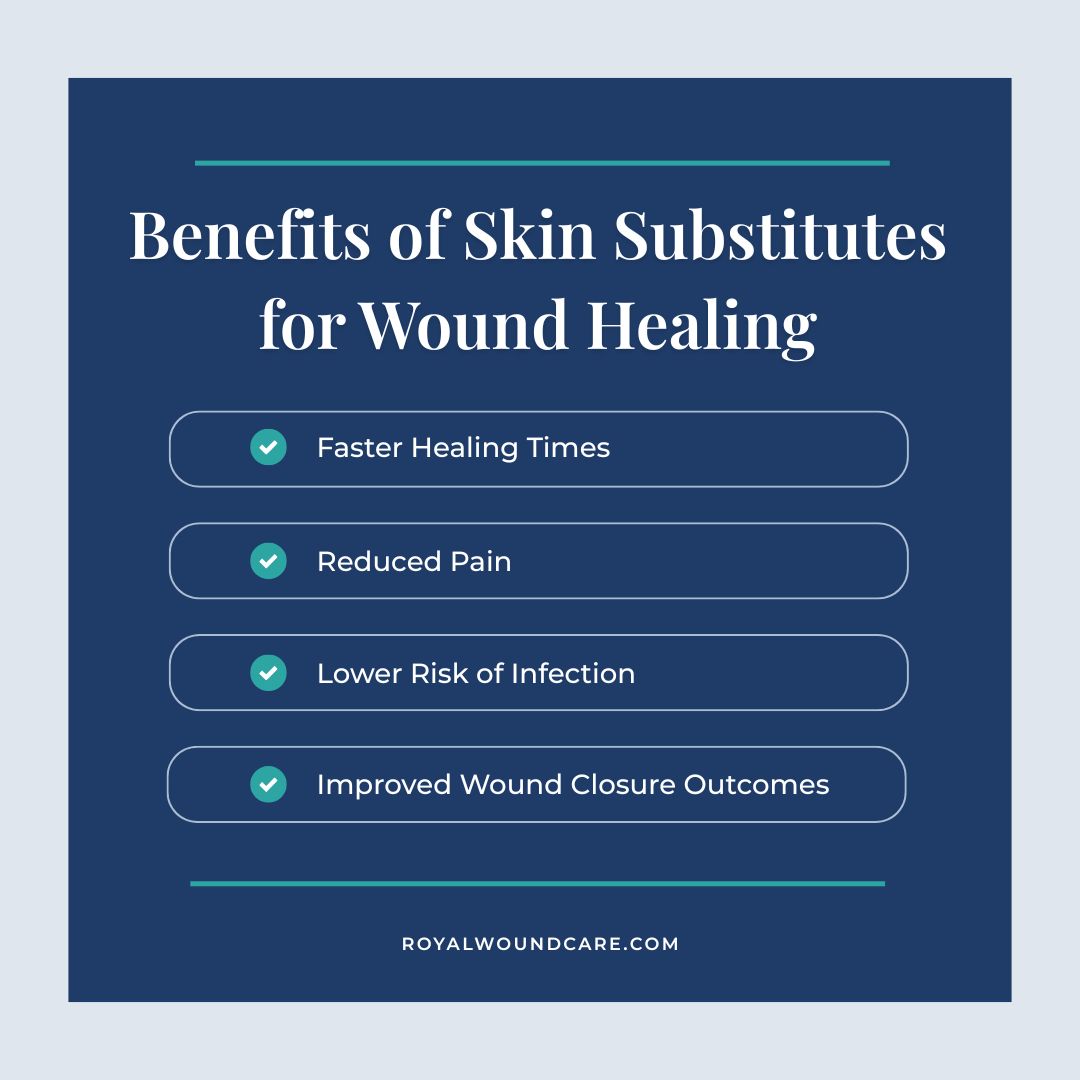
Faster Healing Times
Standard wound care treatments, such as negative-pressure wound therapy (NPWT), are highly effective in promoting healing. However, advanced wounds require a much more specialized approach to promote healing and remove damaged tissue. Skin substitutes help with this by stimulating growth factors, regulating the wound environment, and providing a temporary matrix.
Reduced Pain
In many cases, patients rely on traditional anti-inflammatory medications for pain relief when managing chronic, non-healing wounds. However, skin substitutes can provide a similar effect. By acting as a barrier to exposed nerve endings, substitutes reduce moisture loss, decrease inflammation, and promote tissue regeneration, facilitating faster healing.
Lower Risk of Infection
Dressings and bandages can be effective treatments for superficial, easy-to-heal injuries. In more complex cases, however, substitutes prevent bacteria from entering the wound, thereby reducing the risk of complications. At the same time, they accelerate healing to help reduce the time wounds are vulnerable to infection.
Improved Wound Closure Outcomes
Many patients assume that after a wound closes, healing is complete. This isn’t always the case. In many circumstances, total healing is dependent on proper tissue remodeling, restored skin integrity, and addressing the underlying cause of the wound.
Skin substitutes check all the boxes by providing a structural matrix that allows the patient’s cells to migrate, proliferate, and regenerate. Additionally, many contain growth factors that stimulate the healing process and improve the quality of regenerated skin.
Are Skin Substitutes Safe?
When used appropriately, skin substitutes are absolutely considered safe. However, just as with every advanced medical treatment, safety depends on factors such as:
Proper diagnosis
Appropriate product selection
Skilled wound care oversight
Infection management
Careful monitoring throughout treatment
As we mentioned earlier, different skin substitute products serve different purposes. And they do so through different materials, biological components, and necessities. Some patients may experience symptoms depending on potential allergies, circulatory compromise, and overall wound condition.
However, this is why board-certified care matters. At Royal Wound Care, we evaluate each wound before recommending advanced therapies. Skin substitutions, while incredibly effective, are not a one-size-fits-all solution. We ensure that each treatment recommendation is individualized, personal, evidence-based, and appropriate given the patient’s condition.
Related: When to See a Wound Care Specialist
Are Skin Substitutes Expensive?
In short, skin substitutes are generally expensive. However, the actual cost varies significantly depending on several factors, including:
Size of treatment area
Product type and brand
Frequency of application
Clinical necessity
Insurance coverage
Clinical setting
Ultimately, private insurers can cover skin substitutes for chronic, non-healing wounds that are proven unresponsive to traditional treatment approaches. However, this process requires strict documentation, and costs vary by necessity, provider, authorization, and treatment duration. Nonetheless, it’s important to evaluate the cost in context.
Chronic, non-healing wounds can benefit significantly from skin substitute treatment. Many untreated cases commonly lead to hospitalization, surgical intervention, or long-term care methods. At Royal Wound Care, we treat patients across West Hills, Woodland Hills, Canoga Park, Calabasas, and Chatsworth—and we do so through honesty and transparency. Before receiving treatment, our board-certified team helps patients understand available options before moving forward.
This way, you can understand healing with confidence—both when deciding on a treatment approach and discussing coverage with insurance providers.
Learn about the effectiveness of skin substitutes with Royal Wound Care’s board-certified specialists.
For patients, chronic, non-healing wounds can feel extremely intimidating—especially without understanding what treatment entails. However, with the right team and a personalized care regimen, the healing process feels far more manageable. Additionally, advanced therapies such as skin substitutes offer a specialized way to improve outcomes when traditional wound care alone isn’t enough.
Royal Wound Care, a proud provider serving the San Fernando Valley community, offers personalized, compassionate care to every patient. We don’t just treat wounds—we ensure patients receive the attentive care they deserve. Reach out to the Royal Wound Care team today for questions, concerns, or personalized help.
Beyond patient care, we offer educational resources and partnership opportunities to SNFs and independent nurses. Through evidence-based clinical guidelines and cutting-edge research, we can make high-quality care accessible—and approachable—together.
