
Royal Wound Care was founded with a commitment to advancing the standard of wound care.
Royal Wound Care is a dedicated wound care center located in West Hills, California, specializing in advanced, comprehensive wound treatment. Founded by Dr. Moaddel, Royal Wound Care was born from his commitment to improve the way patients experience wound care. After witnessing the need for more compassionate, personalized care, Dr. Moaddel opened his own center to ensure that every patient receives the attention and expertise they deserve.
After witnessing the shortcomings in traditional wound care settings, Dr. Moaddel set out to create a better experience—one where patients receive the focused, attentive care they truly deserve. That vision became Royal Wound Care.

Our Mission
To deliver exceptional, accessible wound care tailored to the individual—whether in our state of-the-art clinic, at a skilled nursing facility, or in the comfort of a patient’s home. We treat the wound, but we also care for the whole person.
Why Choose Royal Wound Care?
Ongoing Education & Certification
For staff, families, and partner facilities, including wound in-services and professional training opportunities

Expert-Led Care by Board-Certified Providers
With years of hands-on experience managing chronic and complex wounds

Advanced Modalities
Including negative pressure therapy, mist ultrasound, debridement, Doppler studies, grafts, and more

Survey-Ready Documentation
That keeps facilities compliant and families informed

Truly Personalized Care Plans
Tailored to each patient’s condition, lifestyle, and healing goals

Mobile Services That Come to You
Care delivered at home, in clinics, or within partner facilities

A Team That Cares And The Results To Prove It
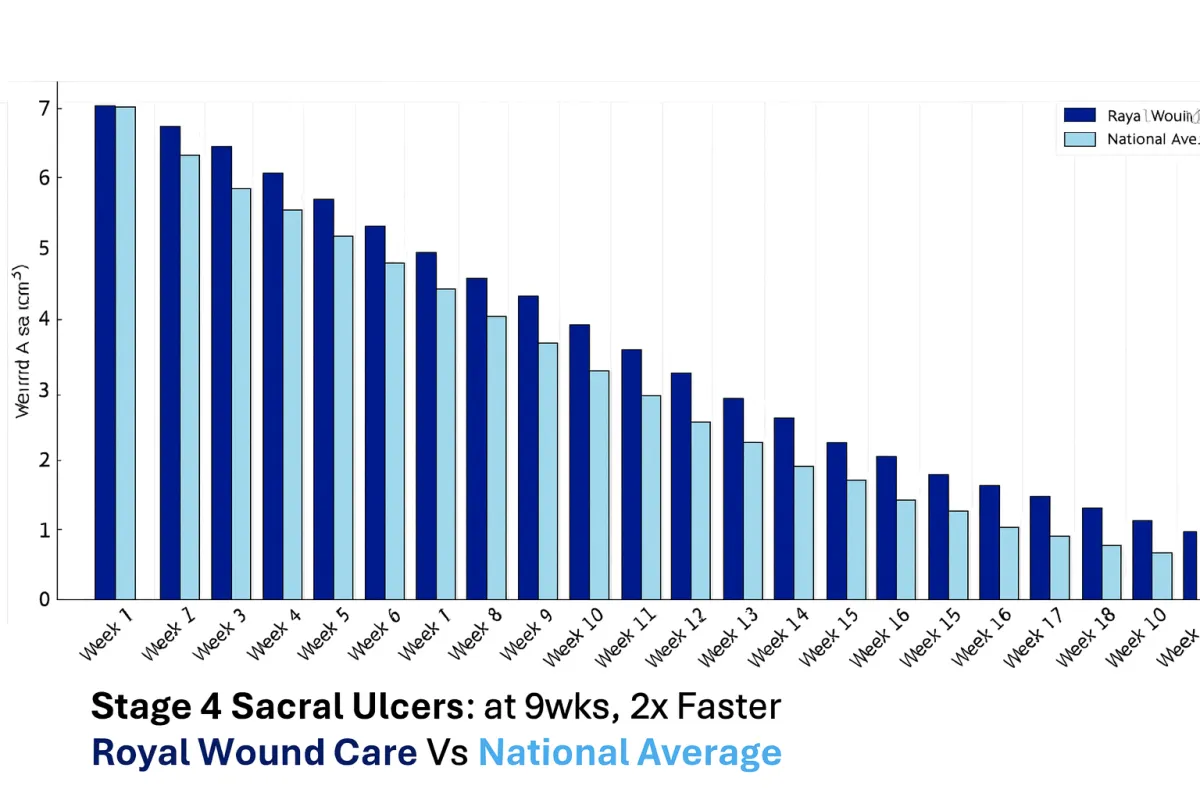
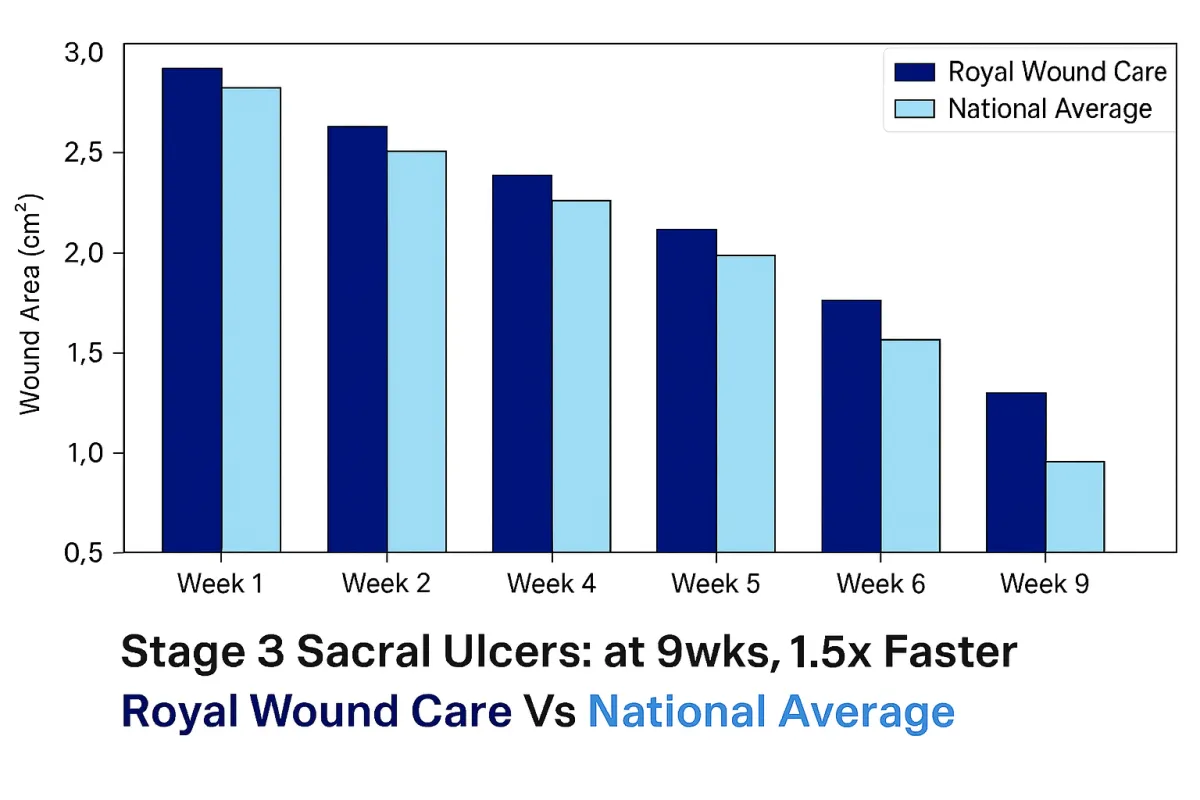
At Royal Wound Care, we deliver results that consistently outperform the national average. Our advanced healing process combines evidence-based treatments, personalized care plans, and direct physician oversight to ensure optimal outcomes. Unlike many clinics, every patient is managed by a board-certified wound care physician who evaluates their condition and customizes treatment from day one.
Our Stage 3 Sacral ulcer graph demonstrates how our approach leads to significantly faster healing compared to the national average. While traditional care results in gradual wound size reduction over several months, patients treated at Royal Wound Care experience more rapid progress through targeted therapies, aggressive infection control, and ongoing physician-directed adjustments to their care plan. Our proactive methods allow us to close even complex wounds weeks earlier than national trends, improving patient mobility, reducing pain, and preventing further complications.
Stage 4 sacral ulcers are among the most complex wounds to treat, yet our outcomes set us apart. Patients at Royal Wound Care heal twice as fast as the national average by leveraging advanced biologic grafts, comprehensive infection management, and customized care protocols. These results highlight our proactive, physician-led care model, allowing us to manage even the most challenging cases successfully while improving long-term patient outcomes.
What Our Partners Experience
86% lower infection rates

47% faster healing compared to others

88% fewer wound-related rehospitalizations

58% faster pressure ulcer healing times

Ready to Heal with Royal Wound Care?
Mobile Wound Care for Skilled Nursing Facilities in Los Angeles
Mobile Wound Care for Skilled Nursing Facilities in Los Angeles
Mobile wound care services for skilled nursing facilities have drastically improved patient accessibility to timely, specialized wound treatment, helping support faster intervention and better healing outcomes. And at a time when chronic wounds and slow-healing ulcers are becoming increasingly common, this level of accessibility matters.
Ultimately, patient transportation to outside clinics can be time-consuming, costly, and disruptive to daily care routines. Mobile wound care bridges this gap. With efficient treatment and continuity of care, on-site specialists decrease risks, reduce rehospitalizations, and, most importantly, reduce patient stress. While these factors are essential for any complex case, they’re especially critical for medically vulnerable patients.
However, not all mobile services in Los Angeles County are equipped to meet clinical demands. Facilities need experienced providers who understand complex wounds, infection control, and collaborative care. And at Royal Wound Care, proud providers for patients throughout the San Fernando Valley, we understand the importance of quality mobile care options.
In this post, we’re sharing mobile wound care for skilled nursing facilities in Los Angeles. We’ll discuss the types of wounds mobile care treats, the services to expect, and what makes Royal Wound Care a leading provider of accessible, patient-centered treatment.
Mobile Wound Care for Skilled Nursing Facilities in Los Angeles
Mobile wound care is an essential factor for skilled nursing facilities, as it directly impacts patient outcomes, staff efficiency, and regulatory compliance. More importantly, facilities frequently manage patients with pressure injuries, diabetic foot ulcers, and post-surgical cases. Each of these complex wounds requires consistent monitoring and advanced treatment to support proper healing.
Dependable access to expert wound care makes a significant difference here. Without proper treatment, even minor complications can advance into infections, delayed wound healing, and emergency transfers. Reliable mobile wound care is often the missing piece for streamlining care delivery while also maintaining quality standards.
At Royal Wound Care, one of the nation’s few board-certified wound care clinics, we understand the growing need for real-time support and tailored treatment plans. That’s why below, we’ll discuss what mobile wound care is and why it should be a common practice across skilled nursing facilities throughout Los Angeles.
Whether you’re a patient or a provider, this information can help you better understand the value of timely, specialized treatment.
Related: Royal Wound Care at Home: A Nurse’s Step-by-Step Checklist
What Is Mobile Wound Care?
Mobile wound care is a healthcare service in which licensed medical professionals provide wound assessment, treatment, and ongoing management directly at the patient’s location.
However, these services are not strictly limited to a single place. Patients can receive quality care whether in assisted living communities, at home, or in a skilled nursing facility. It’s simply a more efficient way to deliver advanced wound treatment wherever a patient currently resides.
These services are specifically designed for chronic, complex, or non-healing wounds—injuries that require strategic care plans and constant monitoring. More specifically, depending on the provider, treatment often consists of services such as:
Comprehensive evaluation
Diagnostic assessments
Debridement
Advanced dressing changes
Negative pressure wound therapy
Compression therapy
Advanced mobile wound care is particularly valuable in skilled nursing environments because continuity matters. Residents remain in familiar surroundings, staff coordination becomes easier, and nurses can provide personalized care tailored to a patient’s condition. It’s a much more structured, hassle-free approach that benefits both the patient and the facility.
Related: How Do You Become a Certified Wound Care Nurse?
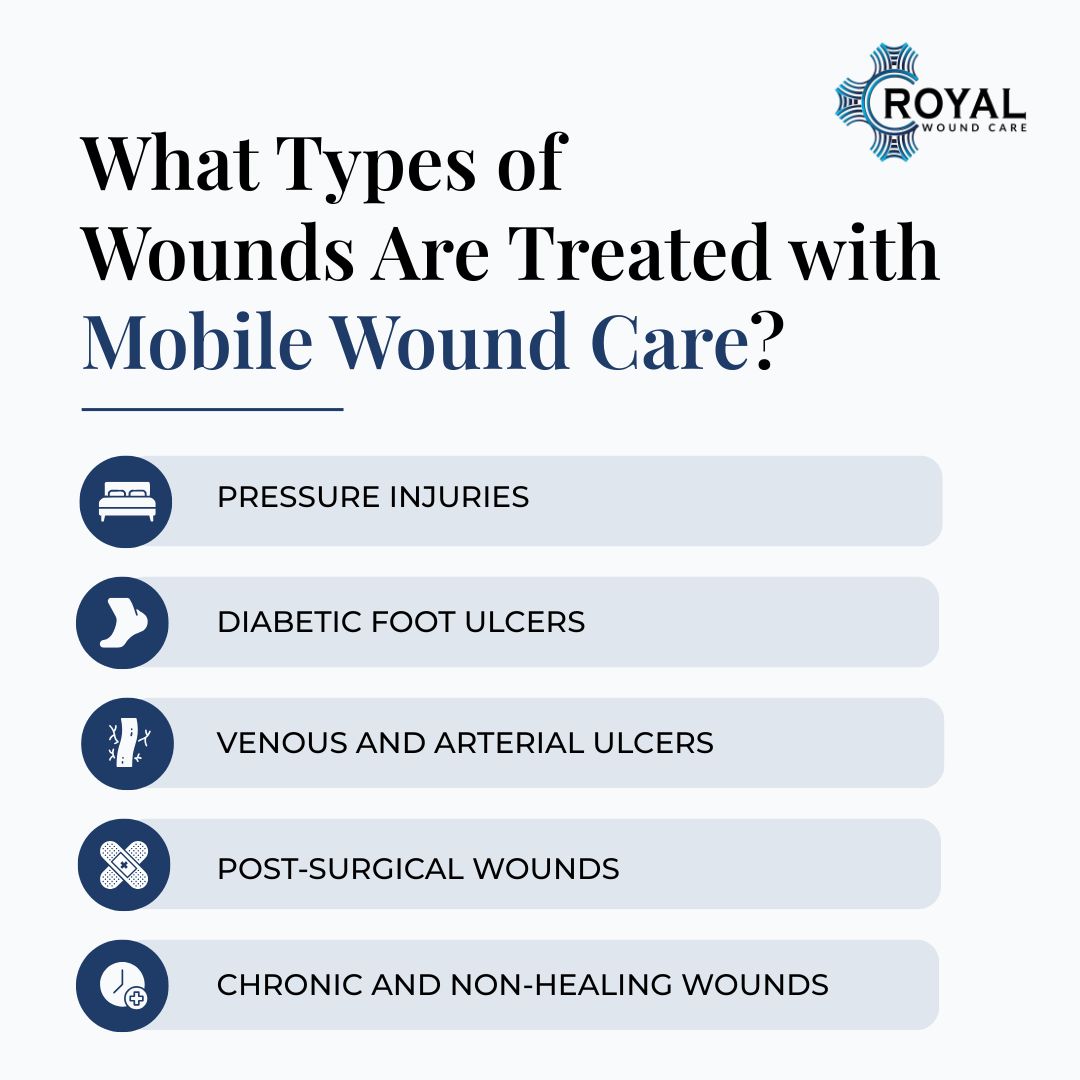
What Types of Wounds Are Treated with Mobile Wound Care?
Pressure Injuries
Pressure injuries, also known as bedsores or pressure ulcers, are among the most common wounds treated in skilled nursing facilities. Patients with limited mobility, prolonged bed rest, or chronic health conditions are especially vulnerable. Without prompt intervention, these wounds can quickly worsen and become increasingly difficult to manage.
A mobile wound care team can regularly monitor patients, providing pressure injury staging, advanced wound treatment, dressing selection, and wound-healing-focused treatment plans. Not only does this reduce hospitalization rates, but it also increases patient compliance.
Related: Wound Dressing for Pressure Ulcers: Best Practices and Uses
Diabetic Foot Ulcers
Diabetic foot ulcers (DFUs) affect approximately 18.6 million people worldwide. In addition to the condition itself, many patients also experience impaired circulation, neuropathy, and slower healing. Left untreated, diabetic wounds can quickly progress to serious complications, such as osteomyelitis and limb amputation.
Mobile wound care services help skilled nursing facilities better manage DFUs, delivering hospital-level care right at a patient’s bedside. Through consistent facility-based wound treatment, nurses can assess healing, conduct daily inspections, and, most importantly, educate clients about potential environmental risks that may be hindering healing.
Read our guide, “Diabetic Foot Ulcer Treatment in West Hills, California,” to learn more about local, board-certified treatment.
Venous and Arterial Ulcers
Circulatory wounds, such as venous and arterial ulcers, generally require ongoing wound management and close monitoring. Poorly managed injuries that lack the necessary oxygen and nutrients can quickly lead to non-healing wounds without expert intervention.
More specifically, venous ulcers may result in swelling and drainage, whereas arterial wounds can lead to poor tissue perfusion. However, mobile wound care can improve healing, reduce infection risks, and eliminate the need for logistically challenging travel—all factors particularly important for patients with limited mobility.
Related: How to Treat Venous Ulcers and Leg Swelling Effectively
Post-Surgical Wounds
While many post-surgical wounds heal without complications, difficulties aren’t uncommon. Many patients can experience surgical site infection (SSI), wound dehiscence (separation), and fluid accumulation, regardless of whether they receive dissolvable stitches or sutures (stitches). With this in mind, skilled bedside care can make a meaningful impact in recovery.
Mobile wound care services allow facilities to address concerns early while maintaining continuity of care. While it primarily eliminates the need to travel to a clinic, regular monitoring also reduces infection risk and hospital readmissions. Expert, board-certified guidance can support the patient’s recovery process and reduce overall stress during healing.
Chronic and Non-Healing Wounds
Chronic and non-healing wounds are incredibly common, affecting approximately 10.5 million (2.5%) of Americans. Many of these cases require advanced wound care expertise, diagnostic evaluation, and specialized techniques, such as debridement and negative-pressure therapy. While patients can receive these treatments in-office, mobile wound care can be a defining factor in healing.
By providing the same advanced expertise directly to their bedside, skilled nursing facilities can provide timely intervention without disrupting daily care routines. Additionally, many patients experience faster healing and fewer complications with consistent, comfortable care.
Related: Wound Care Training for Nurses
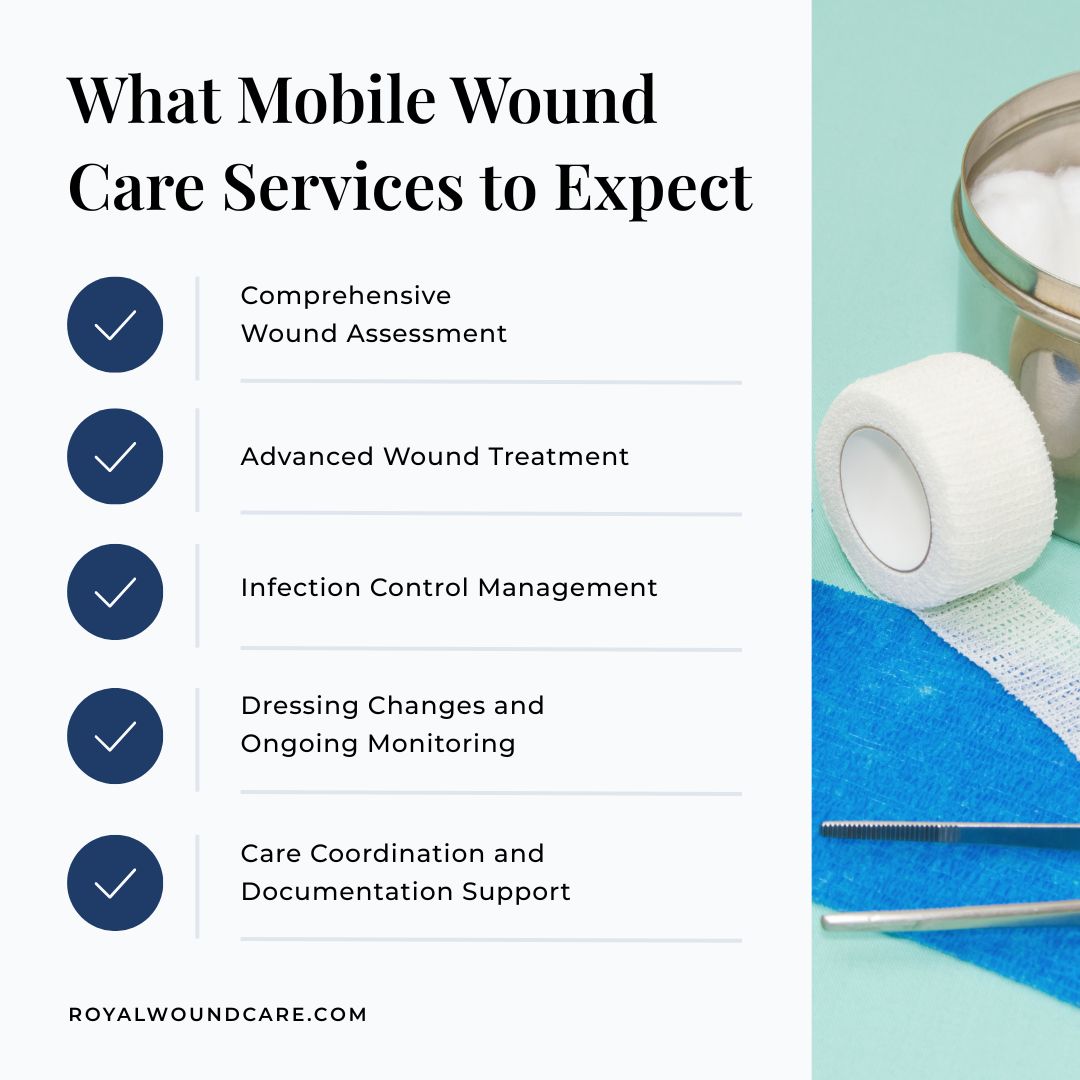
What Mobile Wound Care Services to Expect
Comprehensive Wound Assessment
Every effective wound care program begins with a thorough assessment. Providers will examine the injury to assess wound type, severity, extent of damage, tissue quality, infection risk, healing barriers, and overall patient comfort. This is a thorough but essential process that helps ensure patients receive the appropriate level of care.
Additionally, many skilled nursing facilities now have the extended help of modern technology to assess wounds. For example, tools such as multi-spectral sensors and digital imaging can help measure wound volume and track healing over time. Combined with board-certified education, patients can receive accurate diagnoses that improve healing outcomes.
Related: What Does It Mean to Be Board-Certified in Wound Care?
Advanced Wound Treatment
Rather than visiting a clinic, Los Angeles patients can receive advanced, hospital-level care from the comfort of their own beds. Depending on the injury, mobile wound care services provide a range of cutting-edge treatments, including:
Debridgement
Advanced biological dressings
Ultrasound therapy
Negative Pressure Wound Therapy
UltraMIST Therapy
Vascular screenings
Initially, this level of treatment can improve patient comfort and reduce the need for costly, potentially uncomfortable transfers. In the long term, however, this level of personalized care can also improve healing rates, reduce complications, and support better overall outcomes.
Infection Control Management
Infection control is critical in skilled nursing settings. More specifically, many patients may not realize that their wound is infected until symptoms have already progressed. Mobile wound care teams help reduce complications by monitoring for early signs of infection, including redness, swelling, and a foul odor.
Following inspection, nurses can implement wound treatment strategies while coordinating with care team members to improve treatment continuity. Ultimately, strong infection control protocols support safer outcomes and reduced hospitalization rates.
Related: What Does a Healing Wound Smell Like?
Dressing Changes and Ongoing Monitoring
Consistent follow-up is essential for complex wounds. While many patients understand how to care for initial wound dressings, skilled nursing facilities can provide ongoing clinical oversight to ensure healing remains on track.
This process involves monitoring the wound, changing dressings as needed, and assessing for signs of skin maceration. By doing so, providers can reduce complications and better support consistent, long-term healing.
Related: Types of Foam Dressings and When to Use Each One
Care Coordination and Documentation Support
Skilled nursing facilities operate within strict documentation and compliance requirements. First, this process is essential for allowing patients to understand the kind of care they’re receiving—and why. Additionally, it’s a crucial factor in supporting continuity of care across staff, physicians, and care teams.
Royal Wound Care Mobile Wound Care
At Royal Wound Care, we understand the critical and operational demands that skilled nursing facilities face every day. We also understand the growing need for mobile, accessible care, complemented with skilled, cutting-edge treatments that reduce patient transports. Our advanced mobile wound care services are designed to bring expert-level care to patients in skilled nursing, assisted living, and at-home environments throughout Los Angeles County.
By bridging the gap between home health services and specialty wound care, patients can receive better outcomes, experience faster healing, and benefit from reduced rehospitalizations. We provide this level of care through a focus on:
Chronic wound management
Infection control
Personalized care
Tailored treatment plans
Collaborative treatment
Compassionate approaches
Additionally, we work closely with agency nurses and caregivers, offering real-time support and ongoing education. Because, ultimately, this is what moves the needle for efficient care delivery, continuity, and optimal recovery.
For skilled nursing facilities, the right partner matters. At Royal Wound Care, we provide board-certified expertise, physician-led support, and recurring guidance. With this level of personalized support, SNFs can reduce hospitalizations, ease administrative load, and improve patient outcomes for patients and staff alike.
As one of the nation’s few board-certified wound care providers, Royal Wound Care proudly serves patients throughout West Hills, Woodland Hills, Canoga Park, Calabasas, and Chatsworth. But together, we can expand access to specialized wound care and improve outcomes for patients who need timely treatment.
Visit our post, “The Difference Board-Certified Physician Leadership Makes in Nurse Wound Care Education,” to learn more about parenting with Royal Wound Care today.
Mobile wound care for skilled nursing facilities is an essential part of bridging the gap between healing and accessibility.
When advanced wound care is delivered directly where patients live and recover, facilities can improve efficiency, support wound healing, and help reduce avoidable complications—all while maintaining consistent care. And when you partner with a board-certified wound care facility like Royal Wound Care, you too can achieve results that consistently outperform the national average.
We don’t just treat wounds—we care for patients from diagnosis to resolution. We also support surrounding nursing facilities and provide advanced educational resources, ensuring care is accessible, approachable, and supportive.
Reach out to the Royal Wound Care team today for questions, concerns, or personalized help. And for further information, browse the Royal Wound Care blog.
WEST HILLS
7230 Medical Center Dr. Suite 100
West Hills, CA 91307
(818)–660–2977
BEVERLY HILLS
9735 Wilshare Blvd #210B
Beverly Hills, CA 90212
(818)–660–2977
Request an Appointment at a Royal Wound Care Facility near you.
Royal Wound Care is the expert in wound healing. Our board-certified wound care specialists are ready to help you begin your healing journey. Click the button below to request an appointment at a Wound Care Center near you—no referral needed
© 2025 Royal Wound Care, LLC. All rights reserved.
site by Growth Partners Marketing