Why Do Healing Wounds Itch? Causes, Relief, and What It Means
Why Do Healing Wounds Itch? Causes, Relief, and What It Means
As wounds begin to heal, the process is accompanied by a common yet often frustrating symptom: itching. Many people, especially those dealing with complex or chronic wounds, worry that itching is a sign of infection or improper recovery. In reality, however, mild itching is often a completely normal part of healing.
During the proliferative phase of wound healing, the skin begins to close, and new tissue begins to regenerate. As this occurs, the body releases histamines to prevent infection, damaged nerve fibers regenerate, and scab formation pulls on the surrounding skin. As a result, itching commonly develops even though everything is healing properly.
In this guide, we’re explaining exactly why healing wounds itch. We’ll discuss whether this is normal, why it happens, and how you can reduce itching and still support proper healing. For those having a hard time differentiating a healing wound from a possible infection, this information can help reduce anxiety and unnecessary worry.
Royal Wound Care, one of the nation’s few board-certified wound care clinics, is proud to lead patient care with education and compassion. Whether you’re visiting the Royal Wound Care West Hills office or exploring our online wound care resources, we’re here for you—every step of the way.
Why Do Healing Wounds Itch? Causes, Relief, and What It Means
Although an itchy wound can be uncomfortable, it’s generally temporary and improves as the healing process progresses. As your body repairs damaged skin, regenerates nerves, and coordinates its immune response, several normal healing processes can trigger an itchy sensation.
However, learning more about the healing process can help you better understand why this happens. Additionally, rather than trying to reduce itching altogether, it’s most important to focus on safe, effective wound care practices. Following your healthcare provider’s recommendations and incorporating the information below can play a big role in reducing discomfort and the risk of complications.
Related: How to Recover Faster According to Wound Care Experts
Is It Normal for a Healing Wound to Itch?
Yes, it’s completely normal for a healing wound to itch. In many cases, mild to moderate itching is simply a response to the body regenerating new skin and tissue. More specifically, this often occurs during the inflammatory phase of wound healing and peaks during the proliferation phase.
Itchiness may become more noticeable as the wound or scab dries, the surrounding skin tightens, and the body continues repairing damaged tissue beneath the surface. While the sensation can be irritating, it often indicates that the body is actively rebuilding the area.
That said, itching should gradually improve over time. If it’s accompanied by worsening pain, significant redness, swelling, warmth, drainage, or odor, it’s important to seek medical advice from a certified wound care specialist. They can better assist you after analyzing your injury in person.
Are you looking for reputable, personalized care? Royal Wound Care proudly serves patients throughout West Hills, Woodland Hills, Canoga Park, Calabasas, Chatsworth, and the greater San Fernando Valley. Visit our office or contact the Royal Wound Care team today; we’re here to help.
Related: What Does a Healing Wound Smell Like?
Why Do Wounds Itch When They Heal?
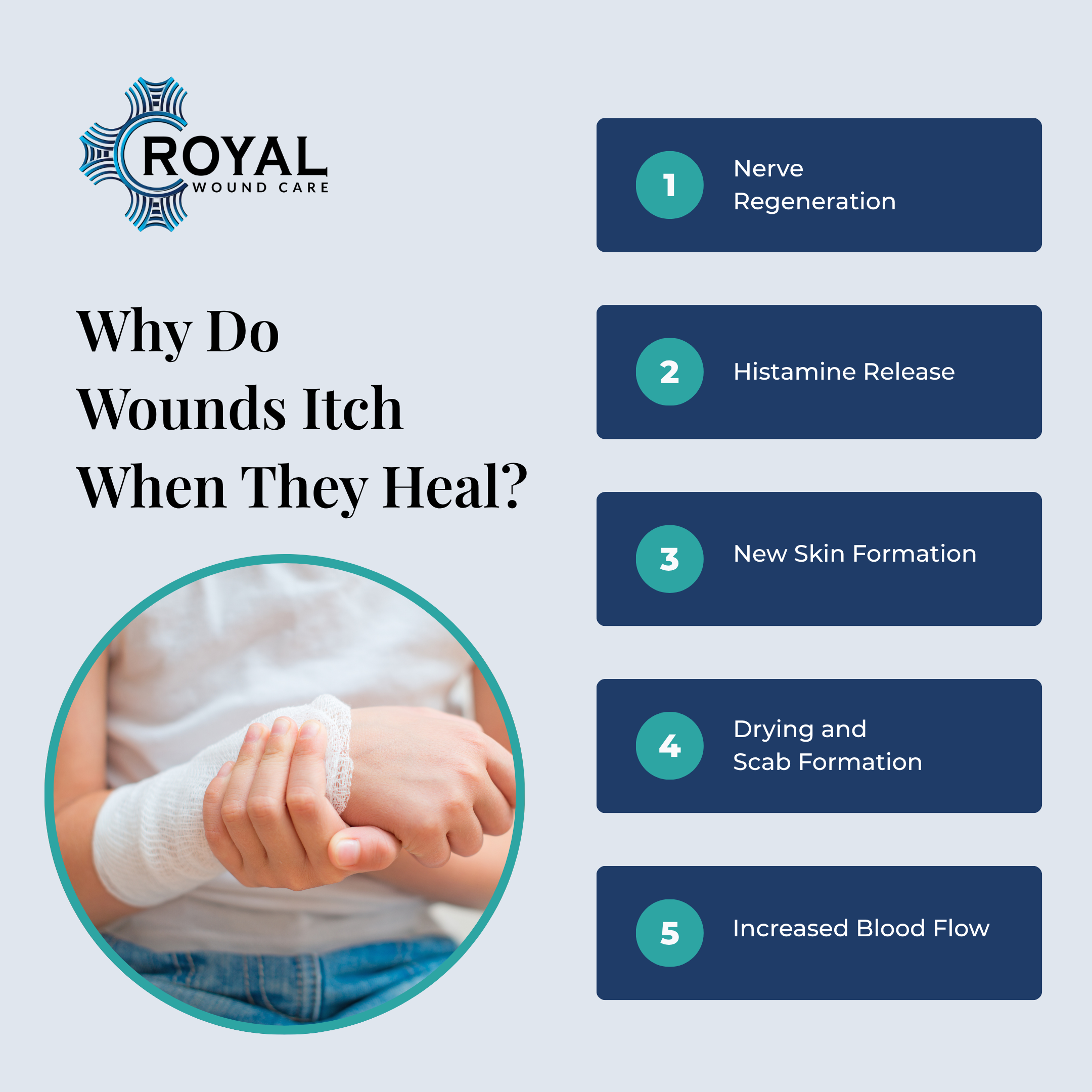
Nerve Regeneration
As damaged nerves regenerate, they don’t always send perfectly organized signals back to the brain. Because of this misfire, the brain may interpret pain signals as itching, tingling, or mild burning.
However, you don’t have to have a severe wound to experience this. Even minor cuts and abrasions can experience damaged nerves, as superficial sensory nerves run just beneath the skin. Fortunately, this sensation typically becomes less noticeable as the nerves continue to heal.
Related: Skin Substitutes for Wound Healing: What Patients Need to Know
Histamine Release
The immune system has a considerable role in wound healing. As part of that response, it releases histamines, a vital chemical messenger. Ultimately, this is essential for initiating the inflammatory response. The messenger acts as an alarm, dilating blood vessels and helping clear bacteria.
However, it’s through the process of expanding blood vessels and increasing blood flow that histamines stimulate nerve endings (C-fibers), sending electrical signals that the brain interprets as itching.
With this in mind, histamine release may also be related to an allergic reaction to adhesive, dressings, or topical medications. If itching becomes severe or spreads beyond the wound, it’s important to seek medical attention from a certified wound care specialist for personalized advice.
Related: How to Know If a Wound Is Infected and When to Seek Treatment
New Skin Formation
As fresh skin cells grow across the wound, the new tissue gradually tightens and matures. During this process, histamines trigger nerve endings, new collagen is pulled and stretched, and the skin can become tight or dry from scab formation.
More specifically, the mechanical tension of the skin shrinking to pull wound edges together often irritates nerve endings. Rather than simply being painful, however, histamine release and the regeneration of nerve fibers commonly produce an itching sensation. While uncomfortable, it’s often a positive sign that the wound is healing as intended!
Drying and Scab Formation
As the wound slowly dries, scabs naturally form to protect the underlying tissue. Although scabs serve an important purpose, they can also make the surrounding skin feel tight and irritated. More specifically, similarly to the processes mentioned above, histamines, mechanical tension, and sensitive nerve endings involved in scab formation result in an itching sensation.
Naturally, excessive dryness may also make itching more noticeable. This is a significant reason why healthcare providers recommend applying a cold compress and maintaining a proper moisture balance during recovery.
Related: How to Treat a Scalp Wound
Increased Blood Flow
During the healing process, blood vessels around the injury widen and dilate. They do this to facilitate better blood flow, helping deliver oxygen, nutrients, and white blood cells to repair damage. However, at the same time, the body continues to release histamines and cytokines.
Because both chemical messengers stimulate sensory nerve endings and the injury is already sensitive, it can enhance itchiness. Additionally, increased blood flow may make the area feel warmer, more sensitive, or itchier as healing progresses.
How to Stop a Healing Wound From Itching
It’s important to note that experiencing itching from a healing wound is generally normal. While you shouldn’t attempt to reduce itching entirely, there are ways to support healing and soothe itching without interfering with the body’s natural repair process.
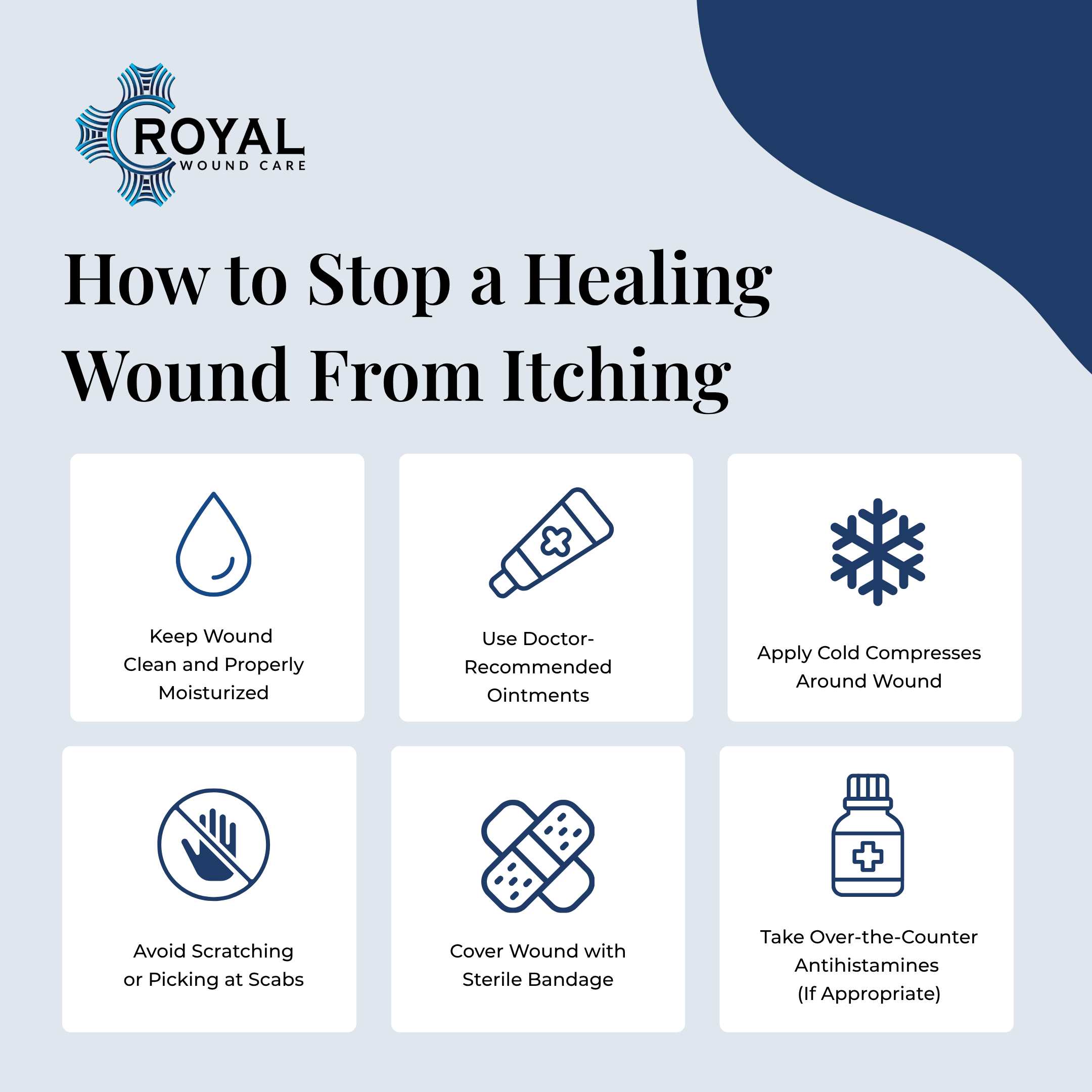
Keep Wound Clean and Properly Moisturized
Following your provider's wound care instructions is one of the best ways to support healing. And, in many cases, this involves cleaning the area with a mild soap when appropriate and maintaining proper moisture levels. We discuss this thoroughly in our guide, “Skin Prep for Wound Care: Best Practices for Proper Healing.”
However, avoid using harsh antiseptics unless directly advised by your wound care specialist. Products such as hydrogen peroxide can reduce the viability of skin fibroblasts and potentially delay healing.
Use Doctor-Recommended Ointments
If your healthcare provider recommends a specific antimicrobial ointment or dressing, use it as directed. In many cases, these products are designed to prevent infection, excessive dryness, and potential irritation. Ultimately, these are all essential for supporting healthy wound healing.
That said, avoid applying creams or ointments not prescribed by your healthcare provider. Some products may trigger irritation, allergic reactions, and introduce bacteria that may negatively impact or delay healing. When in doubt, always check in with your wound care specialist.
Related: Types of Foam Dressings and When to Use Each One
Apply Cold Compresses Around Wound
While it may be tempting to soak a healing wound for temporary relief, this isn’t always the best solution. Depending on the type of wound, where you are in the healing process, and how long the area remains submerged, excessive moisture can lead to skin maceration.
Instead, a cold compress placed around—not directly on—the wound for a few minutes may temporarily relieve itching and irritation. Always avoid placing ice directly onto healing skin, however, as extreme temperatures can damage new, sensitive tissue.
Related: Avoiding Common Wound Care Mistakes: Expert Advice
Avoid Scratching or Picking at Scabs
One of the hardest, yet most important parts, of healing is resisting the urge to scratch itching wounds. However, as your healthcare provider will strongly advise, avoid scratching, picking, or rubbing scabs and healing wounds. Not only can this delay recovery, but it can also reopen the wound, introduce harmful bacteria, and increase the risk of infection.
If itching becomes severe or difficult to tolerate, contact your healthcare provider for tailored medical attention. They know your recovery process best and can discuss safe options to reduce discomfort.
Related: When to See a Wound Care Specialist: Signs It’s Time to Get Expert Help
Cover Wound with Sterile Bandage
At some point, most people have heard that it’s best to let a wound “air out” for optimal healing. However, modern research indicates keeping a wound covered with dressings or bandages provides the optimal environment for successful healing. There are various reasons why this is important.
Primarily, dressings help maintain an ideal moisture balance, which can accelerate tissue and cell regeneration. Additionally, wound coverage protects healing skin from contaminants, which may delay healing and increase the risk of infection.
Related: How to Remove Gauze Stuck to a Wound Without Pain: Step-by-Step
Take Over-the-Counter Antihistamines (If Appropriate)
For some patients, an over-the-counter antihistamine may help relieve itching. However, these medications aren’t appropriate for everyone or for every case. More importantly, depending on the patient, antihistamines may interact with certain medical conditions or prescriptions. Before taking any antihistamines, always contact your healthcare provider or seek additional medical advice.
While it’s entirely common for healing wounds to itch, there are steps you can take to reduce discomfort and support recovery.
As a wound begins to heal, many patients experience persistent itching that may initially feel worrisome. However, generally, itching is a good sign! It indicates that the body is repairing damaged tissue, stimulating collagen, and encouraging scab formation. While it can be overwhelming at first, following the guidance in this post and from your healthcare provider can relieve anxiety and support optimal healing.
At Royal Wound Care, we’re committed to serving patients throughout the greater San Fernando Valley with patience, compassion, and board-certified care. Whether you’re navigating a complex chronic wound or interested in learning more about minor abrasions, visit our office or contact our team for personalized support.
Beyond patient care, Royal Wound Care also strives to support the next generation of SNFs and independent nurses. Learn more about our advanced educational certification opportunities and professional partnership to see how you can reduce hospitalizations, lower facility costs, and support patients through every stage of recovery.
