How to Recover Faster According to Wound Care Experts
How to Recover Faster According to Wound Care Experts
Whenever patients are navigating the wound healing process, one of the most common questions is: “How can I recover faster?” The truth is, wound healing isn’t always linear. For patients dealing with complex wounds in particular, such as diabetic foot ulcers and pressure injuries, slow healing, discomfort, and uncertainty are all common parts of recovery.
Ultimately, different types of wounds progress through the stages of wound healing at different rates. For example, a simple laceration will likely heal much quicker than a tunneling wound. Nonetheless, successful healing depends on the appropriate combination of proper wound care, infection control, and consistent medical guidance.
In this guide, we’re exploring how to recover faster according to the experts at Royal Wound Care. As one of the nation’s few board-certified wound care clinics, we make patient education, compassion, and comprehensive wound treatment cornerstones of our approach. To reflect this, we’ll discuss how long wounds take to heal, what helps speed up the process, and what you can do to encourage faster healing.
Whether visiting our West Hills office or reviewing our advanced educational resources online, we’re here to help you through the healing process—from diagnosis to recovery.
How to Recover Faster According to Wound Care Experts
Wound healing is about much more than stopping bleeding and making sure the wound is closed. Instead, successful recovery depends on factors such as adequate oxygen and nutrient delivery, proper blood flow, infection control, and healthy tissue regeneration.
Beyond this, every stage of the wound healing process directly affects mobility, comfort, and overall health. Not only can delayed healing feel overwhelming, but it also increases the risk of infection, complications, and prolonged discomfort. This is especially true for patients with underlying health conditions, such as diabetes or poor circulation. (Learn more in our guide, “Diabetes and Slow Healing Wounds.”)
This is where specialized, board-certified wound care becomes invaluable. Rather than focusing on the surface of a wound, specialists evaluate every factor influencing recovery. Through advanced wound care and personalized treatment plans, patients can experience a more predictable recovery timeline, faster healing, and fewer wound-related hospitalizations.
That’s the benefit of trusting Royal Wound Care, leaders in advanced healing. For SNFs and nursing facilities, learn how partnering with Royal Wound Care can transform the way you approach wound management.
How Long Does a Wound Take to Heal?
As we discussed in our post, “How Long Does It Take for a Wound to Heal?”, recovery doesn’t follow a one-size-fits-all approach. More specifically, wound healing time varies with the severity and depth of the injury, as well as the patient’s overall health. Minor wounds may close within days, whereas more complex wounds can take months to fully recover.
Generally, the healing timeline often looks like…
Minor Cuts and Abrasions: Several days to one week. Once you are able to stop the bleeding and skin begins repairing itself, new tissue forms relatively quickly.
Moderate Wounds: One to three weeks depending on severity. These injuries often require more attentive wound care to prevent infection and encourage healthy tissue growth.
Surgical Wounds: In most cases, two to six weeks. However, recovery varies depending on the procedure, patient’s overall health, and potential complications.
Chronic or Complex Wounds: Several weeks to several months. These wounds are often affected by poor circulation, reduced blood supply, and underlying medical conditions that may benefit from more advanced wound care approaches.
Most importantly, you are not alone in this process. For those with questions or concerns, we encourage you to contact the Royal Wound Care team. Or, for those in West Hills, Woodland Hills, Canoga Park, Calabasas, Chatsworth, or the San Fernando Valley, consider requesting an appointment with Royal Wound Care today.
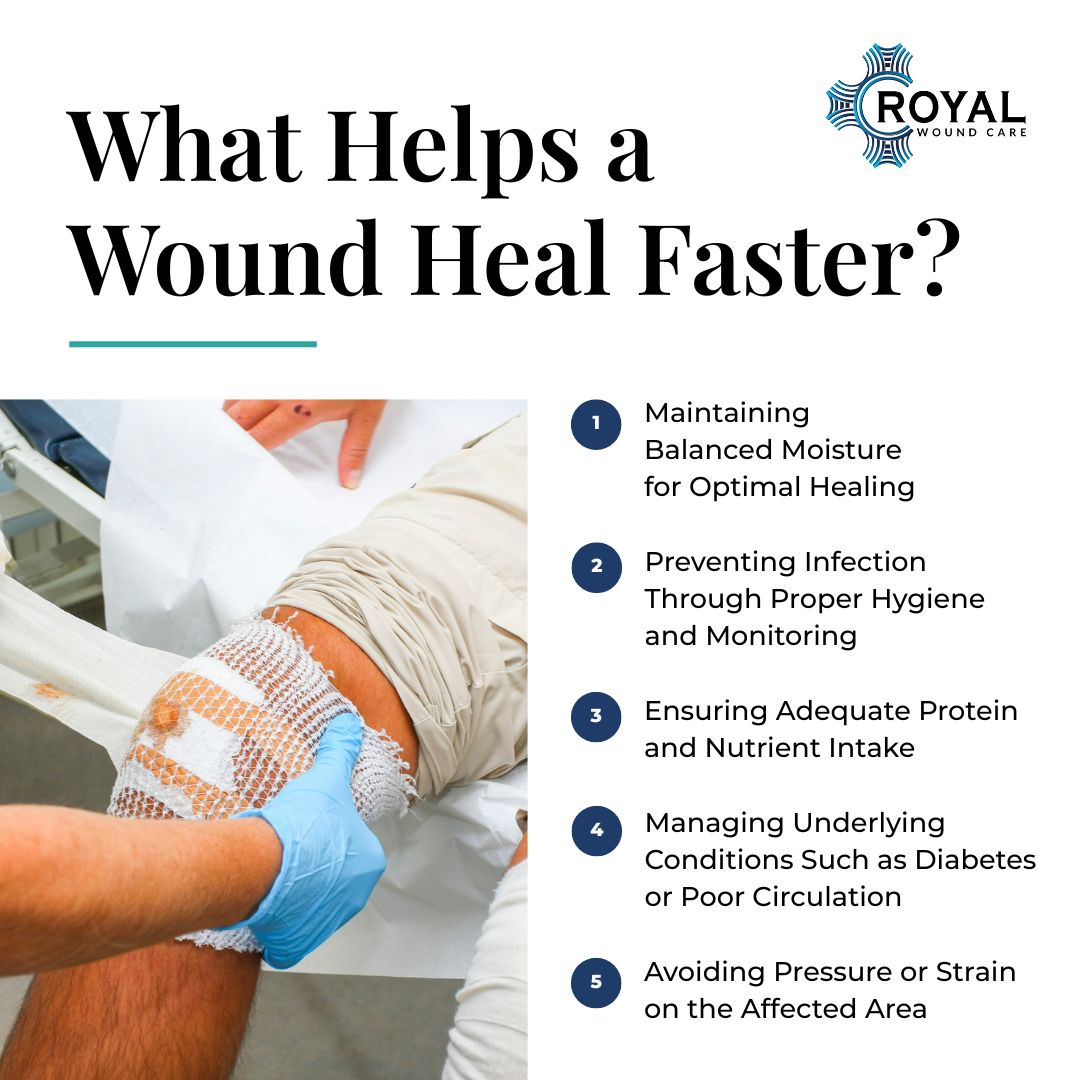
What Helps a Wound Heal Faster?
There isn’t one single shortcut that dramatically heals wounds faster. Instead, recovery depends on supporting the body’s natural repair process while minimizing anything that slows or delays it. From maintaining the proper wound environment to supporting your immune system, here are ways to encourage a more active recovery process:
Maintaining Balanced Moisture for Optimal Healing
At one point, it was believed that “airing a wound out” encouraged proper recovery. However, modern research has shown that a moist wound environment supports faster, more effective healing.
More specifically, maintaining a moist environment supports cell migration, encourages healthy tissue formation, and promotes the growth of new blood vessels necessary for oxygen and nutrient delivery. To support this process, many wound care specialists will recommend specialized wound dressings to maintain an appropriate moisture balance.
Related: Types of Foam Dressings and When to Use Each One
Preventing Infection Through Proper Hygiene and Monitoring
One of the biggest obstacles to wound healing is infection. Bacteria can delay tissue repair, increase inflammation, and significantly extend recovery time. Fortunately, however, there are various ways board-certified wound care specialists minimize this risk and potential complications.
For example, proper hygiene, regular dressing changes, and careful monitoring for redness, swelling, warmth, and odor are standard in reducing infection risk. Beyond this, it’s essential for patients to seek care promptly whenever any concerns arise. The quicker you act, the more likely you are to prevent potentially life-threatening complications.
Related: How to Know If a Wound Is Infected
Ensuring Adequate Protein and Nutrient Intake
Nutrition plays a significant role in muscle, tissue, and enhanced wound healing. As the body begins the healing process, it requires a higher intake of calories, protein, vitamins, and minerals. Think of these as the building blocks for repairing damaged tissue, each playing a dedicated role in faster recovery.
More specifically, here’s how each nutrient impacts the healing process:
Protein: Supports tissue building, muscle growth, and the growth of new blood vessels through amino acids
Carbohydrates and Fats: Provide the energy to fuel the demanding healing process
Vitamins: Stimulate the creation of new skin cells, support the formation of red blood cells, and protect recovering cells
Zinc: Helps control immune response, encourages cell proliferation, stimulates collagen production, and breaks down damaged tissue
From muscle recovery to reducing the risk of injury during healing, nutrition and wound healing go hand in hand.
Managing Underlying Conditions Such as Diabetes or Poor Circulation
Underlying conditions, such as diabetes and vascular disease, can directly impact how quickly (and efficiently) a wound heals. For example, reduced blood flow, often seen in peripheral artery disease, can limit the oxygen and nutrients reaching the wound bed. Similarly, diabetes can interfere with the immune system’s ability to fight off bacteria.
Managing these conditions alongside professional wound care specialists gives your body the best opportunity to heal effectively. More specifically, board-certified physicians can treat hypertension, help manage blood sugar levels, and recommend nutritional management—all of which are essential for reducing more severe, long-term complications.
Related: Diabetic Foot Ulcer Treatment in West Hills, California
Avoiding Pressure or Strain on the Affected Area
Repeated pressure or strain on injured areas disrupts the body’s natural inflammatory healing process. More specifically, both factors can create new tears in the skin, restrict blood flow, result in extensive tissue damage, heighten sensitivity, and delay recovery. This is especially relevant for pressure injuries and wounds located on bony or weight-bearing areas.
To avoid further damage, it’s essential to protect the affected area and follow provider recommendations. In many cases, this involves applying padded dressings, using specialized offloading devices, and incorporating Negative Pressure Wound Therapy into treatment. All are excellent approaches to supporting healthy tissue repair while reducing unnecessary stress to the wound.
How to Recover Fast From Wounds: Tips From Royal Wound Care
Healthy habits and at-home care can absolutely support recovery. However, some wounds require specialized treatment and board-certified care to heal efficiently. Most commonly, this includes diabetic foot ulcers, surgical wounds with complications, pressure injuries, and chronic wounds.
At Royal Wound Care, our goal is to identify what’s preventing your wound healing and develop a personalized treatment plan that supports recovery. Here’s what this often looks like:
Comprehensive Wound Evaluation
Successful treatment starts by understanding the full picture. However, this isn’t simply analyzing blood loss and wound closure. Instead, Royal Wound Care specialists will carefully assess the wound while considering factors that influence healing behind the scenes.
This includes evaluating…
Wound depth
Surrounding tissue health
Blood supply
Circulation
Signs of infection
Underlying medical conditions
By identifying beyond the surface of the wound, we can create a treatment plan specifically designed to your unique needs. Because when it comes to optimal healing and recovery, wound care shouldn’t follow a one-size-fits-all approach.
Related: Difference Between Wound Care Certificate-Trained and Board-Certified Providers
Personalized Treatment Plan
No two patients heal exactly alike. While they both may be managing chronic wounds, they can require entirely different treatment strategies. Ultimately, medical history, circulation, activity level, age, and overall health largely contribute to the treatment efficacy.
This is often why our specialists collaborate with other healthcare professionals, such as physical therapists, doctors, and even plastic surgeons, depending on the patient and the severity of the wound. Approaching healing as a multi-step, collaborative process rather than with a standard, generic treatment plan is what moves the needle in long-term recovery.
Related: When to See a Wound Care Specialist: Signs It’s Time to Get Expert Help
Advanced Wound Care Treatments
Some wounds, such as minor abrasions or simple surgical incisions, heal effectively with dressing changes post-workout, after spending time outdoors, or at the end of the day. In other words, they require little to no advanced approaches or consistent monitoring. Others require a combination of evidence-based therapies to support tissue repair while addressing underlying factors that interfere with recovery.
A patient’s condition, needs, and comfort are the driving forces behind wound care treatment. And ultimately, the specialist will select each intervention based on specific circumstances—not on a single, universal approach.
Related: When to Go to Urgent Care vs. ER for Wound Care
Ongoing Monitoring Throughout Recovery
Healing doesn’t end the moment you step out of your wound care specialist’s doors. It’s a consistent, dynamic process that evolves as you continue recovering. As your wound changes, your treatment plan should change alongside it.
Routine follow-up appointments allow the Royal Wound Care team to continuously monitor the healing process, identify potential concerns early, and make adjustments whenever necessary. Whether a wound responds quickly or requires additional advanced approaches, consistent monitoring helps ensure that every stage of recovery moves in the right direction.
Education That Supports Long-Term Healing
At Royal Wound Care, we strongly believe that education is one of the most important steps in a comprehensive treatment approach. This not only encourages patients to care for their injury between treatments but also ensures they know how to do so.
Our team consistently provides practical guidance on dressing changes, pressure management, activity modifications, nutrition, and the recognition of early signs of infection. With this, patients learn to rely on strategies that protect newly healed tissue, improve circulation, and reduce the risk of future complications.
Most importantly, by combining medical treatments with patient education, we empower those seeking care to actively participate in their recovery. At Royal Wound Care, we don’t believe patients have to take a back seat to their own healing. Instead, we equip them with the tools necessary for continuous, attentive care—even at home.
The goal isn’t necessarily to heal faster; it’s to heal safer and more efficiently.
When you’re managing wounds, particularly complex cases, we understand how quickly this can feel overwhelming. However, it’s important to keep in mind that each wound—and person—follows a unique timeline. To recover more quickly, support your body’s natural healing process through proper wound care, infection prevention, and timely medical intervention. Your wound won’t disappear overnight, but you will have the confidence to manage it.
At Royal Wound Care, everything we do is inspired by a patient-first approach. Because we don’t just want to be your providers, we want to serve as your compassionate advocates for safer, smoother, and more optimal healing.
Patient care isn’t the only thing we’re aiming to raise the standards in. For those interested, review our partnership and advanced educational certification and credit opportunities. The future of healing starts here.
