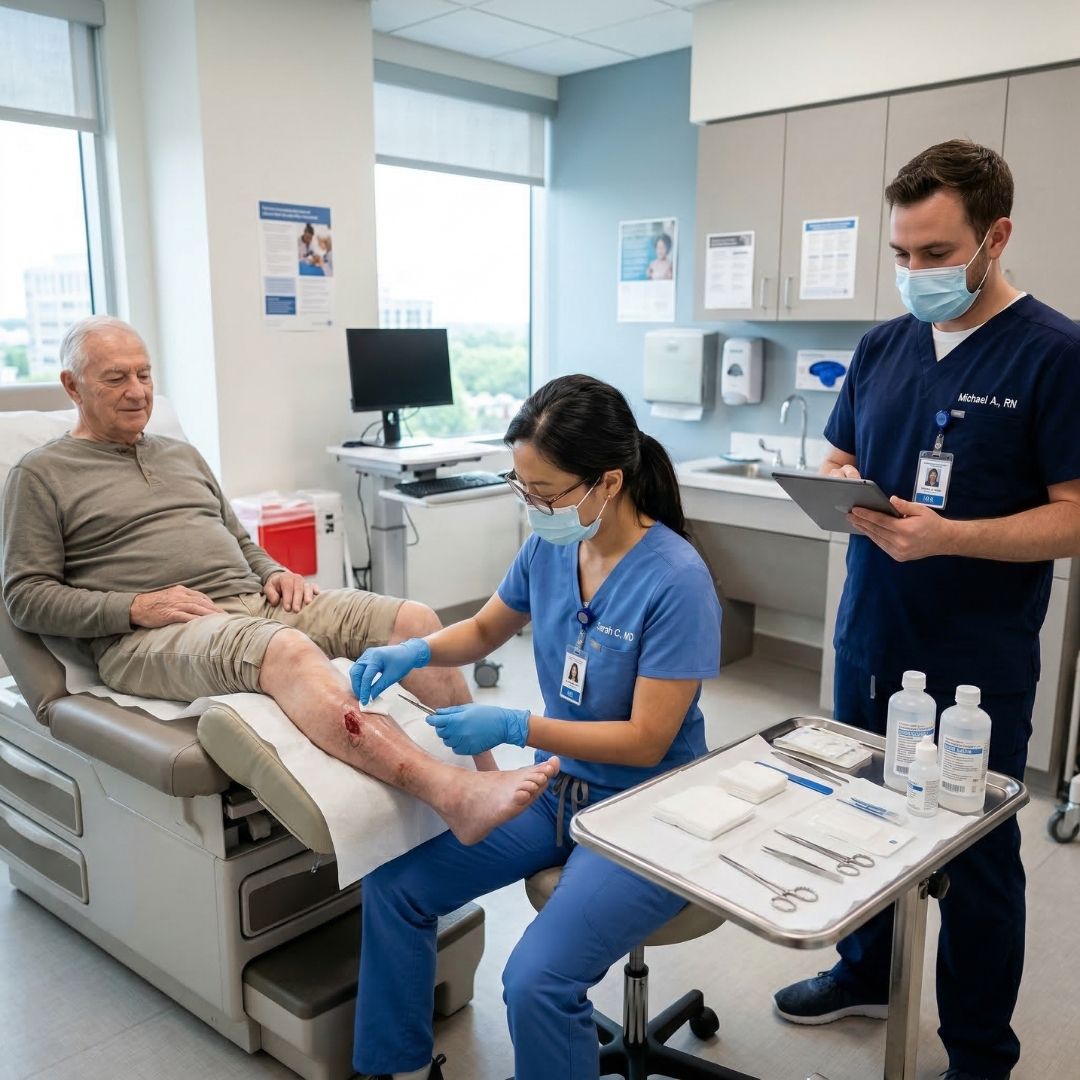
Difference Between Wound Care Certificate-Trained and Board-Certified Providers
Difference Between Wound Care Certificate-Trained and Board-Certified Providers
When seeking wound care treatment, especially for complex or chronic wounds, credentials truly matter. Wound care is a specialized, multidisciplinary field, and not all healthcare professionals carry the same level of education or expertise. Therefore, understanding the difference between wound care certificate-trained and board-certified providers can help patients, physicians, and healthcare teams make more informed care decisions.
While the terms are often used interchangeably, they represent different levels of education, examination, and professional oversight. Some providers complete a short, technical certification program, whereas others pursue national accreditation and advanced speciality expertise.
In this post, we will explore the distinction between wound care certificate-trained providers and board-certified providers. We will also discuss differences in the scope of practice, clinical expertise, and credentialing considerations. By understanding these differences, professionals can gain clearer insight into potential career opportunities—and patients can evaluate provider qualifications more effectively.
For additional information, we encourage you to read: The Difference Board-Certified Physician Leadership Makes in Nurse Wound Care Education
Difference Between Wound Care Certificate-Trained and Board-Certified Providers
Chronic wounds affect approximately 10.5 million Americans—and that number continues to grow. This rise is often a result of our aging population, increased diabetes rates, and a higher prevalence of slow-healing ulcers. Ultimately, however, these complex cases require specialized assessment and management to improve healing times and reduce infection rates.
Properly understanding credentials helps ensure patients are referred to the most appropriate level of care, supporting timely treatment and improved healing outcomes. Naturally, this is why it’s essential to gain clearer insight into the differences in certificate-trained and board-certified providers.
Below, we will discuss each role, the different education and training requirements, and the scopes of practice.
What Is a Wound Care Certificate-Trained Provider?
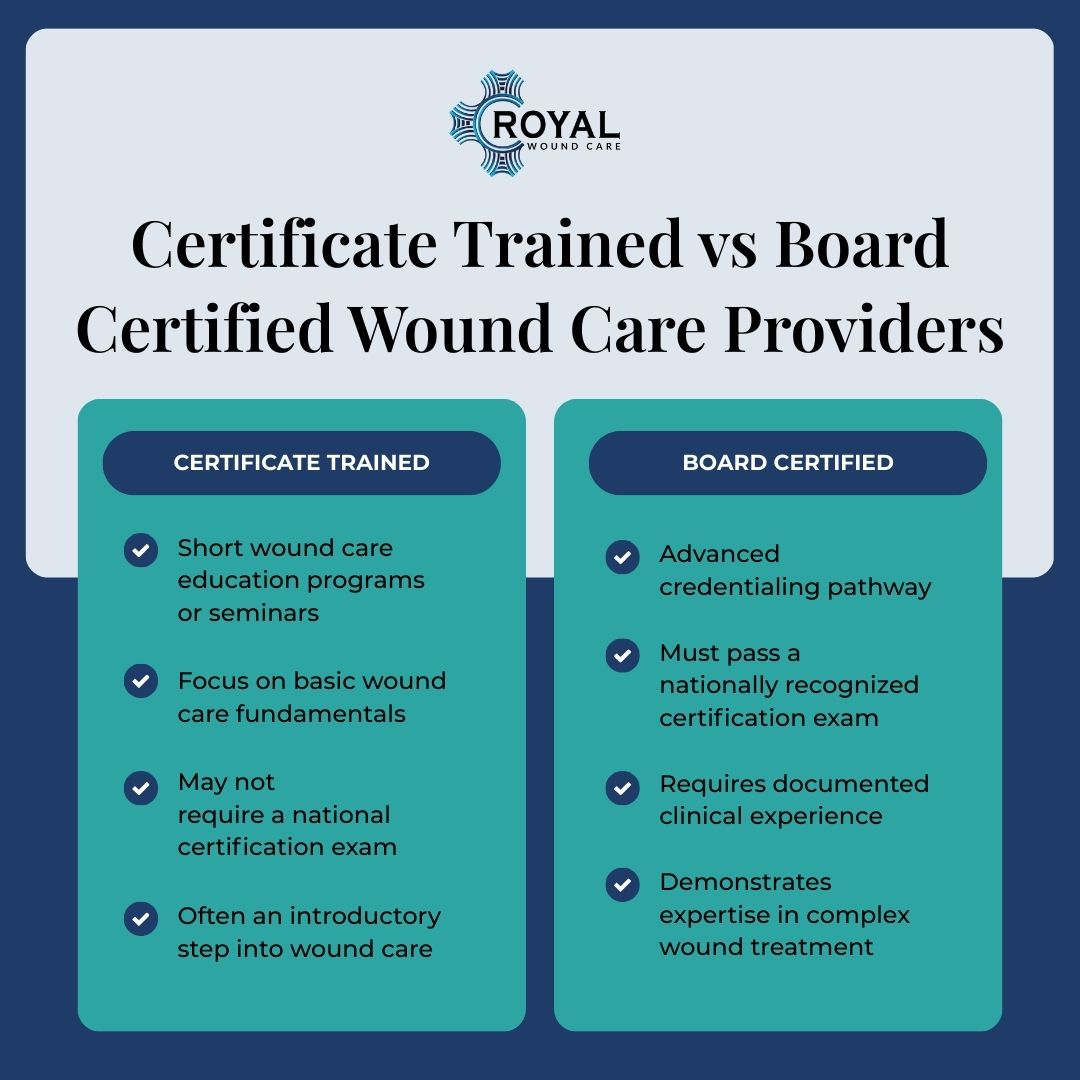
A wound care certificate-trained provider is a licensed healthcare professional who has completed a wound care education course or training program. More specifically, it’s a clinical demonstration that the provider has additional training in wound care. These programs often cover topics such as:
Basic wound assessment
Infection control principles
Dressing selection
Pressure injury prevention
Documentation and care planning
Professionals who pursue this level of certification often include registered nurses, physical therapists, and providers who maintain a full and unrestricted professional license. The training can range from short continuing education seminars to multi-day programs, depending on the content discussed.
Additionally, not all certification programs require a standardized national examination. Because of this, it’s a widely accessible introductory step into the field of wound care.
Related: How Do You Become a Certified Wound Care Nurse?
What Is a Board-Certified Wound Care Provider?
A board-certified wound care provider is a licensed healthcare professional who has completed a more advanced credentialing pathway, demonstrating specialized expertise in treating both acute and complex wounds. Compared to certificate-trained providers, they must meet eligibility requirements, clinical expertise, and successfully pass a nationally recognized certification exam.
Board-certified wound care programs cover topics such as:
Wound healing physiology
Diagnostic evaluation
Debridement methods
Infection control
Understanding causes of complex wounds
Application of advanced modalities
Professional and ethical requirements
Most commonly, licensed healthcare professionals seeking board certification are doctors, nurses, or therapists. They must abide by the strict criteria certification boards establish to maintain credibility.
Related: What Does It Mean to Be Board-Certified in Wound Care?
Education and Training Requirements Comparison
The difference between certificate-trained and board-certified wound care physicians significantly relies on the scope, level, and depth of their education. Below, we will further explore how requirements differ:
Certificate Trained
Certificate-trained providers typically complete short-term education programs or seminars. These courses are designed to provide an introductory level of knowledge on wound care fundamentals. Physicians seeking wound care certification must meet the following qualifications:
An active, unrestricted professional license (RN, LPN, PT, etc.)
At least 2+ years of clinical wound care experience
Variable curriculum standards and varying minimal clinical hour requirements
In some cases, a bachelor’s degree or higher
These courses are often short, lasting a few days to a couple of weeks. Additionally, the required education and experience vary by certification board. For example, to be considered Wound Care Certified (WCC) through NAWCO, you must have at least 2 years of experience. This differs from the requirements of certification boards such as the American Board of Wound Management (ABWM) or the National Alliance of Wound Care and Ostomy (NAWCO).
Education and certification pathways for certified-trained wound care physicians include:
Wound, Ostomy, and Continence Nursing Certification Board (WOCNCB)
Wound Care Nurse Certification (WCN-C)
These courses provide valuable, specialized knowledge. However, in many cases, they are generally considered entry-level exposure to wound management.
Board Certified
Board-certified wound care providers follow a much more structured credentialing process that verifies both education and real-world clinical expertise. The key differences lie in documented experience, education courses, and nationally recognized accreditation. Providers interested in board certification must meet the following criteria:
2–3+ years of clinical wound care experience
Completion of formal wound care education
Passing a standardized national certification exam
Ongoing recertification
Valid, active, unrestricted professional license (MD, DO, DPM, NP, PA, RN, PT)
Board-certified providers undergo a more rigorous process to ensure they have the necessary specialized knowledge to treat complex, slow-healing wounds. This is different from certificate-trained providers, who understand wound care basics. Board certification validates advanced skills, professional standards, and compliance with regulatory requirements.
Education and certification pathways for board-certified wound care physicians include:
American Board of Wound Management (ABWM), offering 3 main certifications: Certified Wound Care Associate (CWCA), Certified Wound Specialist (CWS), and Certified Wound Specialist Physician (CWSP)
CWS Candidate Program (ABWM) available for those with less than 3 years of experience
For clinicians interested in pursuing advanced credentials, understanding the pathway to specialized certification is essential.
Scope of Practice Differences
Both certified-trained and board-certified wound care professionals assess, manage, and treat a variety of diverse wounds. However, education requirements and accreditation standards outline specific boundaries of each career path. Below, we will explore the differences between how each specialist practices:
Both May Legally Provide Wound Care
Both certificate-trained and board-certified wound care physicians must hold a valid, unrestricted professional license. Therefore, both can legally provide wound care so long as they remain in their scope of practice.
For example, a certificate-trained physician may successfully assess and diagnose wounds. A board-certified physician, on the other hand, can apply advanced treatments and develop an evidence-based treatment plan. Together, they can comprehensively treat patients, ensuring they receive optimal, professional care.
Board-Certified Providers Often Manage Complex Wounds
Many clients with complex, slow-healing, or chronic wounds require a specialized, multidisciplinary approach. This often includes specialized dressings, debridement, and possible advanced treatments such as skin grafts or UltraMIST® Therapy.
Treatment of this kind requires a board-certified physician. They have the skills necessary to manage underlying conditions, perform advanced interventions, and lead care teams for full, comprehensive strategies.
Related: Types of Foam Dressings and When to Use Each One
Advanced Therapies Require Specialized Training
Many advanced treatments require precise application and evidence-based practices to both prevent infection and lower complication rates. More specifically, many advanced modalities include:
Biological skin substitutes
Tissue grafting procedures
Advanced negative pressure wound therapy
Hyperbaric oxygen therapy
Board-certified wound care providers can assess underlying complications, recognize nuances, and apply the latest research.
Clinical Expertise and Patient Outcomes
Board certification may correlate with advanced diagnostic capability.
The level of credentialing a provider holds directly influences what injuries they can or cannot treat. Because board-certified providers often manage complex wounds, many treatment plans incorporate advanced modalities that require specialized knowledge and clinical judgment.
Certified-trained providers, while they have basic wound care knowledge, do not yet have the proficiency necessary for advanced diagnostics. Board certification supplies physicians with the skills and tools they need to effectively diagnose, treat, and assess wounds—especially if they aren’t entirely obvious at first glance.
Related: When to See a Wound Care Specialist: Signs It’s Time to Get Expert Help
Complex wound etiologies require comprehensive evaluation.
Conditions such as diabetic ulcers, pressure injuries, and vascular wounds require comprehensive evaluation. Moreover, many factors contribute to proper diagnosis and evaluation. Board-certified wound care specialists are trained to assess:
Circulatory status
Infection risk
Offloading needs
Nutritional status
System disease impact
We’ve covered many of these topics before, which you can learn more about in “Nutrition and Wound Healing” and “Wound Care for Diabetic Foot Ulcers.” However, efficiency and precision are crucial for ensuring patients receive appropriate, timely care.
Board-certified specialists often lead multidisciplinary coordination.
Wound care treatment generally requires collaboration across multiple specialties. While certified-trained providers gain a basic understanding of multidisciplinary approaches, board-certified wound care physicians receive explicit training in coordinating multidisciplinary wound care.
They often communicate among surgeons, primary care physicians, endocrinologists, and rehabilitation teams, ensuring each patient receives comprehensive care. This approach is essential because it streamlines treatment plans, enhances patient safety, and adheres to evidence-based practices.
Regulatory and Credentialing Considerations
Credentialing requirements vary across healthcare settings. Generally, many organizations recognize the value of advanced certifications and continuing education. However, salaries, leadership roles, and professional advantages differ depending on experience and expertise.
Hospitals and wound care centers may require board certification for medical director roles.
Many hospitals and wound care centers prefer or require board certification, particularly for medical director roles. Board-certified providers have extensive expertise in handling real, complex cases. Because of this, they’re able to apply evidence-based care more effectively, improving both patient outcomes and program quality.
Visit our page on partnering with Royal Wound Care to learn more about why board certification matters. Here, we discuss benefits such as improved healing times, lower infection rates, fewer wound-related rehospitalizations, and lower facility costs.
Insurance panels may differentiate credential levels.
When a provider joins an insurance panel, the insurer often considers factors such as education, licensure, certifications, and board status. These credentials then influence factors such as:
Eligibility to join networks
Scope of services they can bill for
Reimbursement rates
Whether they can serve as a primary treating provider or in a supporting role
In terms of certification standards, one provider isn’t universally “better.” However, insurance policies and credentialing requirements categorize providers differently based on their qualifications. As a result, board-certified specialists receive more sufficient panels as their credentials demonstrate a higher level of expertise, leading to improved outcomes and reduced treatment costs.
Accreditation bodies may prefer board-certified providers in leadership positions.
Several organizations establish accreditation and credentialing standards across healthcare. Examples include The Joint Commission, the National Commission for Certifying Agencies (NCCA), the American Nurses Credentialing Center (ANCC), and the Magnet Recognition Program.
Together, these organizations emphasize structured clinical leadership, ongoing education, and clearly defined standards when evaluating healthcare teams. Additionally, these requirements maintain high clinical standards across the field—standards that board-certified leaders already obtain.
When Is Certificate Training Appropriate?
Certificate-level wound care education remains extremely valuable in many clinical contexts. In fact, many healthcare professionals begin their wound care journey through certificate programs. The information learned in these courses is essential for understanding the basic principles within the field. Certificate training can be appropriate for:
General practitioners expanding their wound care knowledge
Registered nurses seeking foundational wound care education
Physical therapists involved in wound care rehabilitation
Professionals obtaining entry-level exposure before pursuing advanced careers
For many, certificate training acts as a stepping stone toward a more advanced speciality. Additionally, this can be extremely rewarding for learning the skills, expertise, and tools necessary for further success.
When Board Certification May Be Recommended
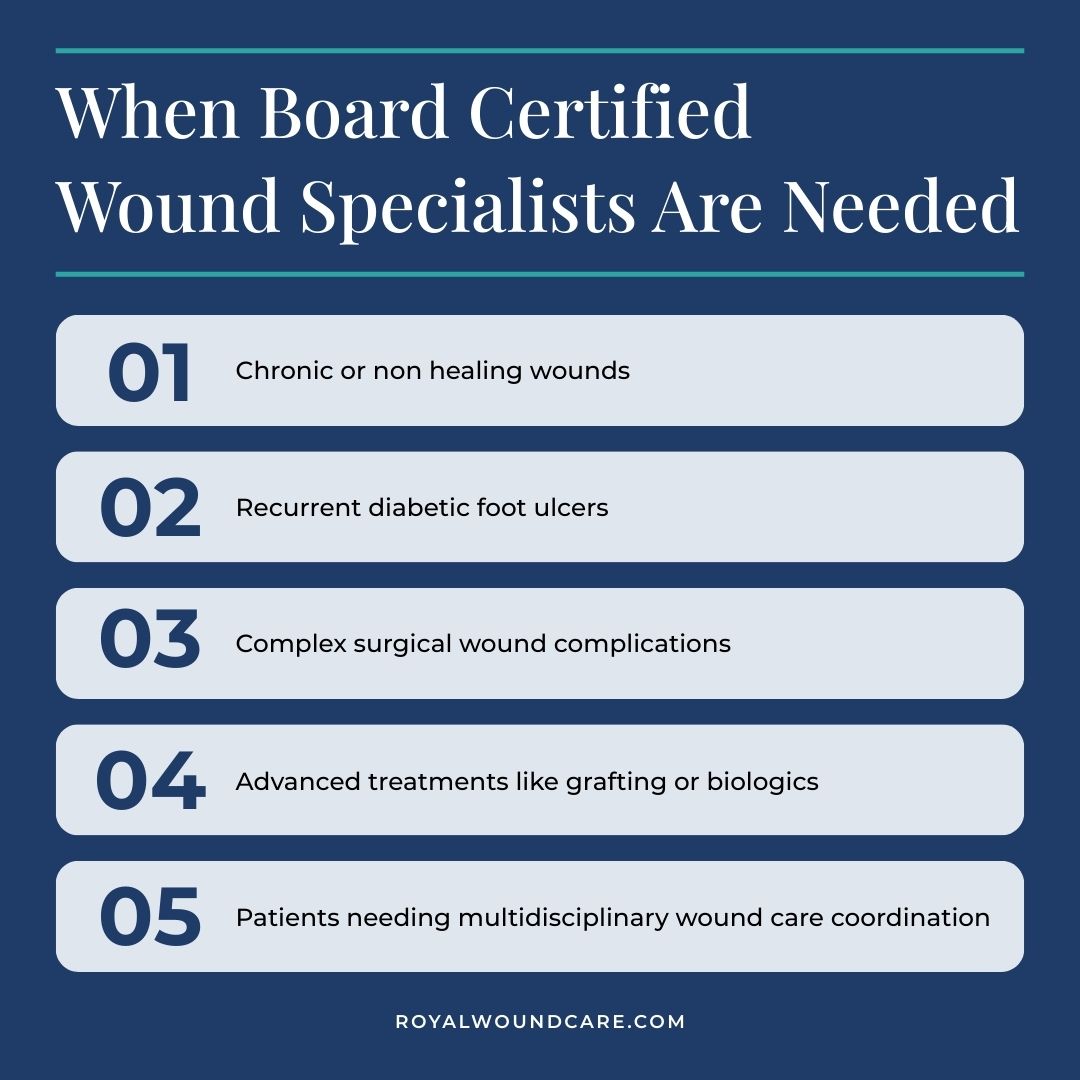
Board-certified wound specialists are often recommended for managing complex, persistent, or slow-healing wound conditions. With years of prior clinical experience, evidence-based education, and real-life injury management, board certification is invaluable in the field.
Situations that may benefit from a board-certified wound care provider include:
Chronic, non-healing wounds
Recurrent diabetic foot ulcers
Complex surgical wound complications
Advanced therapies such as grafting or biologics
Patients requiring multidisciplinary wound care coordination
Both certificate-trained and board-certified professionals are essential to the field of wound care.
While certificate-trained and board-certified wound care providers operate at distinct levels of the specialty, both are crucial to the overall success of patient recovery. More often than not, early certification demonstrates dedication to continued education and high standards of patient care. From there, board certification reflects a more advanced level of clinical training, evaluation, and leadership.
At Royal Wound Care, we aspire to set the standard through board-certified expertise. Through advanced modalities, compassionate support, and medical expertise, every patient receives personalized, dedicated care—beginning with a level of care provided by a board-certified physician.
For additional information regarding SNFs, clinics, and independent nurses, we encourage you to review our educational opportunities and professional partnerships. We lead by example, achieving lower infection rates, improved healing times, and fewer wound-related hospitalizations. Contact the team at Royal Wound Care to learn more about how you can advance your career or facility today.
