
Vascular Disease and Wound Healing
When Circulation Is Compromised, Healing Slows—We Help Reverse That.
At Royal Wound Care, we specialize in treating wounds complicated by vascular disease—particularly those that stem from poor arterial or venous blood flow. These wounds don’t just need dressing changes—they need advanced, proactive care that targets the root cause.
Our board-trained clinicians treat vascular-related wounds directly at the bedside, ensuring patients receive high-quality care without needing to leave their facility.
Find Wound Care Near You
If you or a loved one is struggling with a wound that won’t heal, a Royal Wound Care Wound Care Center can help. Since there is no need for a referral, your treatment is only a click and call away.

The Vascular Connection
When circulation is impaired, the body struggles to deliver oxygen and nutrients needed for tissue repair.
This leads to:
Chronic, non-healing wounds (especially on legs, ankles, and feet)
Increased infection risk
Greater likelihood of hospitalization or even amputation
Without proper vascular assessment and timely wound care intervention, small ulcers can quickly become life-altering medical emergencies.
Our Wound Care Model for Vascular Disease
Individualized Treatment Protocols

Advanced Therapies at the Bedside

Collaborative, Multidisciplinary Care

Real-Time Documentation & Compliance

Want to Learn More About Vascular Wound Care Solutions?
If your facility is treating patients with chronic wounds tied to poor circulation, early intervention can mean the difference between healing and hospitalization
Our team is here to help you:
Reduce wound-related hospitalizations
Prevent avoidable amputations
Improve outcomes with bedside vascular care
Stay fully compliant with wound documentation standards
Get a personalized care plan, ask questions, or learn more about how Royal Wound Care can help you heal faster and more comfortably—right where you are.

Interested in Partnering with Royal Wound Care?
Let’s explore how we can bring expert bedside wound care to your facility—improving outcomes, reducing readmissions, and taking the burden off your staff.
When to Go to Urgent Care vs. ER for Wound Care
When to Go to Urgent Care vs. ER for Wound Care
Wounds can be unpredictable, ranging from minor cuts that can benefit from a simple bandaid to deeper injuries that require immediate attention. Ultimately, the challenge isn’t treating the wound itself—modern medical care is extremely capable! It’s understanding what warrants an urgent care trip or an emergency room visit for proper, effective treatment.
When injuries first happen, many patients have the same questions: “Should I visit an urgent care clinic?” “Is this wound worth visiting the emergency room?” “Should I simply just call a nurse line?” In stressful moments, that decision can feel overwhelming. However, choosing the appropriate level of care can impact everything—from how quickly you receive treatment to what interventions are available.
To help you act quickly and confidently, we’re breaking down when to go to urgent care versus the ER for wound care. We’ll also discuss what each facility is, what they typically manage, and how you can decide which is most appropriate for your situation.
As one of the nation’s few board-certified wound care clinics, Royal Wound Care is proud to support both the San Fernando Valley community and individuals looking for more information online. Through our trusted educational content and West Hills office, we aim to provide expert-level guidance to support your wound-healing process.
When to Go to Urgent Care vs. ER for Wound Care
With today’s advanced wound treatments and widely accessible board-certified wound care, many injuries are easily, safely, and successfully treatable. However, where you go to receive care matters. Wound severity can escalate quickly.
One of the most common mistakes we see in patient care is the uncertainty about ER vs. urgency care treatment. For example, many feel as if the emergency room (ER) is the most practical option for minor wounds and shallow cuts. Others delay seeking emergency medical treatment because they aren’t sure of wound severity.
It’s not that one facility is less capable than the other—they’re simply designed to treat different things. And understanding this can make a significant difference in how quickly and effectively you receive treatment.
Below, we’ll discuss the difference between urgent care and emergency care settings. With this information, you’re better equipped to make a faster, safer decision when every minute matters.
Related: What Does it Mean to be Board-Certified in Wound Care?
What Is Urgent Care Wound Care?
Urgent wound care centers are designed to treat non-life-threatening injuries that still require prompt medical attention. Ultimately, these facilities bridge the important gap between basic first aid and emergency medical care.
When you seek medical attention from an urgent wound care center, you can expect specialists to:
Clean and disinfect wounds
Remove debris from the injury site
Close cuts with stitches, staples, or adhesive strips
Dress and bandage injuries
Evaluate for infection risk
Provide tetanus guidance when appropriate
Recommend follow-up medical care if necessary
These centers commonly manage minor to moderate wounds that still require professional evaluation and treatment, but do not involve signs of severe trauma or immediate, life-threatening instability.
Does Urgent Care Do Wound Care?
Yes! A majority of urgent care centers treat a wide range of minor to moderate wounds—both through scheduled appointments and walk-in visits. Injuries such as shallow cuts, minor burns, uncomplicated lacerations, puncture wounds, animal bites, and foreign object removal warrant an urgent wound care visit.
This is because, in many cases, these injuries are not life-threatening and don’t often require the advanced resources or hospital-based intervention associated with emergency room care. More specifically, many specialists will assess the wound, determine the risk of infection, clean the area thoroughly, and address the next steps. It’s simple, convenient, and, typically, much quicker than ER visits for less severe injuries.
Below, we will discuss specific cases in which a patient would benefit more from urgent care clinic services. However, always contact your physician or trusted specialist for specific guidance.
Related: How to Treat a Laceration: Proper Wound Care and Healing Tips
When to Go to Urgent Care for Wound
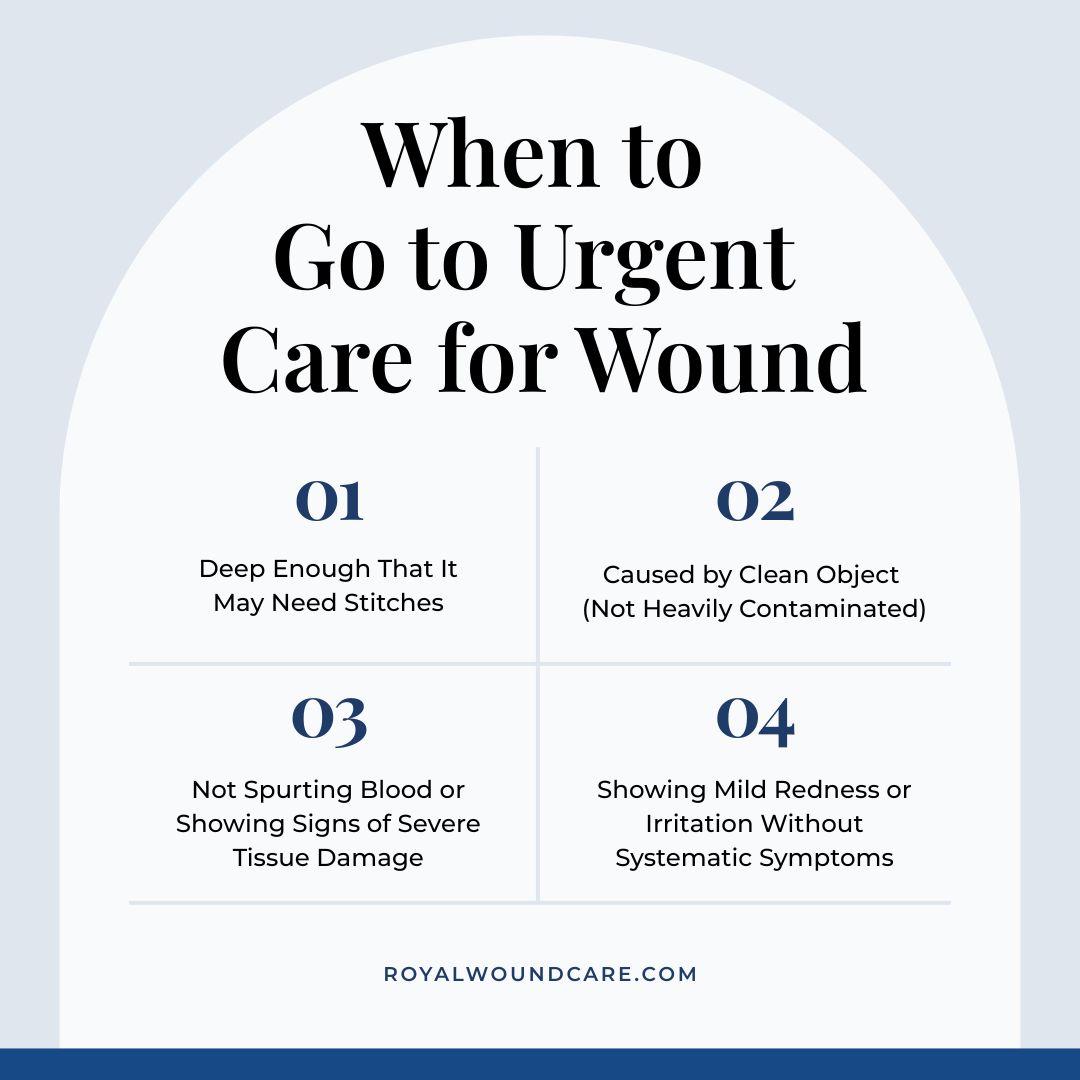
Deep Enough That It May Need Stitches
If a wound appears deeper than a surface scratch and may require closure, urgent care centers can absolutely handle this—so long as you have been able to control bleeding. Physicians will generally clean the wound bed, administer localized anesthesia, and apply stitches, skin glue, or adhesive strips.
However, as we mentioned earlier, determining wound severity isn’t always easy, especially in high-stress situations. To ensure you can control bleeding, use a clean cloth and apply steady, firm pressure. If it doesn’t stop within 10 minutes, a higher level of care may be necessary.
If you’re unsure about how this process works, visit our patient-focused guides: “Dissolvable Stitches Healing Stages” and “When Should Sutures Be Removed?” Both resources walk you through what to expect, helping you feel prepared and confident during treatment.
Caused by Clean Object (Not Heavily Contaminated)
Cuts caused by clean objects generally don’t pose an immediate risk of infection. In most cases, this includes kitchen knives, broken glass, or straight-edged scissors. These are items that lack the rust, debris, or dirt that can enter the injury and introduce external harmful bacteria.
In any case, urgent care clinics routinely sterilize, clean, and debride wounds. We mention this to note that even if the injury source was mildly dirty, your physician will assess the contamination risk and thoroughly clean the area.
Related: Caring for Your Wound
Not Spurting Blood or Showing Signs of Severe Tissue Damage
Urgent care may be the most appropriate option if an injury does not expose excess fat, muscle, tendon, or bone. In these cases, the wound is often more straightforward, requiring simple, standard procedures such as irrigation, stitches, and protective dressings.
Beyond this, it’s important that you’re able to actively and effectively control bleeding. Just as we mentioned earlier, apply a clean cloth with firm pressure and ensure the wound stops bleeding within 10–15 minutes. Conversely, an injury that is spurting blood indicates an arterial bleed, which can become extremely severe within minutes.
Showing Mild Redness or Irritation Without Systemic Symptoms
Some wounds develop mild redness or irritation, primarily due to inflammation. And this isn’t always a warning sign! In fact, it typically means that your immune system is working properly, increasing blood flow to the area to repair damaged tissue.
However, if that redness becomes more pronounced, starts spreading, or feels increasingly warm and painful, urgent care can be a reasonable first step. This is particularly true if you’re not experiencing systemic symptoms, such as fever, chills, wound odor, or severe swelling.
Related: What Does a Healing Wound Smell Like? Understanding Odors
Does Urgent Care Stitch Wounds?
Yes, urgent care clinics commonly stitch wounds! More specifically, these facilities often treat:
Simple lacerations
Straight cuts with clean edges
Injuries that require closure within a short timeframe
Minor puncture wounds that don’t penetrate muscles
Timing plays an important role here. It’s most ideal to receive stitches within 6 to 8 hours of an injury. Often referred to as the “golden window,” this level of prompt attention reduces the risk of infection and severe scarring.
Related: How Long Does It Take a Wound to Heal? What Every Nurse and Patient Should Know
Can Urgent Care Cauterize a Wound?
Yes, in many cases, urgent care can cauterize wounds. This is routine for stopping bleeding, managing minor burns, and even treating nosebleeds. Oftentimes, physicians will use silver nitrate—a standard chemical agent with powerful antimicrobial properties that cauterizes blood vessels.
However, more advanced bleeding control methods may require emergency or surgical settings—especially if it’s profuse, spurting, or difficult to control with firm pressure.
What Is Emergency Wound Care?
Emergency wound care is a time-sensitive medical response to severe, high-risk, or potentially life-threatening injuries. Often provided in a hospital emergency department, this level of care is designed for wounds that involve significant bleeding, deep tissue damage, or risk of serious infection.
Unlike urgent care centers, emergency rooms (ERs) have access to tools such as:
Advanced imaging
Trauma teams
Surgical specialists
IV medications
Blood transfusion support
Comprehensive emergency medical resources
When to Go to ER for Infected Wound
As we mentioned earlier, some redness and swelling are part of the normal healing process. However, many patients find it hard to tell when a wound is simply healing, and when it becomes a cause for concern. This is entirely common, but it’s an important distinction worth being aware of.
To help you receive appropriate treatment, below, we will discuss when to seek care from an emergency room for wound infections:
Rapidly Spreading Redness or Swelling
Localized irritation is one thing in wound care—rapid expansion is another. If redness and swelling spread noticeably over just a few hours, it may indicate a more aggressive infection.
If you’re unsure about the progression of redness and swelling, draw a circle around the outer edge of the affected area with a washable marker. Over the next few hours, monitor whether it continues to spread. This can be a safe and effective way to spot early signs of infection progression.
Fever or Chills
If you begin to experience systemic symptoms, such as fevers or chills, this often indicates that the infection has spread beyond the wound itself. And in most cases, this is considered an urgent warning sign. More specifically, monitor for signs such as:
A fever over 100.4°F
Red streaks extending from the wound
Swollen lymph nodes
Rapid heartbeat
Abnormally rapid breathing
Nausea, vomiting, diarrhea
Weakness or trembling
While this often indicates that your immune system is working hard to fight the infection, emergency care is crucial. Without appropriate treatment, the infection can progress rapidly, potentially leading to serious complications and life-threatening medical concerns.
Pus with a Strong Odor
Wound drainage does not always indicate a medical emergency. In many cases, this is an example of wound exudate—a clear or pinkish watery fluid that is normal in early healing. However, foul-smelling pus can suggest a serious infection that requires urgent intervention.
A foul odor often indicates that the infection has reached deeper layers of the skin. Without treatment, this can quickly progress into sepsis. Similarly, green, yellow, or brown pus generally indicates bacterial infection—a condition that requires immediate emergency care.
Related: Avoiding Common Wound Care Mistakes: Expert Advice
Red Streaks Extending From the Wound
If you notice red streaks radiating from the wound bed, this can indicate lymphangitis—a severe bacterial infection spreading toward lymph nodes. Treat these streaks as a visual map. Oftentimes, this shows how they are spreading through your lymphatic vessels, which is your body’s immune network.
Type of Wound That Is Considered a Medical Emergency
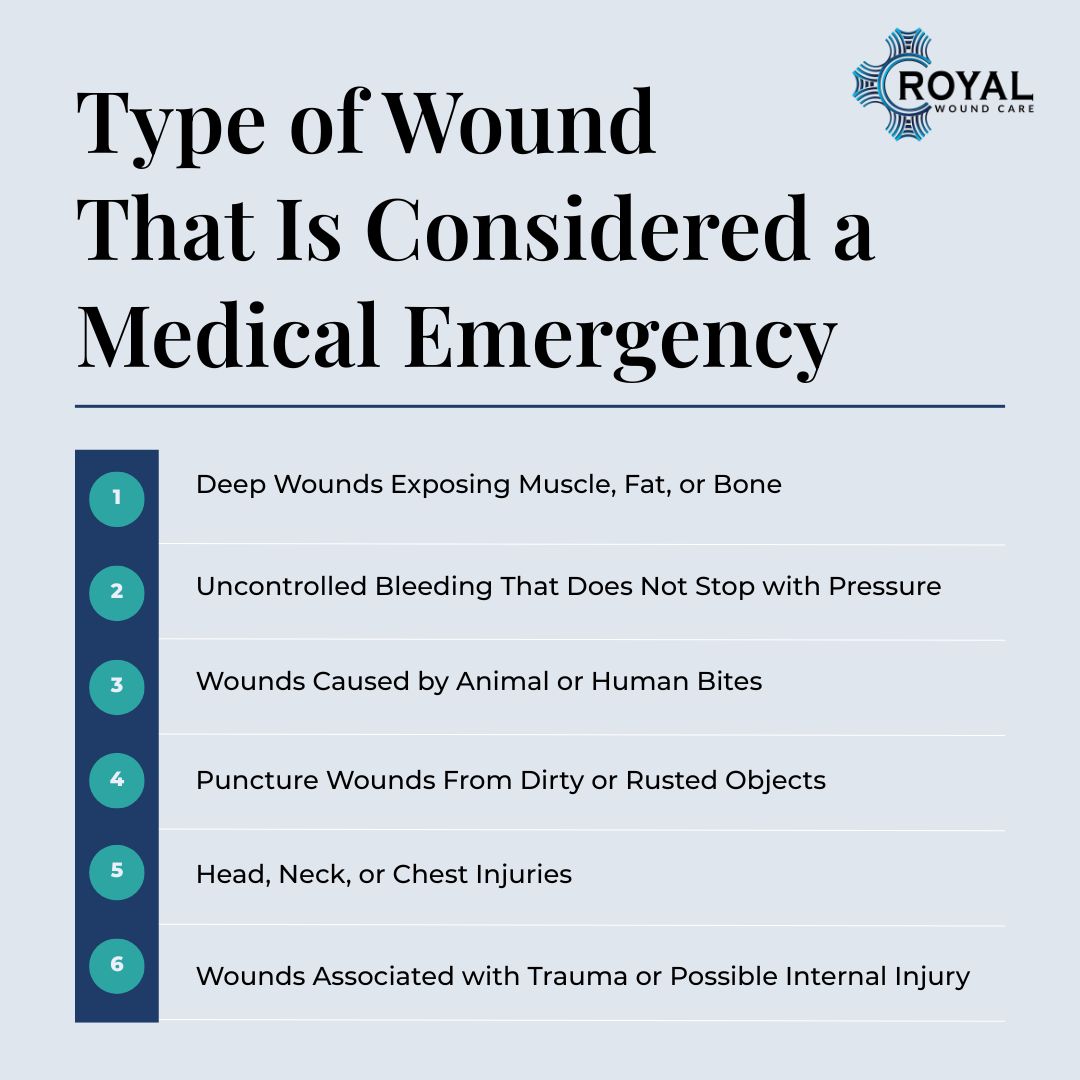
Deep Wounds Exposing Muscle, Fat, or Bone
A deep cut that exposes muscle, fat, or bone is certainly worth a visit to the emergency room. Most importantly, a more severe cut requires a medical professional to stop the bleeding, assess for nerve damage, and close the wound to pull deeper layers together.
Beyond this, deeper tissues are highly susceptible to bacterial contamination. The sooner a physician treats this injury, the better the chances are of preventing a severe infection.
Related: Surgical Incisions, Infections, and Wound Care
Uncontrolled Bleeding That Does Not Stop with Pressure
If applying firm pressure does not stop bleeding within 10 minutes, it’s important to visit an emergency room promptly. Extensive bleeding may lead to rapid blood loss, resulting in hypovolemic shock or organ damage.
Additionally, although we mentioned this previously, it’s important to state again: spurting blood indicates a severe arterial injury. Without immediate attention, this can lead to fatal blood loss in just minutes.
Wounds Caused by Animal or Human Bites
Both animal and human mouths are full of bacteria, which can quickly contaminate broken skin and increase the risk of infection. If you have been bitten, even if the wound appears small, emergency evaluation is the most appropriate course.
This is particularly important if the bite came from a wild or unvaccinated animal. Rabies is easily preventable and treatable—but you must receive treatment before symptoms appear. Physicians commonly administer Post-Exposure Prophylaxis (PEP) to those who have not been vaccinated previously, which is nearly 100% effective.
Puncture Wounds From Dirty or Rusted Objects
Rusty objects notoriously harbor Clostridium tetani—a bacterium found in soil that, when entered in the body through a puncture wound, can produce neurotoxins that attack the nervous system. More specifically, puncture wounds function differently from clean cuts. They commonly drive bacteria deeper into the tissue, where they can quickly multiply without oxygen.
The emergency room is an entirely appropriate response to wounds caused by both rusty and dirty objects. Specialists will thoroughly examine the injury, perform wound cleaning, and determine whether interventions like tetanus prophylaxis, antibiotics, or advanced imaging are needed.
Head, Neck, or Chest Injuries
It’s particularly important to visit the emergency room for head, neck, or chest injuries. These areas house life-sustaining organs, major blood vessels, and other critical structures that may be damaged even if the wound appears manageable.
Beyond initial treatment, emergency room physicians can provide advanced imaging, specialist intervention, and rapid monitoring. This is particularly valuable to avoid life-threatening or long-lasting complications.
Wounds Associated with Trauma or Possible Internal Injury
If the injury occurred during a car accident, a fall, a crush injury, a significant impact, or similar trauma, visiting the emergency room is essential. You may have internal damage, even without visible external wounds.
Ultimately, trauma-related injuries are often the result of highly overwhelming and stressful situations. In such cases, many patients may not even realize that they are in pain, have been injured, or are experiencing life-threatening symptoms. Immediate emergency room care rapidly assesses, monitors, and diagnoses internal injuries to avoid chronic complications.
Knowing whether to visit an urgent care center or an emergency room can make a significant difference in the appropriate treatment and optimal healing.
Regardless of wound type, injuries can often feel overwhelming—especially if you don’t know your next steps. Some wounds heal as expected with simple at-home care. Others become chronic, infected, or far more complex than initially expected. Now that you know which injuries are better suited for urgent care versus emergency treatment, you can make more confident decisions about when and where to seek care.
At Royal Wound Care, we proudly provide advanced wound management for patients throughout West Hills, Woodland Hills, Canoga Park, Calabasas, Chatsworth, and the greater San Fernando Valley. Our main priority is helping patients receive expert, compassionate care—regardless of wound type. Reach out to the Royal Wound Care team today for more personalized care.
Additionally, we provide advanced educational and partnership opportunities for SNFs and independent nurses. With board-certified leadership and care results that consistently outperform national averages, you can lower facility costs, reduce re-hospitalizations, and improve both patient outcomes and quality of life. Don’t wait—contact Royal Wound Care to learn more about advanced strategies and avenues for helping patients today!

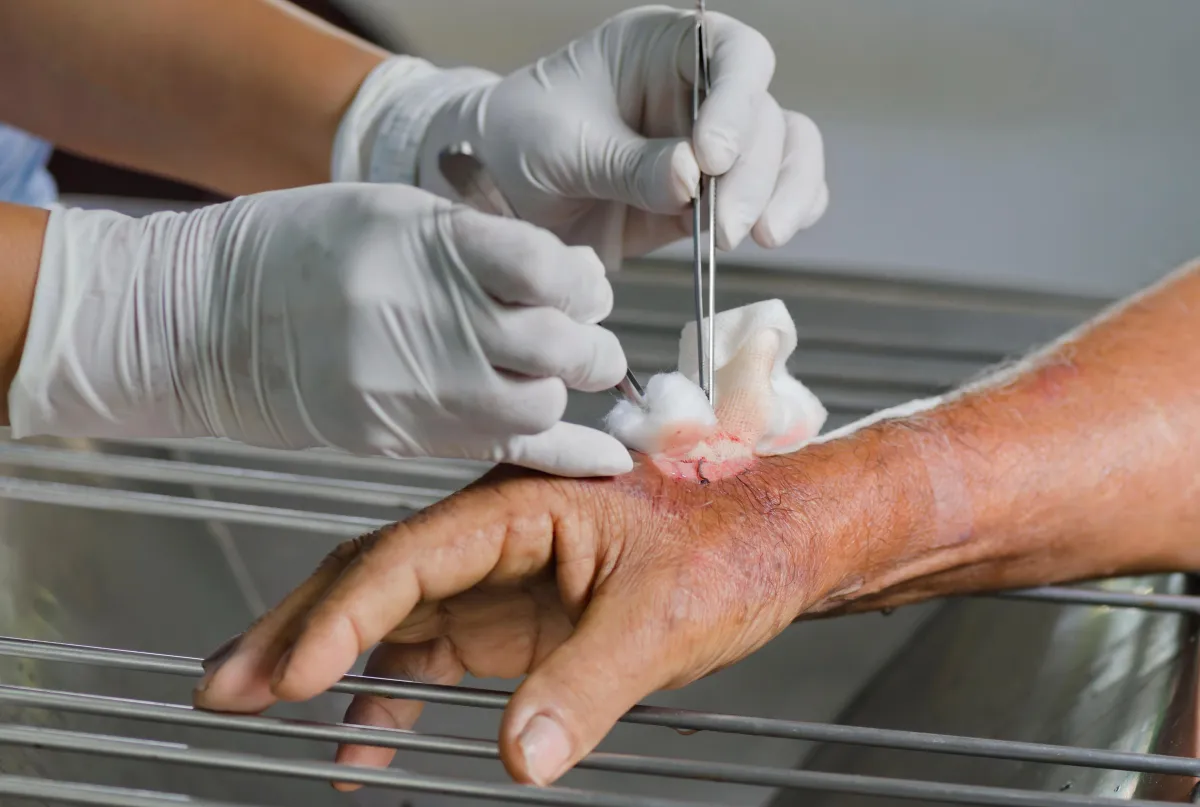
What Every Patient Must Know About Chronic Wound Healing
Discover proven strategies for managing chronic wounds that promote faster healing, reduce the risk of infection, and prevent long-term complications—so you or your loved one can return to comfort, mobility, and peace of mind.
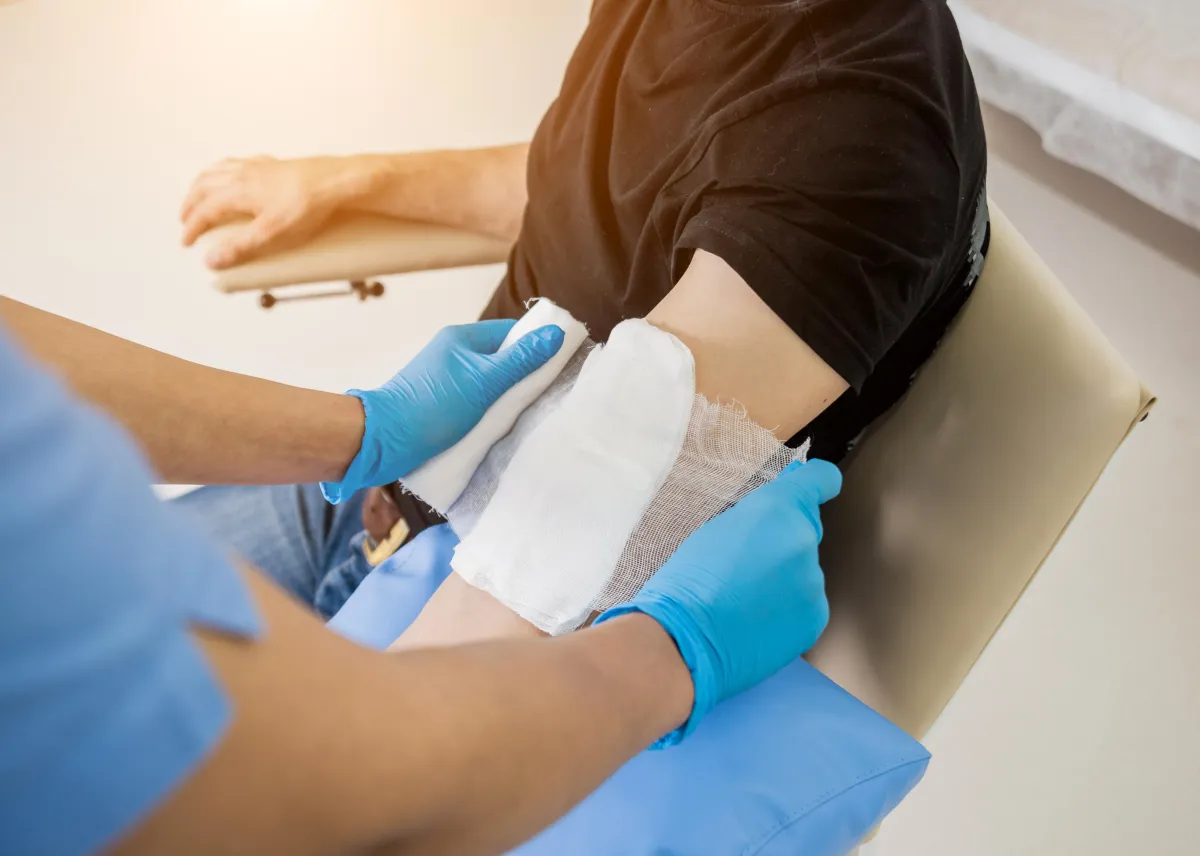
Wound Care Done Right: What to Stop Doing Immediately
Effective healing starts with avoiding the wrong habits. We reveal expert insights into what not to do—and what to do instead—to help wounds heal faster and cleaner.
WEST HILLS
7230 Medical Center Dr. Suite 100
West Hills, CA 91307
(818) 660-2977
BEVERLY HILLS
9735 Wilshire Blvd #210B
Beverly Hills, CA 90212
(818) 660-2977
Request an Appointment at a Royal Wound Care Facility near you.
Royal Wound Care is the expert in wound healing. Our board-certified wound care specialists are ready to help you begin your healing journey. Click the button below to request an appointment at a Wound Care Center near you—no referral needed
© 2026 Royal Wound Care, LLC. All rights reserved.
site by Growth Partners Marketing