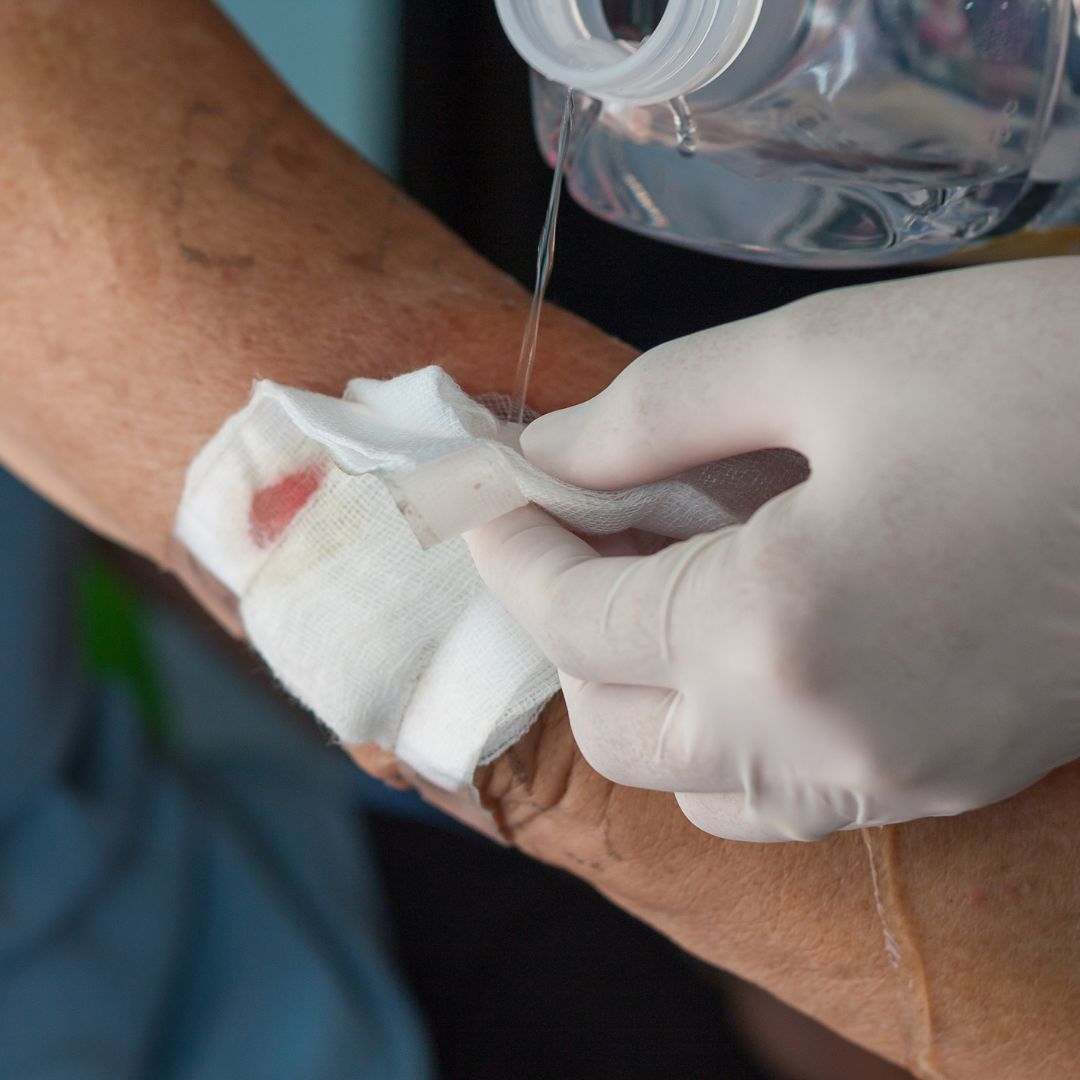
What Are the 4 Types of Wound Drainage? Knowing What They Mean
What Are the 4 Types of Wound Drainage? Knowing What They Mean
Wound drainage is one of the most closely monitored signs during the healing process. While many people assume any fluid coming from a wound is cause for concern, drainage is often a normal and necessary part of recovery. As your body repairs damaged tissue, different types of fluid help remove debris, fight germs, and transport immune cells.
That said, not all drainage looks the same. Changes in consistency, color, odor, or amount can provide meaningful insight about how a wound is progressing. In other words, these changes often reflect a different stage of healing. But understanding what to look for and what may signal complications is essential in comprehensive wound care.
At Royal Wound Care, one of the nation’s few board-certified wound care clinics, we believe education is the foundation of proper care. That’s why below, we’re discussing what the 4 types of wound drainage are and what they may indicate about recovery. Whether you’re a practicing nurse or interested patient, by the end, you’ll better understand the role wound drainage plays in healing.

What Are the 4 Types of Wound Drainage? Knowing What They Mean
Each of the 4 types of wound drainage has distinct characteristics that help guide the proper treatment and care decisions. For example, while serous drainage may represent a normal part of the inflammatory phase of healing, purulent drainage often indicates an infection. However, evaluating drainage isn’t just about identifying the type of fluid present.
Healthcare providers also consider how much drainage is produced, when it appears during healing, and whether it changes over time. This helps determine whether a wound is progressing through the healing process or requires further evaluation.
Below, we will discuss what wound drainage is, what it often looks like, and how you can differentiate between the various types. As a provider, understanding this enables you to provide more accurate care for every patient. As the patient, this information can help you determine whether your injury warrants a visit to a wound care specialist.
Are you seeking board-certified wound care near you? Royal Wound Care, proudly serving West Hills, Woodland Hills, Canoga Park, Calabasas, Chatsworth, and the greater San Fernando Valley is here for you. Schedule an appointment at Royal Wound Care’s West Hills office, or contact the Royal Wound Care team today.
What Is Wound Drainage?
Wound drainage is simply fluid that leaves a wound site as part of the natural healing process. You may also hear clinicians call it "wound exudate." Both words mean the same thing.
Depending on the stage of healing, this fluid can include blood, plasma, and inflammatory fluids. In the early inflammatory stage, your body floods the area with cells and fluid to clean the wound and start repair. As healing continues, the amount of drainage usually begins to slowly decrease.
It’s important to note that some drainage is a good sign; it shows your body is working and the healing process is progressing as intended! More specifically, the goal isn’t zero fluid. Instead, as healthcare professionals, we want to see the appropriate kind of fluid in small amounts.

What Does Wound Drainage Look Like?
The key characteristics of wound drainage are color, consistency, amount, and odor. Together, these help indicate whether a wound is healing as expected or showing signs of a potential complication. We’ll explore the 4 different types comprehensively below. For now, here’s a brief overview of what characteristic may mean:
Color: Normal, healthy drainage tends to range from clear and pale yellow to light pink and, in some cases, bright red. If the color of wound exudate is yellow, tan, brown, or blue-green, this often indicates an infection. (Learn more in our guide, “How to Know If a Wound Is Infected.”
Consistency: Each type of drainage produces different consistency. Serous drainage, for example, is often thin and watery. Sanguineous drainage, on the other hand, is often described as “syrup-like.” Generally, the thicker or milkier the consistency, the more likely a wound may be infected.
Amount: Wound care specialists describe wound exudate amounts in stages, including “None,” “Scant,” “Minimal,” “Moderate,” and “Large.” Often, the goal is for wounds to slowly decrease in the amount of drainage. A wound that’s drainage too much may lead to skin maceration, potentially leading to complications.
Odor: It’s not uncommon for a healing wound to produce an odor, as we discussed in “What Does a Healing Wound Smell Like?” However, this odor is often non-offensive and often smells metallic, earthy, musky, or faintly sweet. If wound drainage smells foul, fishy, or like ammonia, this can indicate an infection or complication.
For those interested in learning more about wound healing, visit our advanced online wound care resources. Whether you’re an independent nurse learning to advance your career or a patient seeking reassurance, the information on our website is here to guide you appropriately.

What Are the Four Types of Wound Drainage?
Here are the common types of wound drainage, what each one looks like, and when it is normal versus when it needs a professional eye.
Serous Drainage
Serous drainage is a thin, watery fluid often made of blood plasma. In many cases, it’s clear or pale yellow, doesn’t have an odor, and gradually decreases in amount over days or weeks. This drainage type is vital during the early stages of healing, as it keeps the wound moist and clears away old, damaged cells.
In other words, serous fluid isn’t something to directly worry about. However, volume still matters. If a wound is producing a large amount of serous drainage, it may indicate high inflammation, swelling, or bacteria counts. In this case, it’s always best to reach out to your wound care specialist for guidance. To learn more, read, "How to Stop a Wound From Weeping Clear Liquid."
Related: How to Describe a Wound: A Step-by-Step Clinical Guide
Sanguineous Drainage
Sanguineous drainage is fresh, bright red blood from a wound that occurs when blood vessels are damaged. As the drainage begins to dry and blood begins to clot, it’s normal for it to turn a darker red or brownish color. Additionally, sanguineous drainage is thin, watery, or slightly sticky, and may have a faint metallic scent.
Because sanguineous drainage is simply fresh blood, it’s normal to experience this after surgery, a fresh injury, or the initial inflammatory healing stage. It’s also normal to notice minor sanguineous drainage on a dressing or bandage if the covering disrupts the fragile tissue.
What isn’t typical, however, is continuous drainage. If you notice bright red bleeding that doesn’t slow down, large amounts that saturate dressings quickly, or drainage that begins suddenly in an otherwise stable wound, reach out to your wound care specialist.
Related: When to Go to Urgent Care vs. ER for Wound Care
Serosanguineous Drainage
Serosanguineous drainage is a watery pink or light red fluid that’s the result of clear blood plasma and red blood cells mixing. In many cases, it’s thin, usually doesn’t produce an odor, and occurs in the early stages of healing. While the color may feel intimidating at first, it’s actually often an encouraging sign in many healing and surgical wounds.
More specifically, small amounts of serosanguineous drainage in the first few days are simply a result of blood vessels healing and mending. Chronic wounds also most commonly produce serosanguineous drainage as a result of prolonged inflammation. However, if you begin to notice an odor, heavier amount of drainage, or changes in color, it’s important to contact your physician to rule out signs of infection.
Related: How Long Does It Take for a Wound to Heal?
Purulent Drainage
Purulent drainage is a thick, pus-like fluid that indicates the body is fighting some form of an infection or complication. It often contains a high concentration of white blood cells, dead tissue, and bacteria, has a strong smell, and appears white, yellow, green, or brown.
In most cases, this type of drainage requires evaluation and treatment from a certified wound care specialist. Your physician can provide advanced wound treatments, targeted antimicrobial therapy, and educate you on how to continue caring for this type of wound at home. It’s important to treat purulent drainage immediately; the sooner you receive professional care, the more likely you are to avoid serious complications.
Related: How to Cover Faster According to Wound Care Experts
By understanding the different types of wound drainage, you can better care for healing injuries.
Experiencing wound drainage can feel intimidating at first, especially if you’re unsure what it means. However, exudate isn’t always a cause for concern! In many cases, healing wounds produce a level of drainage that indicates proper recovery. If you experience odor, thicker drainage, or are unsure of the color, always reach out to your wound care specialist; they’re here to guide you.
At Royal Wound Care, we’re not just your provider; we’re your passionate advocate for better, safer healing. Proudly serving the San Fernando Valley with board-certified care, we’re here to walk you through healing from diagnosis to resolution.
But our mission doesn’t stop at our West Hills office. For SNFs and independent nurses, we also offer advanced educational opportunities and professional partnerships. Learn more about reducing hospitalizations, lower facility costs, and supporting patients to optimal recovery with Royal Wound Care.
This article is educational and is not a substitute for medical evaluation. Any wound with signs of infection, uncontrolled bleeding, or drainage that concerns you should be assessed by a qualified provider.
Warmly,
Dr. Moaddel, Royal Wound Care
