
Royal Wound Care was founded with a commitment to advancing the standard of wound care.
Royal Wound Care is a dedicated wound care center located in West Hills, California, specializing in advanced, comprehensive wound treatment. Founded by Dr. Moaddel, Royal Wound Care was born from his commitment to improve the way patients experience wound care. After witnessing the need for more compassionate, personalized care, Dr. Moaddel opened his own center to ensure that every patient receives the attention and expertise they deserve.
After witnessing the shortcomings in traditional wound care settings, Dr. Moaddel set out to create a better experience—one where patients receive the focused, attentive care they truly deserve. That vision became Royal Wound Care.

Our Mission
To deliver exceptional, accessible wound care tailored to the individual—whether in our state of-the-art clinic, at a skilled nursing facility, or in the comfort of a patient’s home. We treat the wound, but we also care for the whole person.
Why Choose Royal Wound Care?
Ongoing Education & Certification
For staff, families, and partner facilities, including wound in-services and professional training opportunities

Expert-Led Care by Board-Certified Providers
With years of hands-on experience managing chronic and complex wounds

Advanced Modalities
Including negative pressure therapy, mist ultrasound, debridement, Doppler studies, grafts, and more

Survey-Ready Documentation
That keeps facilities compliant and families informed

Truly Personalized Care Plans
Tailored to each patient’s condition, lifestyle, and healing goals

Mobile Services That Come to You
Care delivered at home, in clinics, or within partner facilities

A Team That Cares And The Results To Prove It
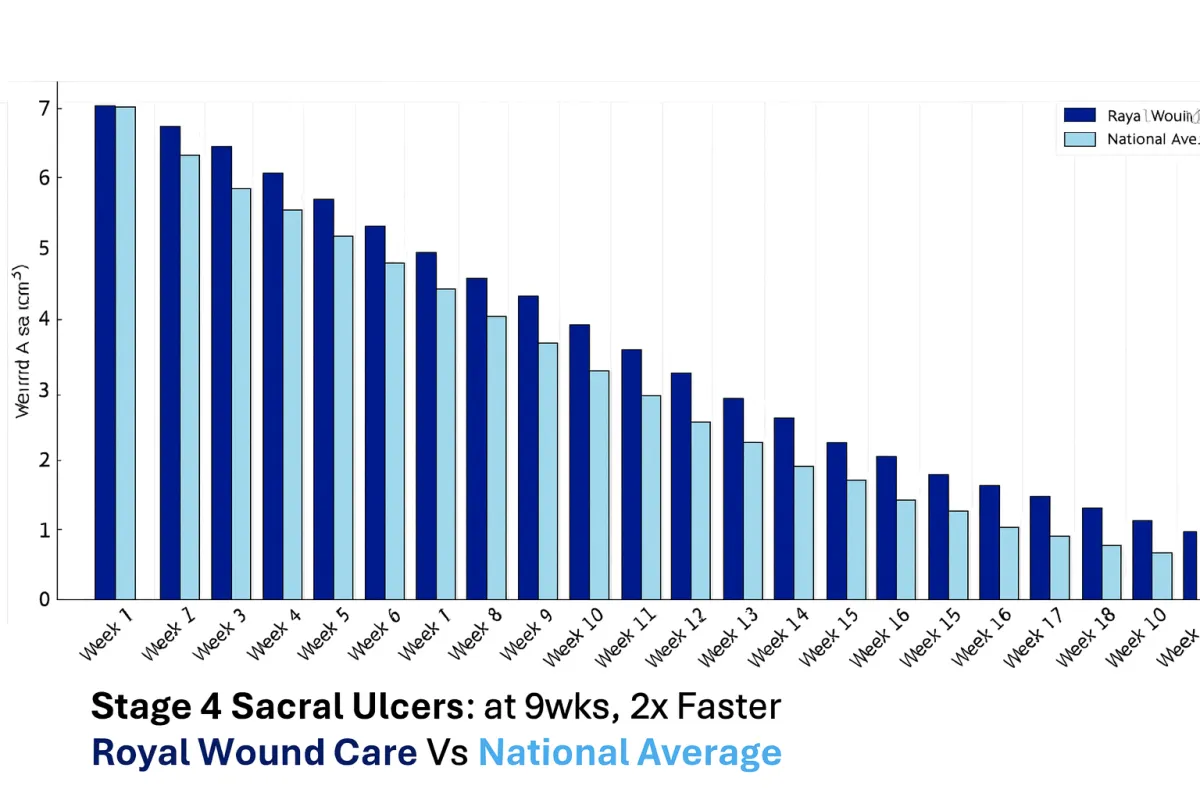
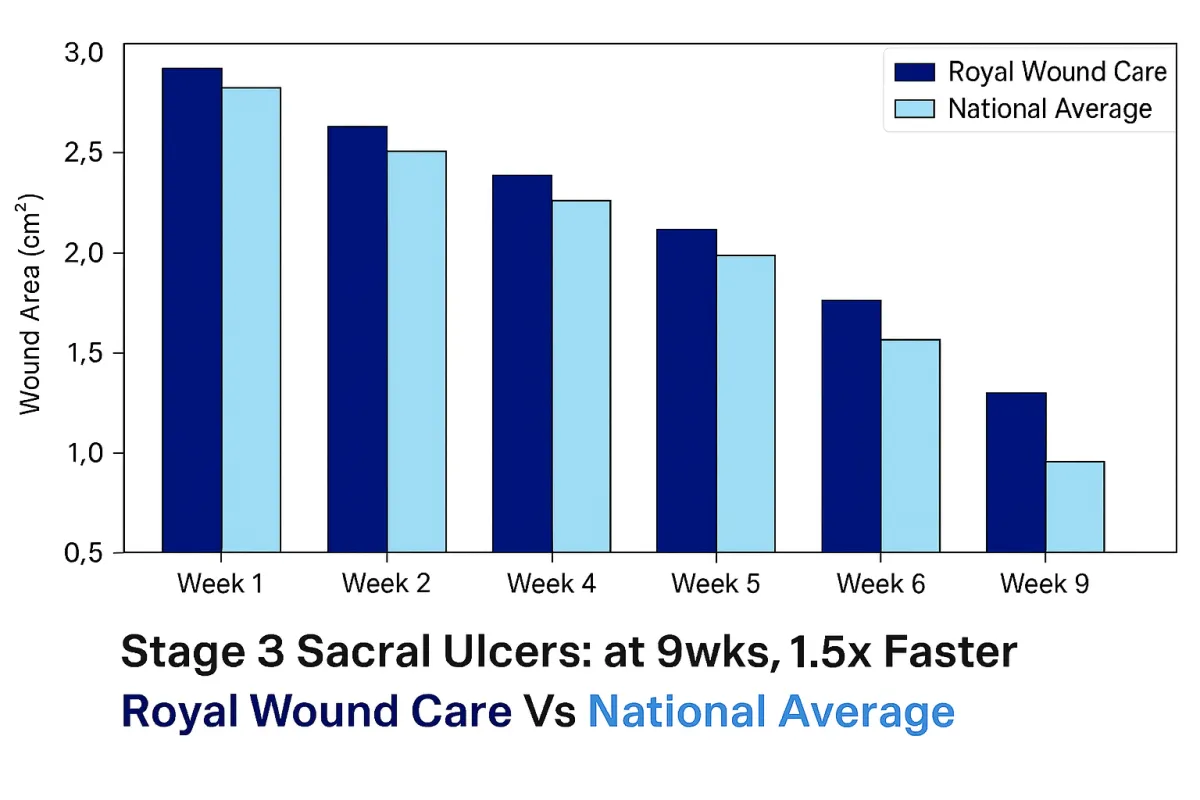
At Royal Wound Care, we deliver results that consistently outperform the national average. Our advanced healing process combines evidence-based treatments, personalized care plans, and direct physician oversight to ensure optimal outcomes. Unlike many clinics, every patient is managed by a board-certified wound care physician who evaluates their condition and customizes treatment from day one.
Our Stage 3 Sacral ulcer graph demonstrates how our approach leads to significantly faster healing compared to the national average. While traditional care results in gradual wound size reduction over several months, patients treated at Royal Wound Care experience more rapid progress through targeted therapies, aggressive infection control, and ongoing physician-directed adjustments to their care plan. Our proactive methods allow us to close even complex wounds weeks earlier than national trends, improving patient mobility, reducing pain, and preventing further complications.
Stage 4 sacral ulcers are among the most complex wounds to treat, yet our outcomes set us apart. Patients at Royal Wound Care heal twice as fast as the national average by leveraging advanced biologic grafts, comprehensive infection management, and customized care protocols. These results highlight our proactive, physician-led care model, allowing us to manage even the most challenging cases successfully while improving long-term patient outcomes.
What Our Partners Experience
86% lower infection rates

47% faster healing compared to others

88% fewer wound-related rehospitalizations

58% faster pressure ulcer healing times

Ready to Heal with Royal Wound Care?
What Does It Mean to Be Board-Certified in Wound Care?
What Does It Mean to Be Board-Certified in Wound Care?
Wound care is one of the fastest-growing specialties in modern medicine due to the aging population, rising diabetes rates, and prevalence of chronic wounds. Caring for these often complex conditions requires far more than basic knowledge, making board certification in wound care essential.
While a voluntary credential, board certification demonstrates a level of advanced, validated expertise that sets board-certified physicians apart within the field. Unlike a single workshop, board certification takes a multidisciplinary approach. Clinicians gain comprehensive training in wound assessment, evidence-based treatment planning, and strategies to improve healing outcomes.
In this post, we’ll take a closer look at what it means to be board-certified in wound care. We’ll also discuss why it matters for healthcare professionals and how to pursue this advanced credential. At Royal Wound Care, one of the nation’s few board-certified wound care clinics, we’re dedicated to compassionate, personalized care—and that begins with advanced clinical expertise.
What Does It Mean to Be Board-Certified in Wound Care?
Being board-certified in wound care is a formal credential earned through a combination of clinical experience, education, and examination. Unlike traditional training courses or workshops, it’s a demonstration that a clinician has developed specialized expertise beyond basic licensing requirements.
However, it’s important to note the difference between general professional licensure and board certification. A healthcare provider must hold a professional license or a license to practice medicine to become a certified wound care clinician. Additionally, board certification in wound care requires professionals to hold an unrestricted license. This confirms that they are in good standing and have gained the necessary minimum level of experience.
Following this, the American Board of Wound Management (ABWM) establishes rigorous certification pathways that validate knowledge and skills. These certifications, including Certified Wound Care Associate (CWCA), Certified Wound Specialist (CWS), and Certified Wound Specialist Physician (CWSP), ensure clinicians have a full understanding of wound management, prevention, assessment, and treatment.
In the field of wound care, certification demonstrates that professionals are dedicated to the highest standard of care possible. And for an industry that requires compassion, precision, and commitment, board certification isn’t a simple title. It’s a testament to redefining what patient-centered, evidence-based care looks like.
Related: How Do You Become a Certified Wound Care Nurse?
Is a Wound Care Board Certification Worth It?
For many healthcare professionals, the benefits of board certification extend far beyond the title itself. The additional medical knowledge and education represent a meaningful investment in both their careers and the quality of patient care. Below, we will discuss specific examples outlining why wound care board certification is absolutely worth it:
Professional Recognition
Board certification in designations such as CWCA, CWS, or CWSP signifies advanced professional credibility. More specifically, board-certified wound care professionals are widely recognized as specialists, improving hiring prospects, salary potential, and leadership opportunities.
This recognition also reflects a clinician’s commitment to ongoing medical education and professional growth. As the field continues to evolve, specialists need to remain well-versed in advanced wound treatments, updated research, and modern care practices.
Related: The Difference Board-Certified Physician Leadership Makes in Nurse Wound Care Education
Demonstrated Expertise
Advanced expertise relies on a foundation of specialized knowledge, clinical judgment, and evidence-based practices. Board certification confirms these additional skills through comprehensive exams, strict eligibility requirements, and years of rigorous, hands-on experience. More specifically, many organizations widely recognize the WCC and CWS credentials as the most prestigious certifications within the field.
For patients and employers, this validation reinforces trust in the clinician's knowledge. It shows that they remain informed about evolving standards, treatment modalities, and the care of complex conditions. And with the prevalence of complex diabetic foot ulcers and vascular-related wounds, this degree of attention proves invaluable.
For those interested in additional training, we kindly encourage you to visit our Wound Care Nurse Certification (WCN-C) program. As a national premier training program, it offers hands-on experience and skills labs to increase the knowledge, skills, and confidence during care.
Patient Confidence and Outcomes
From both a patient and employer lens, board certification communicates a strong commitment to delivering high-quality care. More specifically, board-certified specialists' skill set extends beyond basic requirements; they maintain a comprehensive, multidisciplinary approach to each unique individual.
As a result, patients often feel more comfortable and confident in their level of care and treatment plans. In fact, research shows that board certification is associated with higher patient satisfaction, improved outcomes, and reduced inpatient mortality. This reflects the ongoing, evolving accessibility of advanced, comprehensive care for patients.
Interdisciplinary Collaboration
Successful wound care treatments significantly rely on multidisciplinary collaboration. Healing and treatment are rarely isolated experiences. From wound care specialists to physical therapists to infectious disease specialists, it’s crucial to bridge the gap to improve outcomes and quality of life.
The specialized expertise gained during board certification is what helps wound care specialists stand out, often taking a central role in developing wound care protocols and training teams. They deeply understand the framework for effective communication and coordination and implement it throughout every phase of treatment.
Career Growth
In modern wound care, many organizations and employers prefer, or even require, board certification. General knowledge and basic experience, while important, no longer reflect the specialized knowledge required for advanced practice.
Board certification demonstrates a deep understanding of the expertise, skills, and credibility necessary to improve patient outcomes and reduce complications. As wound care continues to grow, this extent of knowledge helps clinicians stand out in competitive hiring environments and broader leadership roles.
Related: Difference Between Wound Care Certificate-Trained and Board-Certified Providers
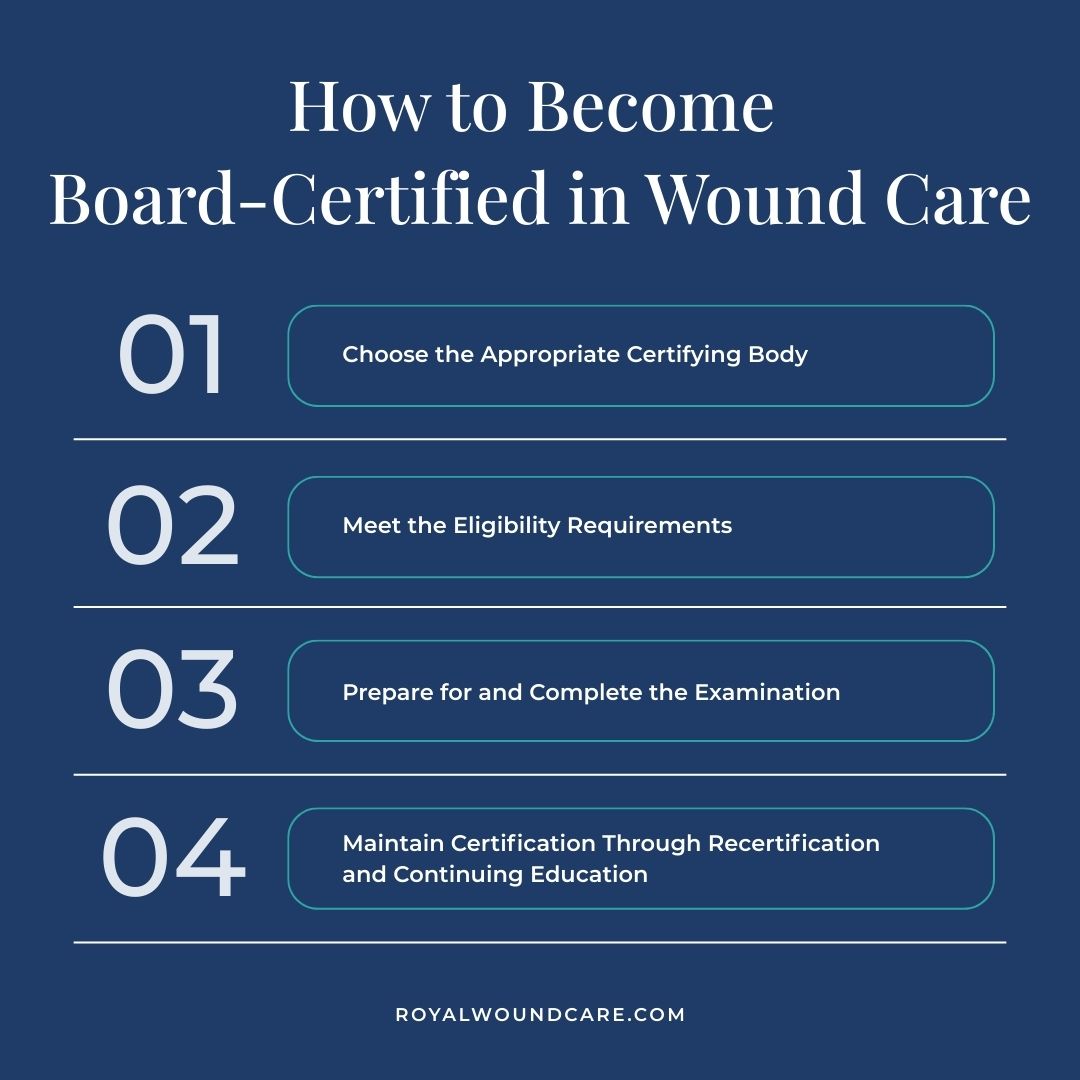
How to Become Board-Certified in Wound Care
Choose the Appropriate Certifying Body
The first and often most important step in board certification is choosing the appropriate certifying body. Fortunately, several reputable member boards offer certification in wound care, allowing professionals to pursue credentials aligned with their career goals. Examples of top certifying bodies include:
The American Board of Wound Management (ABWM)
Wound, Ostomy and Continence Nursing Certification Board (WOCNCB)
Each organization offers slightly different expertise pathways for wound prevention, assessment, management, and treatment. Choosing the appropriate organization depends on the clinician's role, experience level, and professional goals.
Meet the Eligibility Requirements
Before attempting any certification exams, it’s important to ensure that clinicians meet the necessary eligibility requirements. As we discussed above, requirements may look different across various certifying bodies and organizations. Most commonly, however, clinicians must meet the following prerequisites:
An active, unrestricted professional license
2–3 years of clinical wound care experience
Valid, professional references
Completion of a recognized wound care management course
Requirements differ based on unique specifications. For example, some member boards require clinicians to hold a Bachelor’s degree, while others will accept an Associate’s degree. The necessary background relies on the clinician’s level of expertise and their desired role within wound care.
Prepare for and Complete the Examination
To apply for board certification in wound care, in addition to the eligibility requirements discussed above, professionals must prepare to take an official examination. Generally, exams range from $375 to $995+, depending on the certification type. If a clinician fails their exam, they can submit a retest application for the following 30–90 days.
However, retesting policies vary by organization. For the American Board of Wound Management, for example, three failed attempts require 20 additional hours of continuing education. Similarly, the National Alliance of Wound Care and Ostomy requires professionals to wait one year before reapplying after three failed attempts.
With this in mind, it’s essential to prepare for the exam prior to testing. This often includes reviewing clinical guidelines, completing educational courses, and strategically studying wound management principles. The examination tests interdisciplinary knowledge, anatomy, physiology, etiology, treatment, and prevention. They’re also often reflective of real-world circumstances.
Create a consistent study schedule, take practice tests, target the weakest areas of knowledge, and engage with peers.
Maintain Certification Through Recertification and Continuing Education
Board certification isn’t a simple one-time achievement—wound care specialists must recertify every 5–10 years to maintain their credentials. This often consists of an additional fee, proof of continuing education, and re-examination.
While seemingly tedious, it’s a clear example of how professionals remain informed about new techniques, technologies, and standards in wound management. Wound care is a fast-paced, ever-evolving field. Understanding current, effective, and precision-based techniques is the cornerstone of patient-led care.
At Royal Wound Care, we offer Nursing Education Credits (CNE), Medical Education Credits (CME), and Wound Care Nurse Certifications (WCN-C). Designed as comprehensive overviews, these training programs reinforce the skills, knowledge, and abilities necessary in the wound care profession.
Board certification in wound care demonstrates advanced clinical knowledge, specialized expertise, and a commitment to evidence-based patient care.
Wound care is a vast, growing field, and board certification is a meaningful milestone for healthcare professionals committed to excellence. This level of dedication demonstrates a willingness to meet rigorous professional standards, ensuring that patients receive the highest standard of care. Additionally, it positions professionals to stand out, enhancing opportunities for leadership roles, career advancement, and greater professional recognition.
At Royal Wound Care, we’re dedicated to redefining what wound care looks like. Through medical expertise, advanced modalities, and compassionate support, we believe that care should be personalized and accessible for all patients—and that begins with board certification.
For SNFs, independent nurses, and clinics, we encourage you to review our educational opportunities and professional partnerships. Together, we can lower infection rates, improve healing times, and reduce wound-related hospitalizations. Contact the Royal Wound Care team to learn more.

WEST HILLS
7230 Medical Center Dr. Suite 100
West Hills, CA 91307
(818)–660–2977
BEVERLY HILLS
9735 Wilshare Blvd #210B
Beverly Hills, CA 90212
(818)–660–2977
Request an Appointment at a Royal Wound Care Facility near you.
Royal Wound Care is the expert in wound healing. Our board-certified wound care specialists are ready to help you begin your healing journey. Click the button below to request an appointment at a Wound Care Center near you—no referral needed
© 2025 Royal Wound Care, LLC. All rights reserved.
site by Growth Partners Marketing