
Royal Wound Care was founded with a commitment to advancing the standard of wound care.
Royal Wound Care is a dedicated wound care center located in West Hills, California, specializing in advanced, comprehensive wound treatment. Founded by Dr. Moaddel, Royal Wound Care was born from his commitment to improve the way patients experience wound care. After witnessing the need for more compassionate, personalized care, Dr. Moaddel opened his own center to ensure that every patient receives the attention and expertise they deserve.
After witnessing the shortcomings in traditional wound care settings, Dr. Moaddel set out to create a better experience—one where patients receive the focused, attentive care they truly deserve. That vision became Royal Wound Care.

Our Mission
To deliver exceptional, accessible wound care tailored to the individual—whether in our state of-the-art clinic, at a skilled nursing facility, or in the comfort of a patient’s home. We treat the wound, but we also care for the whole person.
Why Choose Royal Wound Care?
Ongoing Education & Certification
For staff, families, and partner facilities, including wound in-services and professional training opportunities

Expert-Led Care by Board-Certified Providers
With years of hands-on experience managing chronic and complex wounds

Advanced Modalities
Including negative pressure therapy, mist ultrasound, debridement, Doppler studies, grafts, and more

Survey-Ready Documentation
That keeps facilities compliant and families informed

Truly Personalized Care Plans
Tailored to each patient’s condition, lifestyle, and healing goals

Mobile Services That Come to You
Care delivered at home, in clinics, or within partner facilities

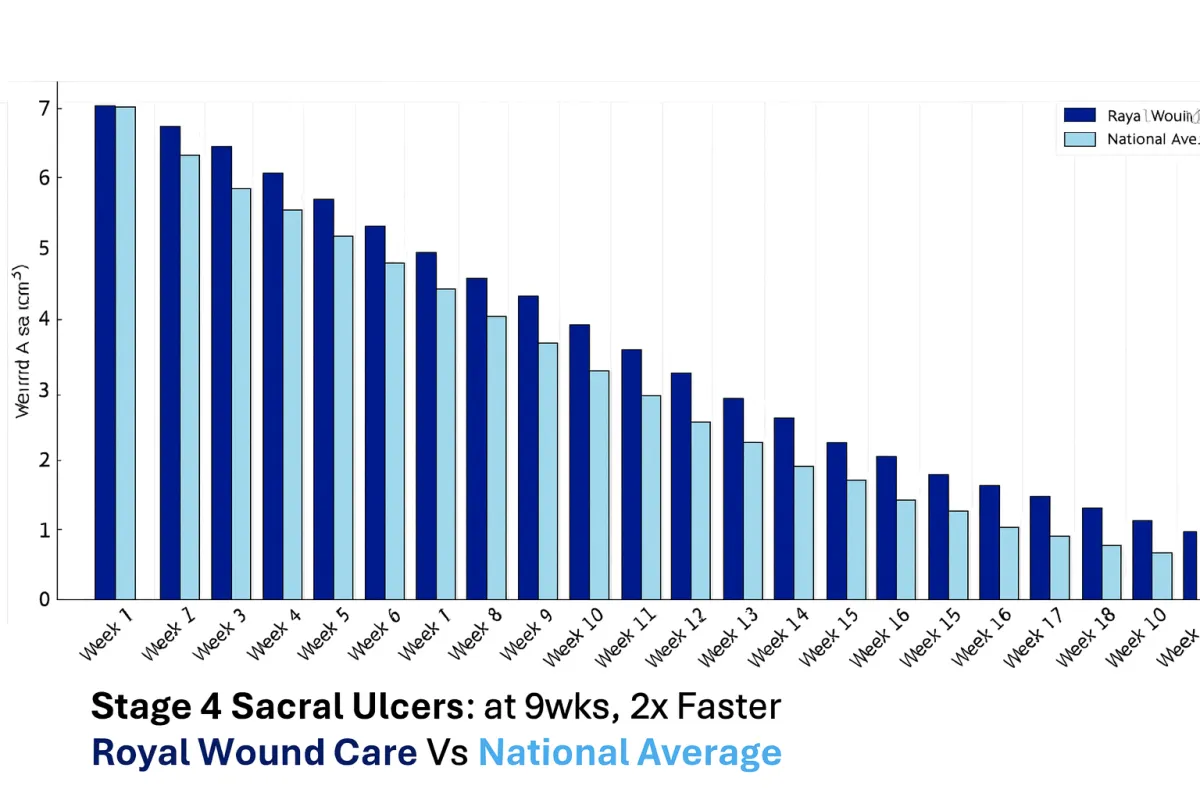
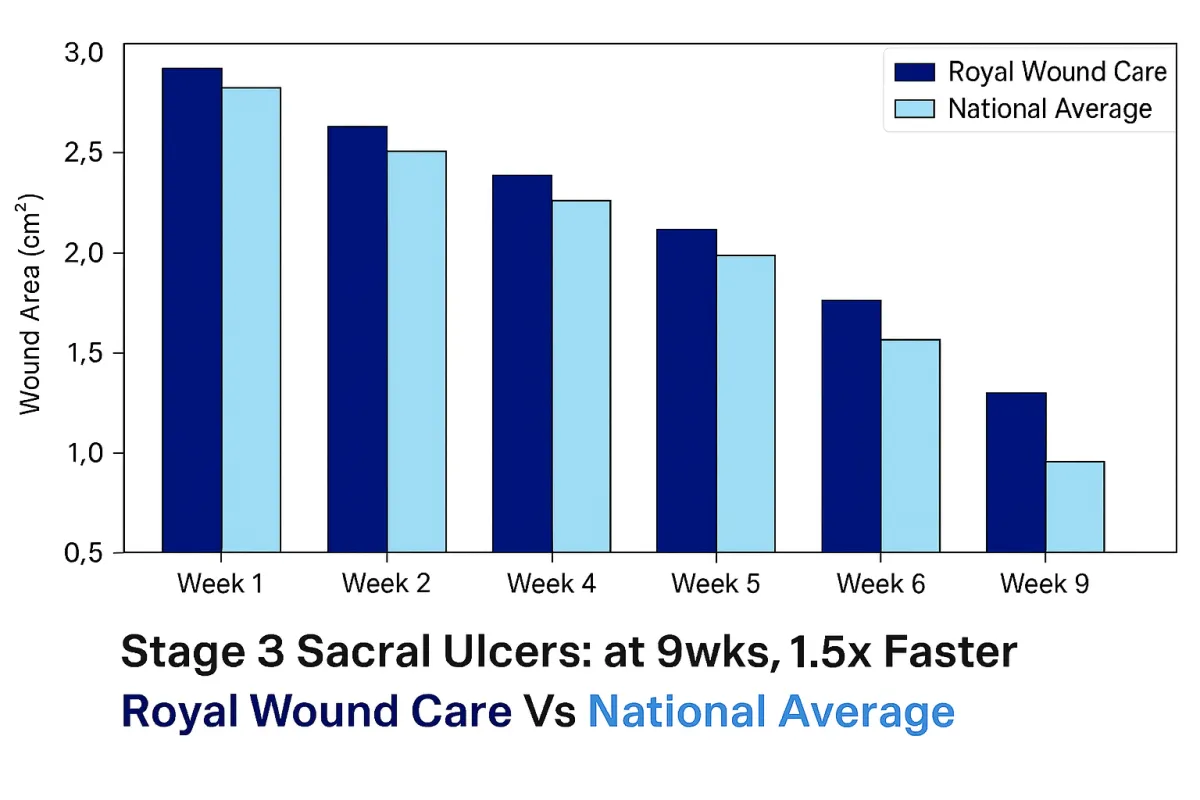
A Team That Cares And The Results To Prove It
At Royal Wound Care, we deliver results that consistently outperform the national average. Our advanced healing process combines evidence-based treatments, personalized care plans, and direct physician oversight to ensure optimal outcomes. Unlike many clinics, every patient is managed by a board-certified wound care physician who evaluates their condition and customizes treatment from day one.
Our Stage 3 Sacral ulcer graph demonstrates how our approach leads to significantly faster healing compared to the national average. While traditional care results in gradual wound size reduction over several months, patients treated at Royal Wound Care experience more rapid progress through targeted therapies, aggressive infection control, and ongoing physician-directed adjustments to their care plan. Our proactive methods allow us to close even complex wounds weeks earlier than national trends, improving patient mobility, reducing pain, and preventing further complications.
Stage 4 sacral ulcers are among the most complex wounds to treat, yet our outcomes set us apart. Patients at Royal Wound Care heal twice as fast as the national average by leveraging advanced biologic grafts, comprehensive infection management, and customized care protocols. These results highlight our proactive, physician-led care model, allowing us to manage even the most challenging cases successfully while improving long-term patient outcomes.
What Our Partners Experience
86% lower infection rates

47% faster healing compared to others

88% fewer wound-related rehospitalizations

58% faster pressure ulcer healing times

Ready to Heal with Royal Wound Care?
Wound Nurse Certification Programs: How to Become Certified
Wound Nurse Certification Programs: How to Become Certified
Wound nurse certification programs are one of the most meaningful steps professionals can take to advance their careers. According to research, approximately 95 million traumatic wounds occur annually in the United States alone—many of which include diabetic foot ulcers, pressure injuries, and chronic wounds. As a result, the wound care field increasingly requires advanced knowledge, evidence-based practices, and specialized clinical skills.
Beyond strengthening their skillset, nurses who invest in certification programs are better equipped to improve patient outcomes, increase their earning potential, and unlock opportunities for higher-level leadership roles. Fortunately, there are several recognized certification programs available to choose from.
At Royal Wound Care, proudly serving patients throughout the San Fernando Valley, we understand just how critical well-trained wound care nurses are to delivering evidence-based, high-quality care. That’s why in this post, we’re breaking down the best wound nurse certification programs. We will discuss what they are, different eligibility criteria, and how to choose the right certification based on career path.
Wound Nurse Certification Programs: How to Become Certified
Wound care specialization is in high demand in hospitals, long-term care facilities, home health, and specialty clinics. This is primarily due to a combination of an increased aging population and a rise in chronic diseases. However, as patients' needs increase, so does the need for highly-trained wound care professionals.
Certification is more than just a credential; it’s an investment in your clinical expertise, professional confidence, and career opportunities. As a result, nurse credentialing positions you as a trusted expert within wound care.
The first step is understanding who should consider wound care certification and how to choose the proper programs. While seemingly overwhelming at first, it’s essential for setting yourself on a path toward greater impact, recognition, and fulfillment within your career.
Related: How Do You Become a Certified Wound Care Nurse?
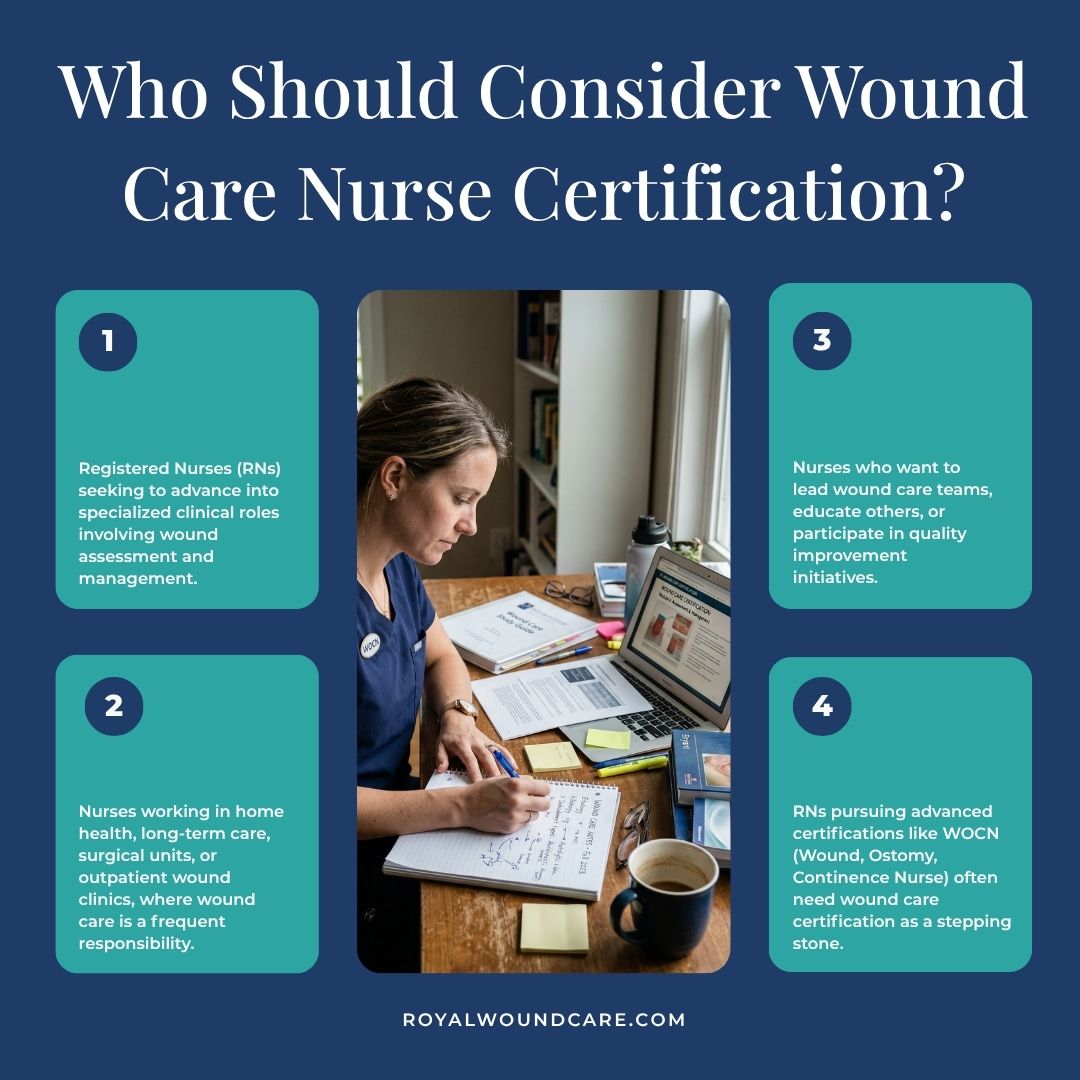
Who Should Consider Wound Care Nurse Certification?
Registered Nurses (RNs) seeking to advance into specialized clinical roles involving wound assessment and management.
While general Registered Nurses (RNs) can provide wound care, their scope of practice is significantly limited. They are permitted to assess wounds, identify pressure injury stages, monitor healing, and report changes. However, credentialing is necessary for more comprehensive, evidence-based care.
For those looking to move beyond general nursing and into a more focused specialty, certification is essential. Programs equip nurses with the expertise necessary to manage complex wounds, implement evidence-based treatment strategies, and deliver quality patient care across a variety of clinical settings.
Related: Wound Care Training for Nurses
Nurses working in home health, long‑term care, surgical units, or outpatient wound clinics, where wound care is a frequent responsibility.
In home health, long-term care, surgical units, or outpatient wound clinics, wound care is a critical daily responsibility. In home health care, for example, nurses widely offer specialized, autonomous care. Therefore, they’re individually responsible for assessing complex wounds, making advanced treatment decisions, and providing high-quality care.
Similarly, nurses in long-term care facilities directly manage chronic, slow-healing, or recurring wounds. In these environments, certification is essential to ensure consistent, evidence-based care and optimal patient outcomes.
For further information regarding advanced wound care nursing opportunities, we encourage you to read our guide, “The Difference Board-Certified Leadership Makes in Nurse Wound Care Education.”
Nurses who want to lead wound care teams, educate others, or participate in quality improvement initiatives.
Certified nurses often develop the skills necessary to serve as leaders in the industry. And, fortunately, many wound nurse certification programs incorporate training for leading, educating, and collaborating teams.
This level of expertise allows nurses to go beyond direct patient care. In practice, they often take on responsibilities such as guiding treatment protocols, mentoring other staff members, educating patients, and supporting ongoing clinical training. Through evidence-based practices and evolving standards, certified nurses play a key role in consistency and quality of care.
RNs pursuing advanced certifications like WOCN (Wound, Ostomy, Continence Nurse) often need wound care certification as a stepping stone.
Many advanced nurse credentialing pathways require foundational wound care certification as a stepping stone. Because of this, while certification programs broaden a nurse’s skill set, they also prove pivotal in advancing their career.
By establishing a strong clinical foundation, certification prepares nurses for more specialized roles within healthcare. It also supports progression into higher-level credentials, which often require both clinical expertise and formal wound care education. Over time, this pathway not only enhances a nurse’s clinical confidence but also opens the door to additional opportunities.
Related: Difference Between Wound Care Certificate-Trained and Board-Certified Providers
Wound Nurse Certification Programs
Wound Care Certified (WCC)
The Wound Care Certified (WCC) credential, offered by the National Alliance of Wound Care and Ostomy (NAWCO), is most commonly the first wound care certification program nurses pursue. It’s widely accessible due to its broader eligibility requirements and its multidisciplinary approach to skin and wound management.
More specifically, WCC focuses on a comprehensive curriculum, such as:
Wound care management and assessment
Wound types and treatment
Infection management
Pressure injury prevention
Advanced treatment techniques
Patient education
Being Wound Care Certified demonstrates a nurse’s ability to provide higher-quality care, resulting in faster healing rates and lower facility costs. Essentially, it’s an entry-level commitment that validates a nurse’s dedication to strengthening their knowledge and skills beyond basic requirements.
To qualify, nurses generally need an active, unrestricted license and 2 years of full-time or 4 years of part-time wound care experience. Additionally, they must have either graduated from an NAWCO-approved skin and wound management care education course or possess a current certification.
Certified Wound Care Nurse (CWCN)
The Certified Wound Care Nurse (CWCN) credential is offered by the Wound, Ostomy, and Continence Nursing Certification Board (WOCNCB). Often considered the “gold standard” in wound nursing, the credential validates specialized areas in wound management, assessment, and education.
More specifically, CWCN focuses on:
Wound assessment and management in both acute and chronic wounds
Wound bed preparation
Reliable tools for risk assessment
Dressing selection
Debridement techniques
Wound cleaning
Advanced therapies
Pain management
Pressure injury prevention
Hospitals and inpatient specialty teams primarily prefer the CWCN credential, as it emphasizes advanced clinical expertise. Moreover, it demonstrates a nurse’s ability to manage complex wounds with confidence, while simultaneously improving patient outcomes and contributing to higher-quality care.
To qualify, nurses must hold an active, unrestricted RN license. Additionally, they must also meet eligibility through either a traditional method or an experiential pathway. According to the traditional method, nurses must have graduated from an accredited WOCNEP within the last 5 years. Following the experiential pathway, they must have 1,500 hours of direct patient care in wound care or 50 continuing education credits.
For additional information, visit Royal Wound Care’s Wound Nurse Certification (WCN-C) course. This national premier training program is formulated to help licensed nurses meet basic educational needs in different clinical settings.
Certified Wound Specialists (CWS) and Other Credentials
Offered by the American Board of Wound Management (ABWM), certifications such as the Certified Wound Specialist (CWS) and Certified Wound Care Associate (CWCA) are more interdisciplinary. More specifically, these certification programs are not limited to nurses. They’re equally valuable to healthcare professionals across a range of clinical specialties for strengthening their expertise in the field.
The CWS credential focuses on:
Assessment and diagnosis
Principles of wound care
Anatomy and physiology of the skin
Wound classification
Specialized dressing selection
Debridement methods
Infection control techniques
Documentation and interdisciplinary teamwork
To qualify, nurses must hold a full, unrestricted license and have at least 3 years of clinical wound care experience.
The CWCA credential focuses on:
Comprehensive skin, pain, and functional assessments
Diagnostic tools
Patient’s nutritional status
Skin layers and functions
Biology of wound healing
Biofilm management
Treatment modalities
Wound types
Treatment techniques
Pressure offloading
Documentation, ethics, and patient education
To qualify, nurses must hold a full, unrestricted professional license, be involved in wound care, and have at least 3 years of experience in wound care.
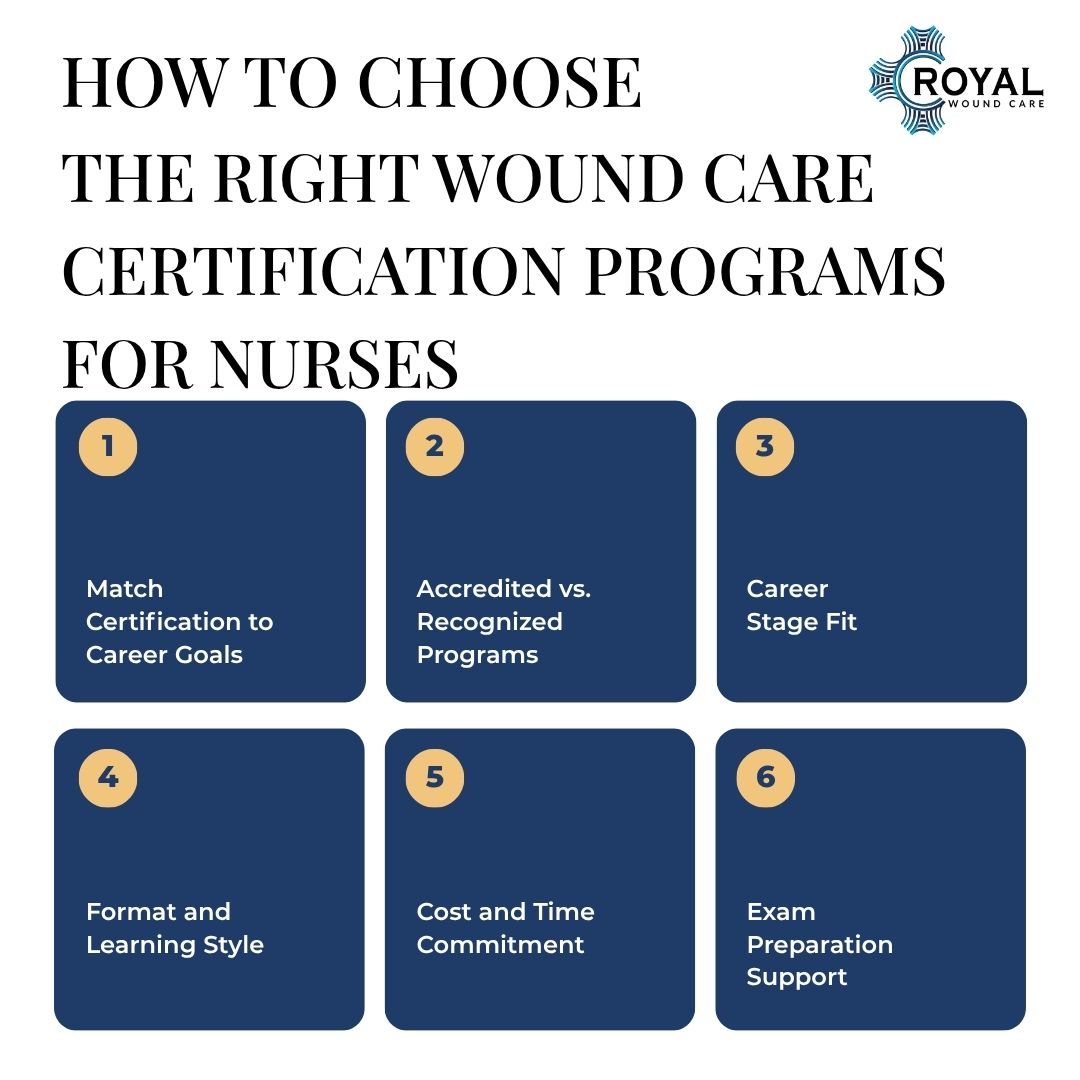
How to Choose the Right Wound Care Certification Programs for Nurses
Match Certification to Career Goals
First and foremost, it’s essential for a nurse to consider where they want their career to go. This includes opportunities such as bedside care, mobile wound care, leadership roles, and specialized outpatient clinics. Ultimately, choosing the proper program will help align a nurse’s path with their long-term goals.
Accredited vs. Recognized Programs
Reputable programs remain the cornerstone of career advancement for wound care nurses. Generally, accreditation ensures certifications are reviewed by third parties that validate rigorous, standardized criteria. Gold-standard providers include WOCNCB and ABWM. On the other hand, while recognized programs ensure competency, they lack independent oversight that may be necessary to guarantee credentialing across the industry.
Career Stage Fit
Certification programs vary based on career stage. For example, those just entering the field can best benefit from the Wound Care Certified credential offered by the National Alliance of Wound Care and Ostomy. This program is highly inclusive, bridging the gap between licensure and specialized knowledge. Nurses must ensure the program they’re pursuing matches their current level of expertise.
Format and Learning Style
Many programs offer flexible formats, including online and hybrid learning. This is crucial, as many professionals pursuing credentialing are either in school or are operating in full-time care commitments. Consider whether you prefer self-paced study or a structured classroom environment based on learning style and current availability.
Cost and Time Commitment
Certification programs can vary widely in both cost and duration. Therefore, it’s important to evaluate each factor before enrolling. Make sure your desired program fits your schedule and budget while still meeting your professional goals.
Exam Preparation Support
Preparing for a certification exam can often feel like the most challenging and overwhelming part of advancing your career. However, preparation is key. Many accredited bodies offer study materials, course reviews, and practice tests to support nurses' success. Additionally, take advantage of study groups, advice from previously wound care certified nurses, and real-life applicable experience opportunities.
Wound nurse certification programs offer an advantageous opportunity for those seeking to pursue more advanced roles in the field.
Becoming wound care certified is more than just earning an additional title. It’s a demonstration that a nurse plans to commit to higher-quality care, continuing education, and evidence-based strategies. As complex cases continue to rise, so does the need for specialized training—and change can begin with proper education.
Dr. Moaddel, our board-certified wound specialist at Royal Wound Care, has committed to serving West Hills, Woodland Hills, Canoga Park, Calabasas, Chatsworth, and the San Fernando Valley. By focusing on the core principles that drive effective healing, each patient isn’t just another case—they’re part of our community. Contact the Royal Wound Care Team to learn more about receiving compassionate, personalized care.
Additionally, we also strive to empower other professionals to level up. Review our educational opportunities and professional partnerships to learn how you can transform the wound care community today!

WEST HILLS
7230 Medical Center Dr. Suite 100
West Hills, CA 91307
(818)–660–2977
BEVERLY HILLS
9735 Wilshare Blvd #210B
Beverly Hills, CA 90212
(818)–660–2977
Request an Appointment at a Royal Wound Care Facility near you.
Royal Wound Care is the expert in wound healing. Our board-certified wound care specialists are ready to help you begin your healing journey. Click the button below to request an appointment at a Wound Care Center near you—no referral needed
© 2025 Royal Wound Care, LLC. All rights reserved.
site by Growth Partners Marketing