
Royal Wound Care was founded with a commitment to advancing the standard of wound care.
Royal Wound Care is a dedicated wound care center located in West Hills, California, specializing in advanced, comprehensive wound treatment. Founded by Dr. Moaddel, Royal Wound Care was born from his commitment to improve the way patients experience wound care. After witnessing the need for more compassionate, personalized care, Dr. Moaddel opened his own center to ensure that every patient receives the attention and expertise they deserve.
After witnessing the shortcomings in traditional wound care settings, Dr. Moaddel set out to create a better experience—one where patients receive the focused, attentive care they truly deserve. That vision became Royal Wound Care.

Our Mission
To deliver exceptional, accessible wound care tailored to the individual—whether in our state of-the-art clinic, at a skilled nursing facility, or in the comfort of a patient’s home. We treat the wound, but we also care for the whole person.
Why Choose Royal Wound Care?
Ongoing Education & Certification
For staff, families, and partner facilities, including wound in-services and professional training opportunities

Expert-Led Care by Board-Certified Providers
With years of hands-on experience managing chronic and complex wounds

Advanced Modalities
Including negative pressure therapy, mist ultrasound, debridement, Doppler studies, grafts, and more

Survey-Ready Documentation
That keeps facilities compliant and families informed

Truly Personalized Care Plans
Tailored to each patient’s condition, lifestyle, and healing goals

Mobile Services That Come to You
Care delivered at home, in clinics, or within partner facilities

A Team That Cares And The Results To Prove It
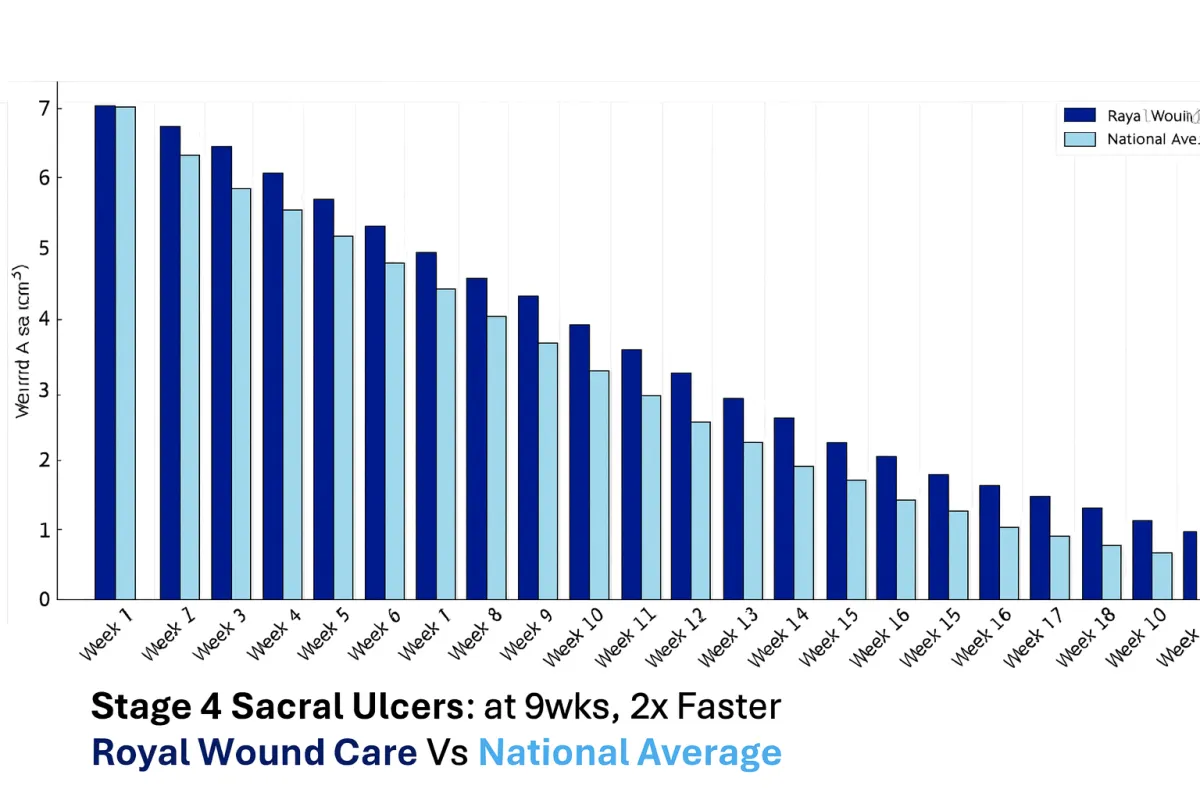
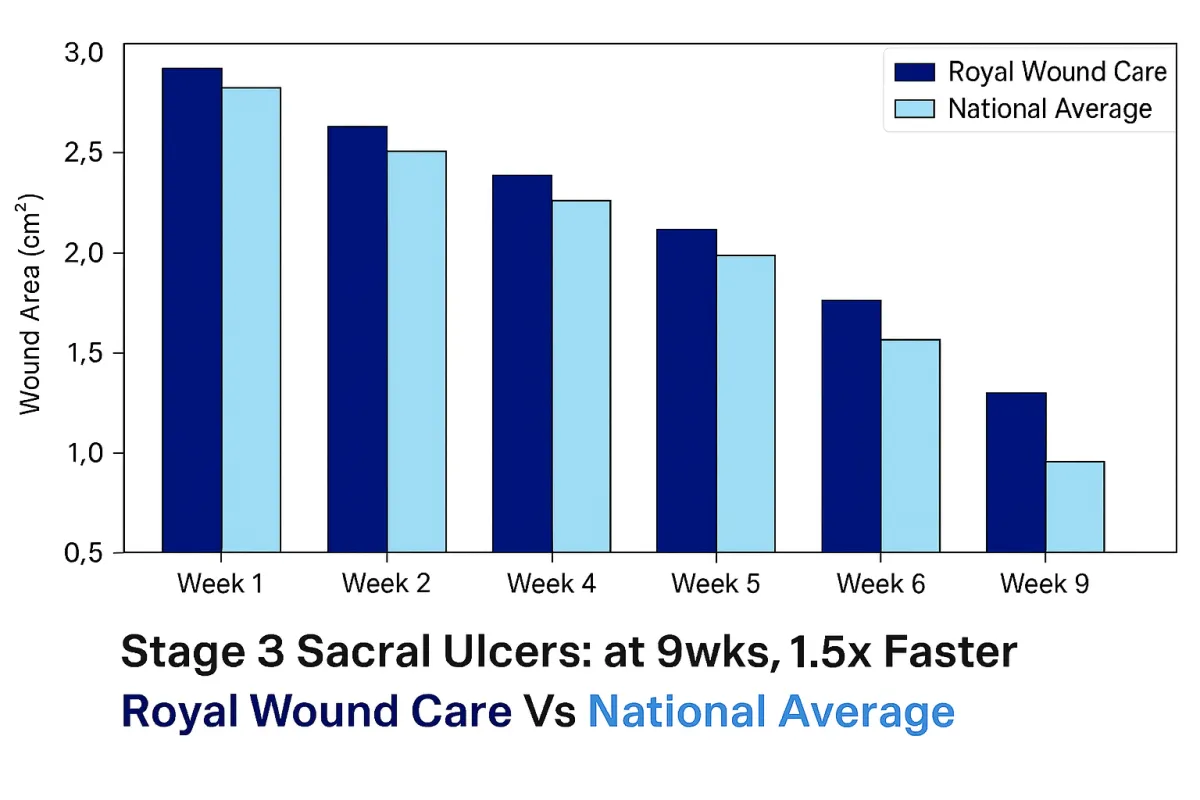
At Royal Wound Care, we deliver results that consistently outperform the national average. Our advanced healing process combines evidence-based treatments, personalized care plans, and direct physician oversight to ensure optimal outcomes. Unlike many clinics, every patient is managed by a board-certified wound care physician who evaluates their condition and customizes treatment from day one.
Our Stage 3 Sacral ulcer graph demonstrates how our approach leads to significantly faster healing compared to the national average. While traditional care results in gradual wound size reduction over several months, patients treated at Royal Wound Care experience more rapid progress through targeted therapies, aggressive infection control, and ongoing physician-directed adjustments to their care plan. Our proactive methods allow us to close even complex wounds weeks earlier than national trends, improving patient mobility, reducing pain, and preventing further complications.
Stage 4 sacral ulcers are among the most complex wounds to treat, yet our outcomes set us apart. Patients at Royal Wound Care heal twice as fast as the national average by leveraging advanced biologic grafts, comprehensive infection management, and customized care protocols. These results highlight our proactive, physician-led care model, allowing us to manage even the most challenging cases successfully while improving long-term patient outcomes.
What Our Partners Experience
86% lower infection rates

47% faster healing compared to others

88% fewer wound-related rehospitalizations

58% faster pressure ulcer healing times

Ready to Heal with Royal Wound Care?
LPN Wound Care Certification: A Practical Guide for LPNs Ready to Specialize
LPN Wound Care Certification: A Practical Guide for LPNs Ready to Specialize
An LPN wound care certification can be a valuable next step for licensed practical nurses who want to expand their clinical knowledge and skills and specialize in wound management. More specifically, as wound care becomes an increasingly important part of healthcare, specialized training proves essential.
Certification helps LPNs better understand wound assessment, evidence-based treatments approaches, infection prevention, and proper documentation. These are leading factors in providing optimal care, and they prove particularly crucial when caring for complex or chronic wounds.
At Royal Wound Care, physician-led wound management is at the heart of everything we do. Under the leadership of Dr. Moaddel, our team has extensive experience treating complex wounds and educating professionals on best practices. That’s why in this guide, we’ll discuss what LPN wound care certification is and what you can expect from the certification process.
Whether you’re visiting Royal Wound Care’s West Hills office or reviewing our advanced educational resources outline, the goal remains the same: to help patients achieve better healing outcomes while equipping healthcare providers with the knowledge needed to deliver advanced wound care.

LPN Wound Care Certification: What It Means in Practice
An LPN wound care certification is a formal credential that demonstrates advanced knowledge and competency in skin and wound management beyond the requirements of basic nursing licensure. More specifically, it validates specialized skills in:
Wound assessment
Evidence-based treatment
Dressing selection
Infection recognition
Physiology of wound healing
These certifications are designed for licensed practical nurses (LPNs), licensed vocational nurses (LVNs), and other healthcare professionals who regularly care for patients with acute and chronic wounds. This includes those treating diabetic foot ulcers, pressure injuries, venous leg ulcers, surgical wounds, and other complex skin conditions.

For wound care professionals, that additional training translates into stronger clinical decision-making throughout the wound care process. Certified providers are ultimately better equipped to perform comprehensive wound assessments, select appropriate dressings, recognize early signs of infection, document wounds accurately, and contribute to evidence-based treatment plans.
Whether working in a skilled nursing facility, home health environment, or outpatient wound care settings, these skills support more consistent wound management and improved patient outcomes.
Related: Wound Care Certification for LPN: Requirements and Career Path
Can LPN Get Wound Care Certification?
Yes, Licensed Practical Nurses (LPNs) and Licensed Vocational Nurses (LVNs) are eligible to earn wound care certification through several nationally recognized certification programs. (Provided they meet the program’s eligibility criteria, of course.) As we’ll expand on below, wound care certifications are offered by notable organizations like:
To qualify, applications generally must hold an active, unrestricted LPN/LVN incense, complete the necessary board-approved wound care training course, and obtain documented clinical experience. These requirements are in place to ensure candidates have both the foundational and hands-on experience needed to provide evidence-based care.
While the WCC credential is one common pathway, it’s certainly not the only option available. Eligibility criteria, coursework, clinical hour requirements, and exam formats commonly vary between organizations. We talk more about this in our guides like: “Wound Care Certification Programs: How to Become Certified.”
Eligibility Pathways for LPNs
There isn’t a universal best pathway to becoming wound care certified. Instead, most certification organizations offer eligibility routes based on a combination of licensure, clinical experience, and formal education. Common eligibility pathways include:
Education or Training Pathway. Complete an approved wound care education or training program that covers topics such as wound assessment, skin and wound management, dressing selection, infection prevention, and evidence-based treatment practices. Many organizations recognize approved courses as part of their eligibility requirements.
Clinical Experience Pathway. Demonstrate a required amount of hands-on experience caring for patients with acute or chronic wounds. Depending on the certification provider, applications may need to document clinical hours or a minimum period of wound care practice before becoming eligible.
Continuing Education Pathway. Some certification bodies allow applicants to qualify by completing a specified number of continuing education hours. However, these hours generally must focus on wound care, skin integrity, pressure injury prevention, or related clinical topics.
Existing Credential Pathway. Certain organizations recognize previously earned wound care or related healthcare certifications as part of the eligibility process. However, acceptance varies by certification body.
Regardless of the pathway, most certification organizations require applicants to hold an active, unrestricted nursing license. They must also satisfy the program’s education and experience standards before taking the certification exam.
Related: Wound Care Nurse Certification for RN
Common Barriers LPNs Face in Certification
Although wound care certification is accessible to many LPNs, there are several factors that can impact when and how candidates become eligible. Understanding common barriers in advance can help you choose a pathway that aligns with your current professional experience.
Clinical Experience Requirements. Many certification programs require applicants to document a minimum number of providing direct wound care. Nurses who spend less time treating wounds may need additional clinical experience before they qualify.
Employer Support. Access to major employer-sponsored education varies. Some healthcare organizations reimburse certification costs, provide continuing education opportunities, or allow dedicated study time. Others require nurses to complete training independently. It’s important to make sure you know how costs will be covered prior to enrolling.
Exam Eligibility Requirements. Each certification body establishes its own standards for licensure, education, clinical experience, and approved coursework. Failing to meet any prerequisite may delay eligibility until completing missing requirements.
Scope of Practice. Earning a wound care certification demonstrates advanced knowledge and competency. However, it doesn’t change an LPN’s legal scope of practice. Certified nurses must continue to practice within state regulations, employer policies, and their professional responsibilities.
It’s most important to review eligibility requirements before enrolling in a certification program. This can help you select a pathway that matches your education, clinical experience, current budget, and overall career goals.
Related: How Do You Become a Certified Wound Care Nurse?

Best Wound Care Certification for LPN
As we mentioned previously, there’s no single best credential for every LPN. The right fit ultimately depends on your license, professional setting, and career goals. To help you decide, we’re listing the leading certification programs for LPNs and LVNs below. Our hope is that by the end, you can better compare your options and understand what to expect.
Wound Care Certified (WCC)
The Wound Care Certified (WCC) credential is one of the most widely recognized wound care certifications available. Offered by the National Alliance of Wound Care and Ostomy (NAWCO), this certification is designed for clinicians who provide direct wound care and want to demonstrate advanced competency in skin and wound management.
Additionally, the program covers topics such as wound assessment, healing processes, preventive care, and professional practice standards. To qualify, candidates must meet the organization’s eligibility requirements before taking the exam, which typically include active licensure, a minimum of 2 years of clinical experience, and the completion of an approved training course.
Overall, the WCC credential is a strong option for LPNs who want to build a clinical foundation in wound care management.
Certified Wound Care Associate (CWCA)
The Certified Wound Care Associate (CWCA) credential, offered by the American Board of Wound Management (ABWM), provides another pathway for healthcare professionals looking to strengthen their knowledge of wound care. Ideal for entry-level professionals, the program focuses on wound assessment, patient management, and infection control.
To qualify, candidates must have a minimum of 3 years of wound care-related experience and hold an active, unrestricted professional license. This experience requirement helps ensure applicants have developed clinical judgement necessary to evaluate wounds and support treatment decisions.
Related: Wound Care Training for Nurses
Wound Care Nurse Certification (WCN-C)
The Wound Care Nurse Certification (WCN-C), a premier national training program, is designed to meet the educational needs of nurses working across different healthcare settings. Overall, the program offers a comprehensive overview of what LPNs, LVNs, and similar professionals can expect working in the wound care industry.
When enrolling, you can expect to learn about concepts such as the phases of wound healing, classification of wounds, role of a wound care nurse, types of and uses for wound debridement, and more. Additionally, nurses will participate in a Negative Pressure Wound Therapy skills lab.
Offered exclusively by Royal Wound Care and approved by the California Board of Registered Nursing and the California Board of Vocational Nursing, the WCN-C credential encourages professionals to provide the highest level of care.
Wound Treatment Associate-Certified (WTA-C)
The Wound Treatment Associate-Certified (WTA-C) credential, offered by the Wound, Ostomy, and Continence Nursing Certification Board (WOCNCB), is intended for nurses seeking specialized education in wound treatment. Eligibility generally includes holding an active nursing license, completing an approved wound care education program, and satisfying the organization's clinical training requirements.
The WTA-C credential is often considered one of the most accessible wound management courses. For nurses that are newer to the industry and want to develop foundational knowledge to exceed care expectations, this is an excellent starting point.
To learn more about industry standards and expectations, review our article: “When to See a Wound Care Specialist.”
LPN wound care certification can play an essential role in advancing your career.
As a nurse, earning wound care certifications can be one of the most rewarding decisions you can make. Whether you’re exploring certification for the first time or comparing different credentialing pathways, understanding each program’s eligibility requirements, educational expectations, and clinical prerequisites can help you make an informed decision.
At Royal Wound Care, one of the nation’s few board-certified wound care clinics, we believe education is a crucial step in proper patient care. Whether treating patients in West Hills, Woodland Hills, Canoga Park, Calabasas, Chatsworth, and the greater San Fernando Valley or leading the next generation of LPNs, our goal is to advance evidence-based wound care and improve healing outcomes.
To learn more, explore our advanced educational certification and professional partnership opportunities. Together, we can reduce hospitalizations, lower facility costs, and support patients every step of the way.
This post is educational and is not a substitute for professional medical evaluation. For any wound or health concern, please consult a qualified provider. Certification requirements change, so always confirm current eligibility requirements directly with the certifying body.
Warmly,
Dr. Moaddel, Royal Wound Care

WEST HILLS
7230 Medical Center Dr. Suite 100
West Hills, CA 91307
(818)–660–2977
BEVERLY HILLS
9735 Wilshare Blvd #210B
Beverly Hills, CA 90212
(818)–660–2977
Request an Appointment at a Royal Wound Care Facility near you.
Royal Wound Care is the expert in wound healing. Our board-certified wound care specialists are ready to help you begin your healing journey. Click the button below to request an appointment at a Wound Care Center near you—no referral needed
© 2025 Royal Wound Care, LLC. All rights reserved.
site by Growth Partners Marketing