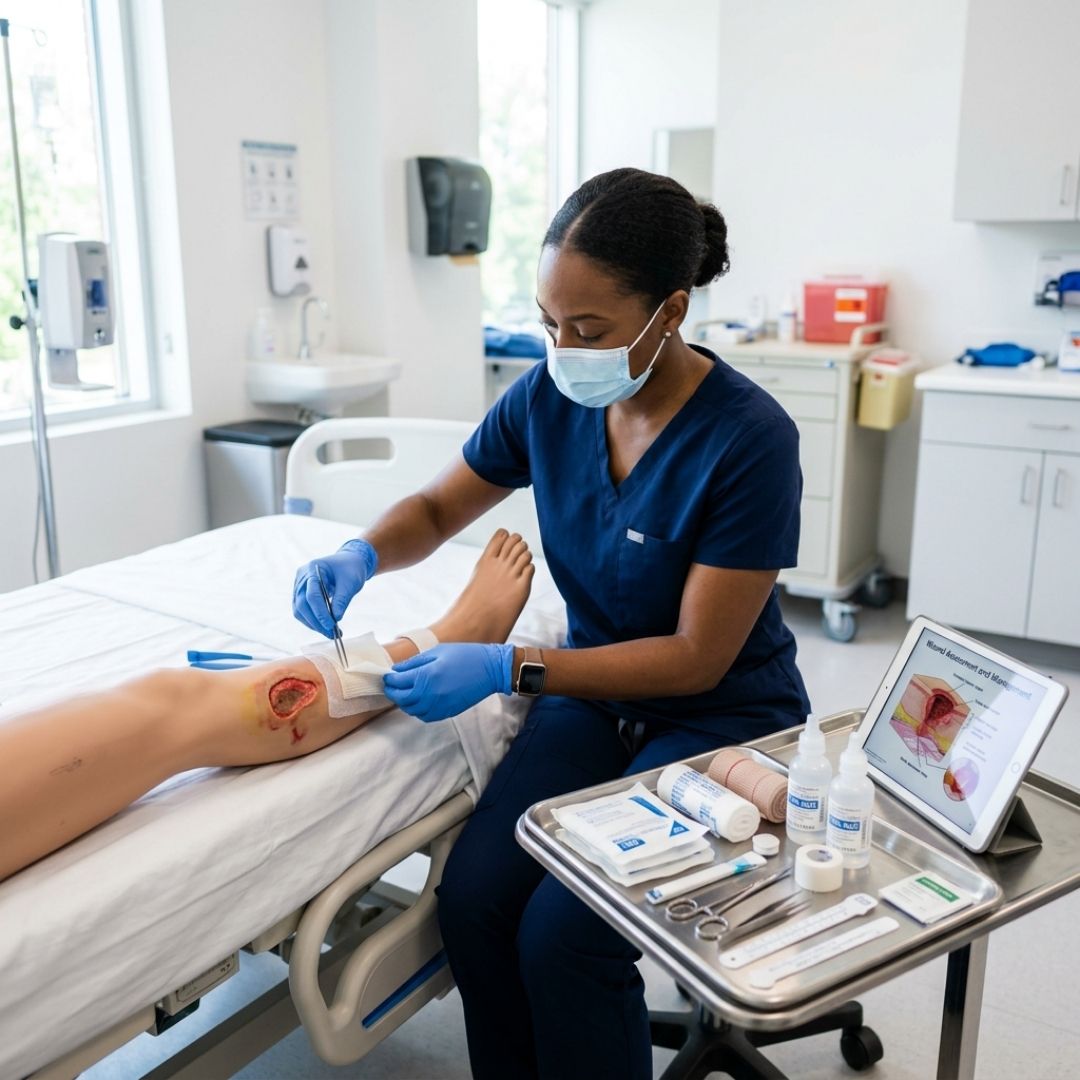
Wound Care Certification for LPN: Requirements and Career Path
Wound Care Certification for LPN: Requirements and Career Path
Licensed Practical Nurse (LPNs) who earn wound care certifications significantly advance their careers—in more ways than one. To start, those with specialized knowledge often receive better, higher-paying job opportunities and professional recognition. Additionally, healthcare professionals certified in wound care also reduce costs for healthcare facilities.
Most importantly, LPNs with wound care certifications can provide better, more optimized patient care. This can lead to faster healing, reduced infection rates, and, ultimately, better patient outcomes. And as chronic wounds are on the rise, affecting approximately 10.5 million Americans, many hospitals, long-term care facilities, and outpatient clinics are increasingly preferring—or requiring—LPNs to be wound care-certified.
As patient care demand increases, so does the need for proper wound care education, training, and certification. In this guide, we will discuss everything licensed nurses need to know about wound care certifications. We will explore the benefits, how to become certified, and which certifications offer the best advantage.
What Is a Wound Care Certification for LPN?
Wound care certification for LPNs is an advanced nursing credential that demonstrates expertise in assessing, managing, and treating wounds. There are many certification opportunities, each targeting a range of skills, circumstances, and patient concerns. You can read a brief overview in our post, “Wound Care Training for Nurses: Courses and Certifications.”
Ultimately, however, these courses have one thing in common: they allow licensed practical nurses to deepen their knowledge in wound care practices, documentation, and patient-centered treatment strategies. While some programs are also open to registered nurses and board-certified practitioners, many options are specifically accessible to LPNs.
Below, we will expand on which wound care certifications are best for licensed practical nurses. First, however, we will discuss why certification is worth it and outline the necessary steps to become certified.
For those beginning their career and are interested in learning more, we encourage you to read our guide: “How Do You Become a Certified Wound Care Nurse?”
Is Wound Care Certification Worth It for LPN?
Wound care certification for LPNs is absolutely worth it. Rather than viewing it as a standard form of continuing education, consider it a strategic investment in your professional career. The time and commitment these programs require demonstrate a strong dedication to advancing clinical expertise and, in turn, higher-quality patient care.
Here are a few specific benefits of earning wound care certifications as an LPN:
Salary and Job Opportunities
The wound care field is rapidly growing, with debilitating health issues on the rise. As a result, certified LPNs are extremely competitive in the job market. As discussed previously, employers are increasingly prioritizing certified LPNs for their skill and evidence-based knowledge.
With this, certified LPNs often benefit from higher salaries, advanced career opportunities, and specialized positions. To be specific, certification resulted in over a $13,000 salary increase for LPNs and LVNs. Moreover, many LPNs with speciality expertise experience a 7% salary increase within 2 years. This higher level of marketability is extremely valuable for those looking to advance their careers and take on more responsibility.
For additional information regarding different levels of certification, visit: Difference Between Wound Care Certificate-Trained and Board-Certified Providers
Professional Development
With today’s technology, the research surrounding wound treatment is constantly evolving. Because of this, it’s essential that healthcare professionals stay current with the latest evidence-based practices and clinical guidelines.
Wound care certification supports this by providing structured, up-to-date education that enhances clinical knowledge and decision-making skills. Both professionals and their employers can feel confident in the assessment, treatment, and management of chronic and acute wounds.
Related: The Difference Board-Certified Physician Leadership Makes in Nurse Wound Care Education
Patient Impact
LPNs are often much more hands-on with patients, as they’re responsible for cleaning wounds, changing dressings, and documenting healing progress. Because of this, they play a crucial role in making patients feel comfortable, secure, and cared for. Credibility can directly impact this relationship.
Certification allows LPNs to deliver the highest-quality care possible. And with advanced training, professionals are better equipped to manage everything from diabetic foot ulcers to minor lacerations, helping prevent complications and support faster healing. Not only does this competence increase trust, but it also improves patient outcomes.
At Royal Wound Care, we’re committed to combining medical expertise with compassionate treatment, supporting patients through every stage of healing. This is why proper education and training are the cornerstone of thoughtful, accessible care. To learn more, visit our Royal Wound Care’s educational opportunities, designed to support professional development.
How to Get Wound Care Certification for LPN
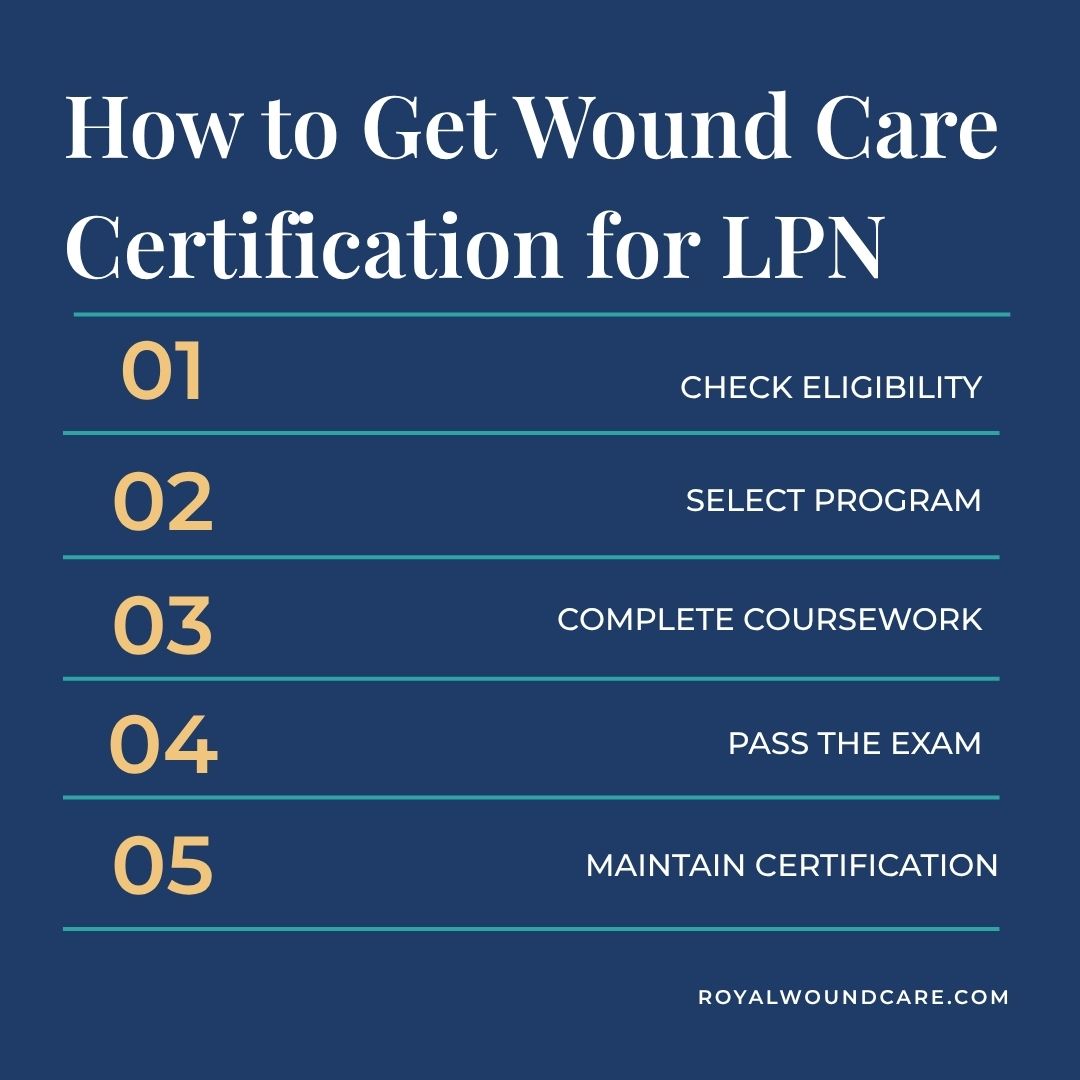
To apply for wound care certification, it’s important to verify eligibility, select your preferred program, complete the required coursework, pass the exam, and maintain certification. Below, we will provide further details on ensuring you meet qualifications:
Check Eligibility
Most wound care certification programs require an active, unrestricted LPN license and some level of clinical expertise. More specifically, many programs require 2 years of full-time or 4 years of part-time experience, or equivalent hours within the previous 5 years.
Select Program
Choose a program that aligns with your schedule and career goals. Additionally, for scheduling convenience, specific programs may be offered online, in-person, or in a hybrid format. It’s important to analyze availability before signing up.
Complete Coursework
After enrolling in a program, LPNs must complete the required coursework. In most cases, this ranges from 20 to 40 hours and covers both foundational and advanced topics. However, total time commitment can vary. Here’s a more detailed breakdown of what you can expect:
Online or Self-Paced Certifications: On average, these programs take anywhere from 25 to 60 hours to complete, depending on your pace and schedule. They offer flexibility, making them ideal for working professionals.
Basic Preparation Certifications: Entry-level certifications, such as the Wound Care Certification (WCC), require around 20 to 30 hours of coursework. This may include pre-course assignments, core training modules, and hands-on lessons.
Live Training Certifications: Many programs that feature live training generally take 2 to 5 days, totaling 25 to 60 hours of coursework. These programs often emphasize hands-on skills and real-world application.
Pass the Exam
After completing the coursework, LPNs must pass their certification exam. These exams are usually multiple choice and focus on wound care best practices, documentation, real-life case studies, and treatment planning. Before examination, it’s essential to use prep courses, practice tests, and structured study plans.
If an LPN were to fail their certification exam, many certifying bodies allow up to 3 or 4 additional retakes. However, following this, most programs require that candidates who exceed 4 retakes wait a full year before reapplication.
Maintain Certification
Most certifications require renewal every 2–3 years through continuing education. However, renewal requirements vary depending on the certifying body. Nonetheless, this ensures skills remain aligned with evolving standards in wound care management, treatment, and practice.
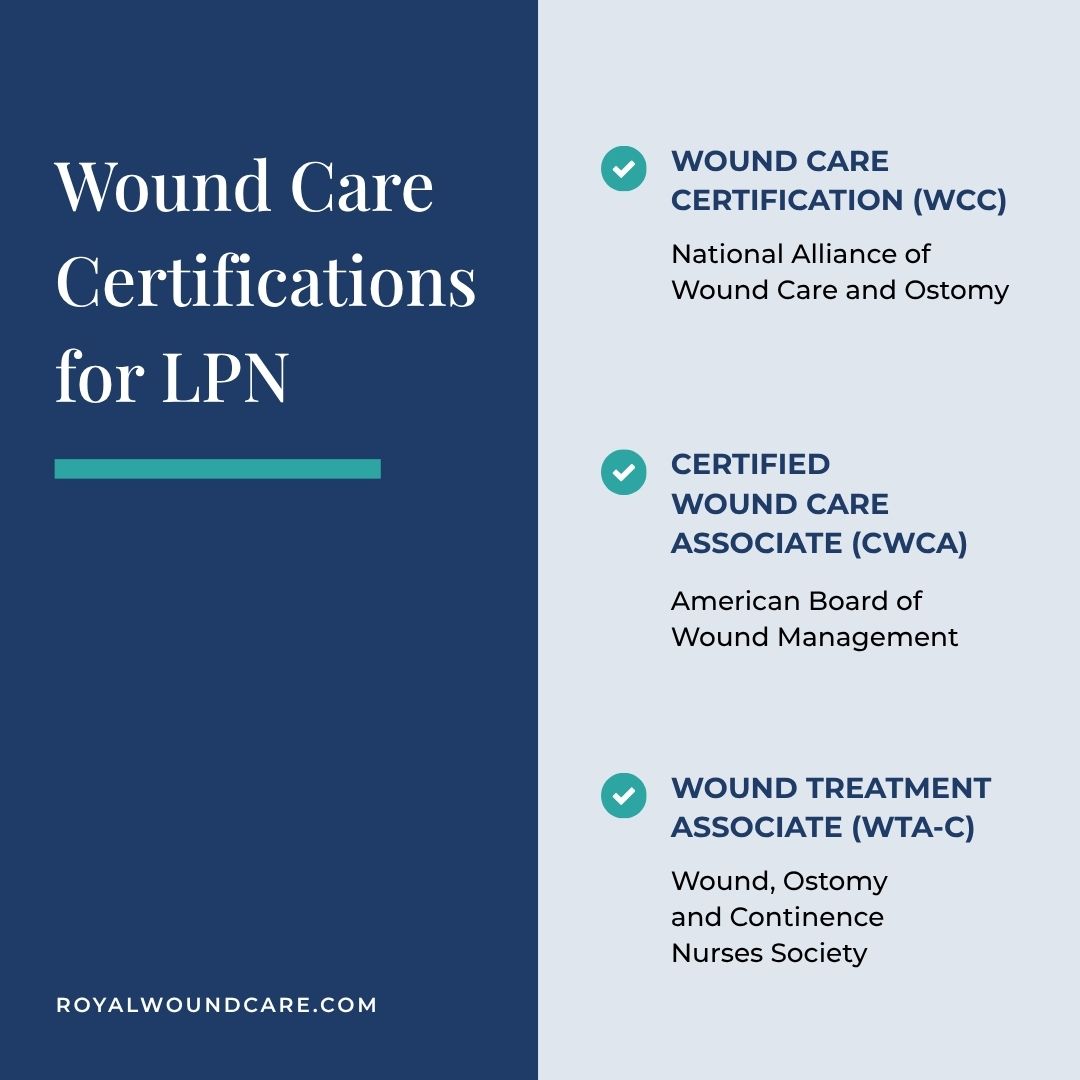
Which Wound Care Certification Is Best for LPN?
Wound Care Certification (WCC) - National Alliance of Wound Care and Ostomy
The Wound Care Certification (WCC) is one of the most recognized credentials offered by the National Alliance of Wound Care and Ostomy (NAWCO). This foundational certification focuses on practical, evidence-based care in skin and wound management.
This program covers key topics such as wound assessment, healing processes, skin integrity, risk factors, preventive care, infection prevention, and professional practice standards.
Key requirements:
Eligibility: RN, LPN/LVN, PT, PTA, MD, DO, DPM, PA, and other qualified healthcare professionals
Experience: Minimum of 2 years of clinical experience and completion of an approved training course
Exam: 110 multiple-choice questions (online or in-person)
Recertification: Valid for five years with continuing education requirements
Cost: Approximately $350+
Certified Wound Care Associate (CWCA) - American Board of Wound Management
The Certified Wound Care Associate (CWCA) certification, offered by the American Board of Wound Management, is ideal for entry-level professionals seeking foundational knowledge. The program focuses on wound assessment, patient management, wound healing environments, and infection control.
Essentially, the CWCA certificate covers five key wound care domains, ensuring professionals remain consistent across the board.
Key requirements:
Eligibility: LPN, LVN, PTA, MD, DO, DPM, CNA, CMA, dietitians, and other qualified healthcare professionals
Experience: Minimum of 3 years of wound care-related experience
Exam: 120 computer-based multiple-choice questions
Recertification: Every 10 years by retaking and passing the CWCA exam
Cost: Approximately $375+
Wound Treatment Associate (WTA-C) - Wound, Ostomy and Continence Nurses Society
The Wound Treatment Associate (WTA-C) certification from the Wound, Ostomy and Continence Nurses Society is excellent for LPNs to pursue. The program covers basic bedside wound care, foundational skin anatomy, pressure injury prevention, wound assessment, and documentation. Additionally, LPNs learn expertise regarding specialized wound care, including how to treat and care for diabetic, arterial, and venous ulcers.
Many of these clinical skills are learned through hands-on labs in injury staging, dressing selection, and negative pressure wound therapy (NPWT).
Key requirements:
Eligibility: LPN, LVN, or RN
Education Pathways:
Completion of an approved WTA or skin and wound care course within the past 5 years or
Completion of required continuing education hours in wound care
Clinical Experience:
16-160 supervised clinical hours (depending on pathway) under a qualified wound care professional
Exam: 110 multiple-choice questions
Recertification: Every 5 years by retaking and passing the renewal exam or the Professional Growth Pathway (PGP)
Cost: Approximately $250+
How Long Does It Take to Get Wound Care Certification for LPN?
The timeline varies depending on the program. However, most LPNs can complete their wound care certification within 2–3 months. Ultimately, balancing coursework with work schedules and clinical hours is often the biggest factor. However, many courses are flexible, allowing professionals to complete training while continuing to work in their designated field.
Wound care certification for LPNs can be a valuable step towards advancing clinical expertise and improving patient outcomes.
The wound care field is highly rewarding, both professionally and personally. With ample opportunities to grow, healthcare professionals can advance their careers, take on leadership roles, and earn higher salaries. Additionally, the potential to improve patient outcomes, prevent infections, and offer an improved quality of life is immeasurable. For LPNs, wound care certification is often an essential step.
At Royal Wound Care, we deliver results that consistently outperform the national average. This is because our foundation lies on evidence-based treatments, personalized care plans, and direct physician oversight. Additionally, this is why we offer both educational opportunities and professional partnerships.
Healing begins with education, consistency, and dedication. Patient-focused care results in lower infection rates, improved healing times, and fewer wound-related hospitalizations. Contact the Royal Wound Care Team today to learn more about how you can advance your career or facility.
