
Royal Wound Care is the nation’s leading provider of advanced wound care.
Royal Wound Care is a dedicated wound care center located in West Hills, California, specializing in advanced, comprehensive wound treatment. Founded by Dr. Moaddel, Royal Wound Care was born from his commitment to improve the way patients experience wound care. After witnessing the need for more compassionate, personalized care, Dr. Moaddel opened his own center to ensure that every patient receives the attention and expertise they deserve.
After witnessing the shortcomings in traditional wound care settings, Dr. Moaddel set out to create a better experience—one where patients receive the focused, attentive care they truly deserve. That vision became Royal Wound Care.

Our Mission
To deliver exceptional, accessible wound care tailored to the individual—whether in our state of-the-art clinic, at a skilled nursing facility, or in the comfort of a patient’s home. We treat the wound, but we also care for the whole person.
Why Choose Royal Wound Care?
Ongoing Education & Certification
For staff, families, and partner facilities, including wound in-services and professional training opportunities

Expert-Led Care by Board-Certified Providers
With years of hands-on experience managing chronic and complex wounds

Advanced Modalities
Including negative pressure therapy, mist ultrasound, debridement, Doppler studies, grafts, and more

Survey-Ready Documentation
That keeps facilities compliant and families informed

Truly Personalized Care Plans
Tailored to each patient’s condition, lifestyle, and healing goals

Mobile Services That Come to You
Care delivered at home, in clinics, or within partner facilities

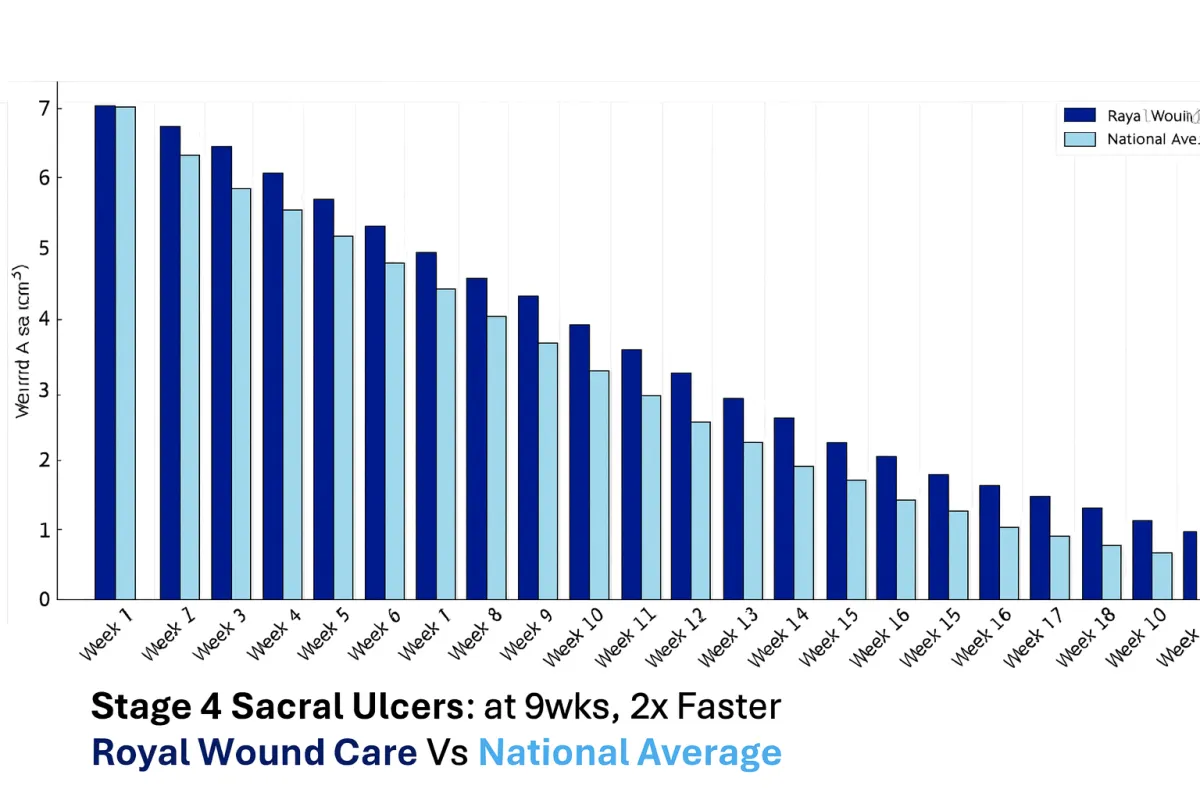
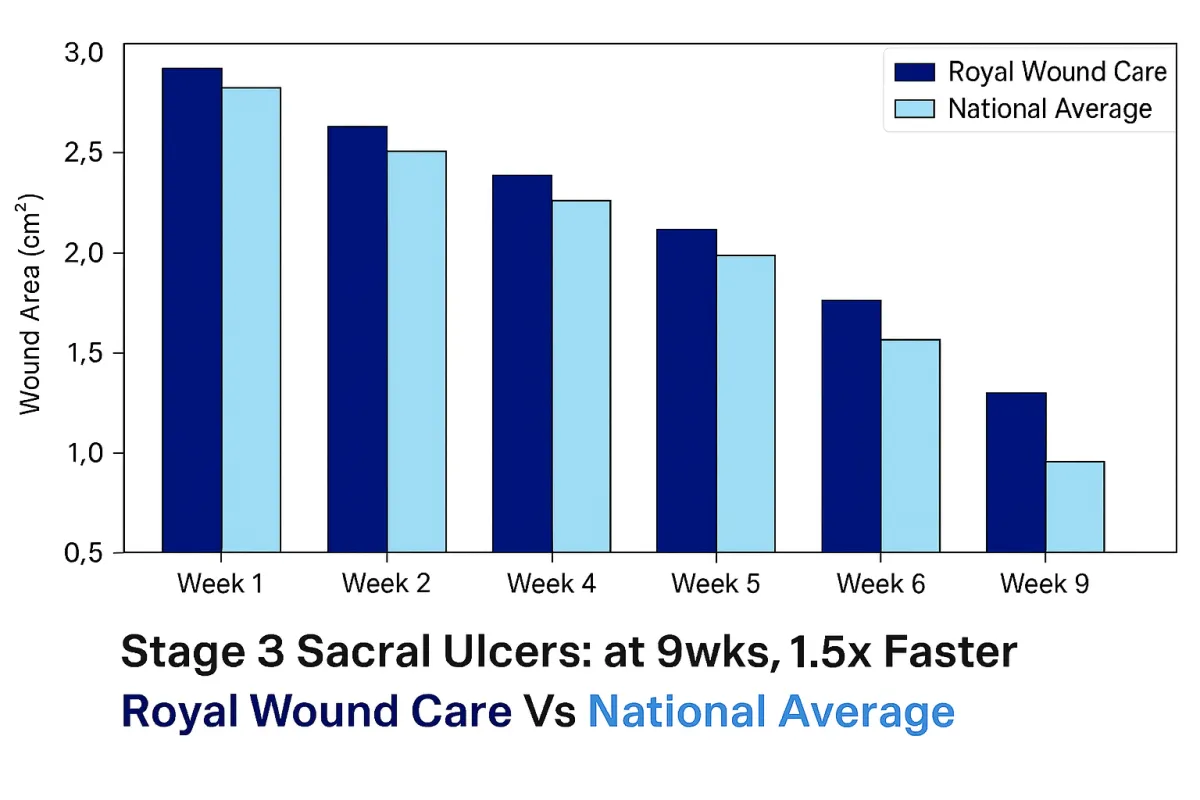
A Team That Cares And The Results To Prove It
At Royal Wound Care, we deliver results that consistently outperform the national average. Our advanced healing process combines evidence-based treatments, personalized care plans, and direct physician oversight to ensure optimal outcomes. Unlike many clinics, every patient is managed by a board-certified wound care physician who evaluates their condition and customizes treatment from day one.
Our Stage 3 Sacral ulcer graph demonstrates how our approach leads to significantly faster healing compared to the national average. While traditional care results in gradual wound size reduction over several months, patients treated at Royal Wound Care experience more rapid progress through targeted therapies, aggressive infection control, and ongoing physician-directed adjustments to their care plan. Our proactive methods allow us to close even complex wounds weeks earlier than national trends, improving patient mobility, reducing pain, and preventing further complications.
Stage 4 sacral ulcers are among the most complex wounds to treat, yet our outcomes set us apart. Patients at Royal Wound Care heal twice as fast as the national average by leveraging advanced biologic grafts, comprehensive infection management, and customized care protocols. These results highlight our proactive, physician-led care model, allowing us to manage even the most challenging cases successfully while improving long-term patient outcomes.
What Our Partners Experience
86% lower infection rates

47% faster healing compared to others

88% fewer wound-related rehospitalizations

58% faster pressure ulcer healing times

Ready to Heal with Royal Wound Care?
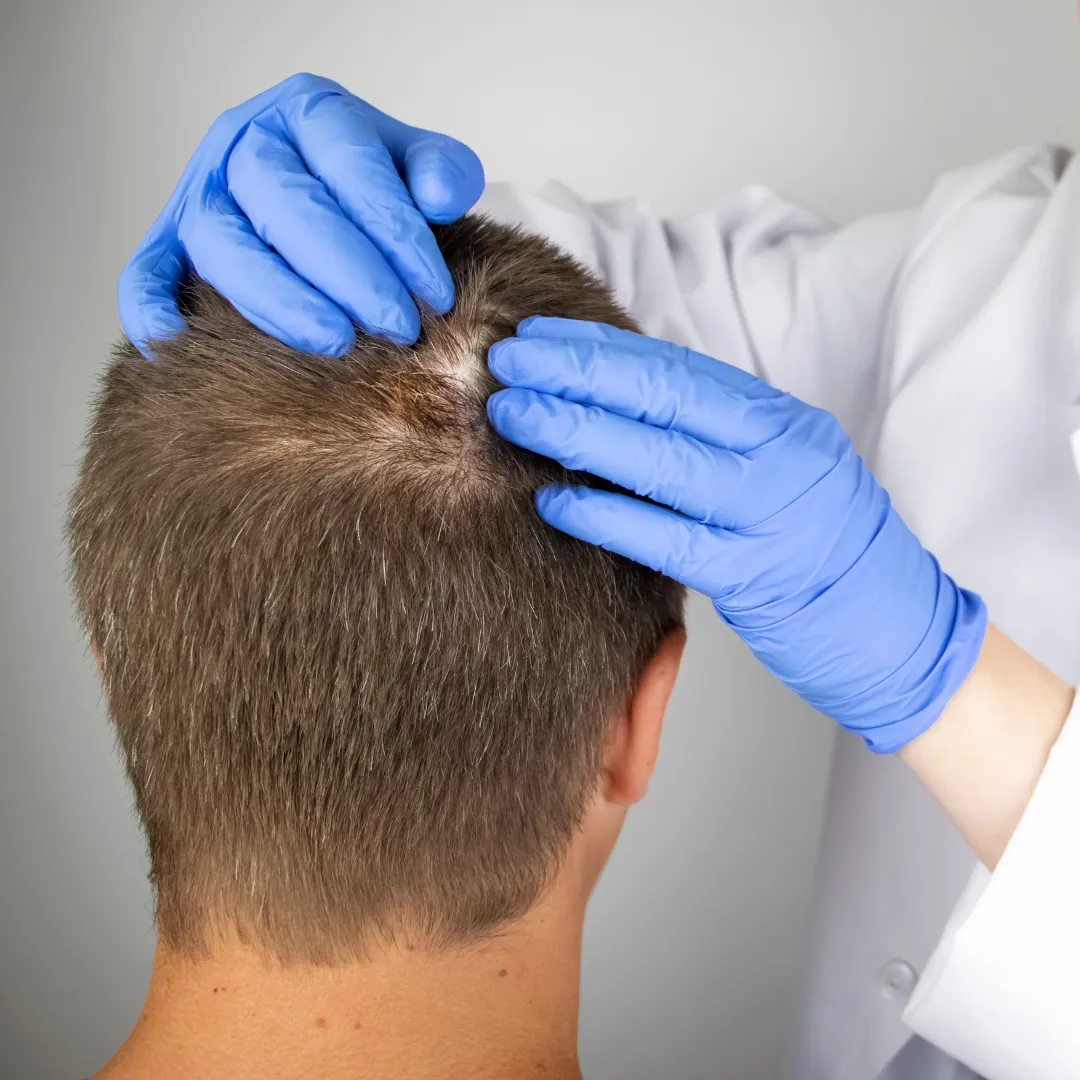
How to Treat a Scalp Wound: Treatment and Healing Tips
How to Treat a Scalp Wound: Treatment and Healing Tips
A scalp injury can feel and look pretty alarming, especially when there’s a lot of blood involved. Fortunately, not all scalp wounds are serious, and many minor cuts can be safely cared for at home. However, knowing how to treat a scalp wound depends on the injury itself.
It’s important to consider the depth of the cut, amount of bleeding, and any other symptoms you may be experiencing. This can help both you and a wound care provider determine whether standard first aid is appropriate, or if your injury calls for professional treatment.
At Royal Wound Care, led by Dr. Moaddel, we regularly treat scalp wounds at our West Hills clinic. That’s why below, we’re sharing our guide on how to treat a scalp wound, step by step. We’ll share how to assess the injury, what you can do to care for it safely, and what may require professional treatment from a certified wound care specialist.
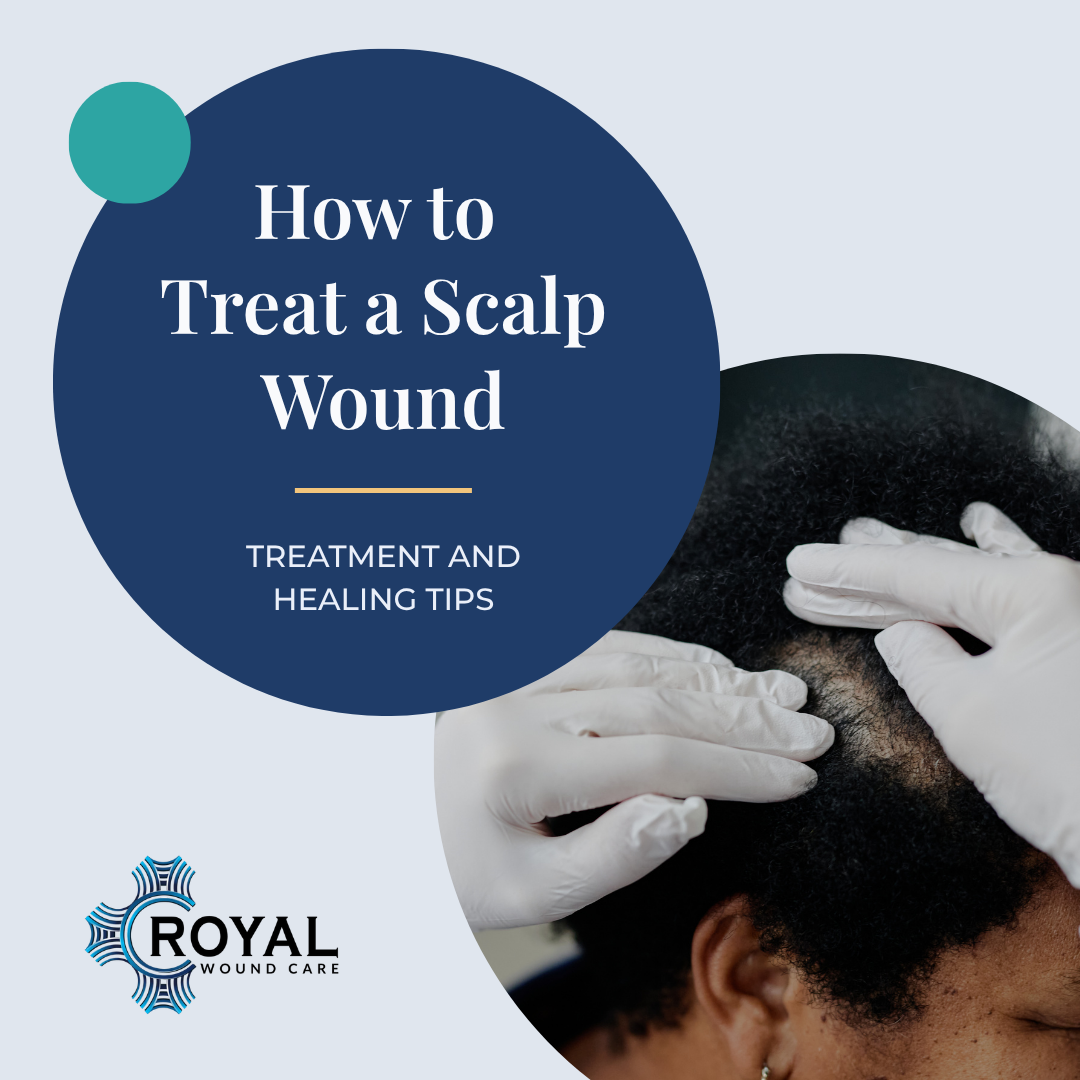
How to Treat a Scalp Wound Safely
The skin on the head has a lot of small blood vessels close to the surface, meaning that when they’re injured, they often bleed a lot. While most head injuries are minor and don’t require medical attention, heavy bleeding can, understandably, feel alarming. When you understand that scalp wounds bleed more profusely and how to address it promptly, you can stay calm and treat the area with confidence.
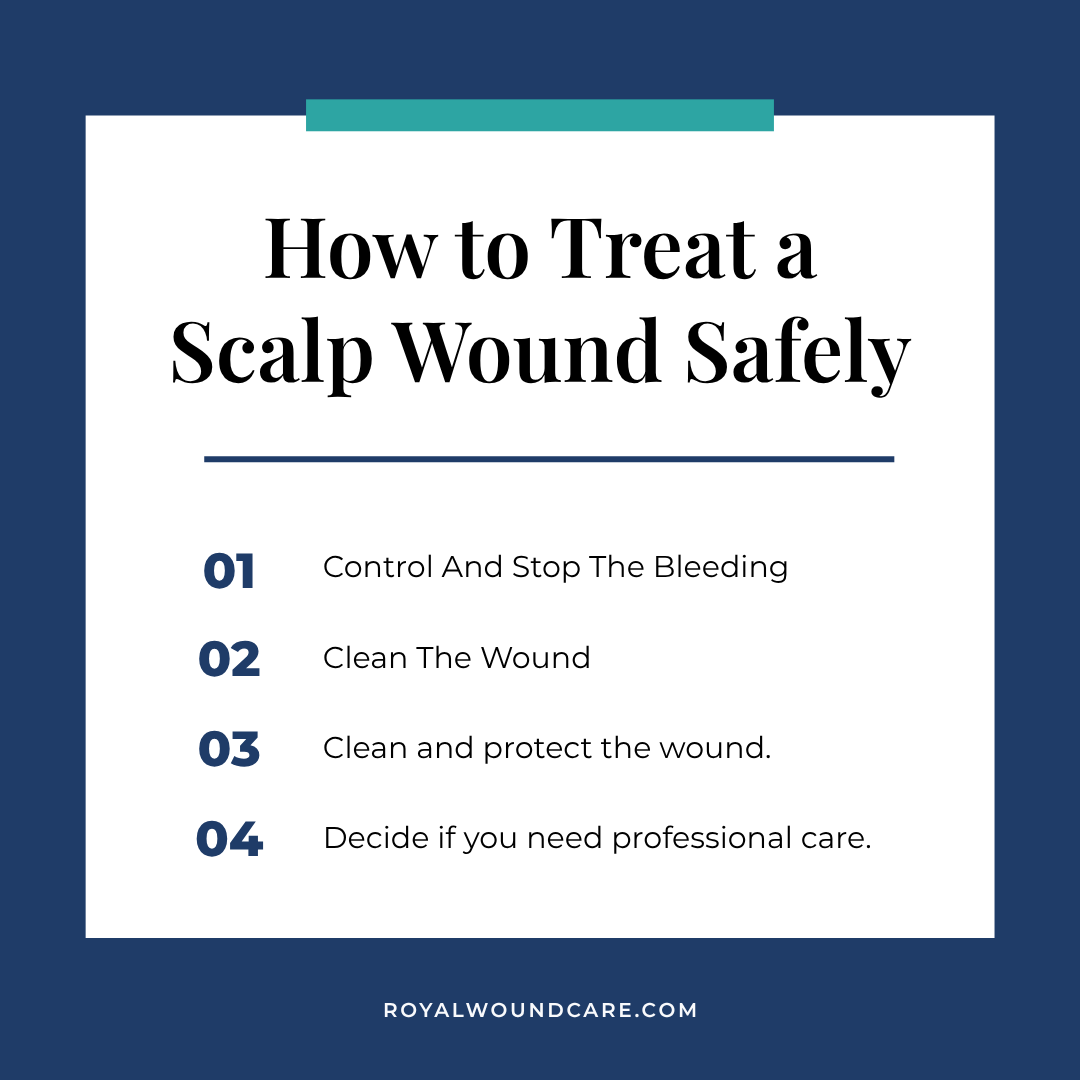
Below, we’ll cover four main steps: assessing the injury, controlling the bleeding, cleaning and protecting the wound, and deciding whether professional care is needed. Most importantly, we’ll discuss how to know the difference between wounds you can treat at home and head wounds that require emergency treatment.
Related: How to Treat a Laceration
What Is a Scalp Wound?
A scalp wound is any break in the skin covering the top and sides of the head, and it can range from a minor cut to a deeper injury that may require medical treatment. Common causes include falls, sports impacts, sharp objects, and accidents around the home. Because the scalp sits over the skull with skin that's thick yet richly supplied with blood, these injuries behave differently than cuts elsewhere.
The reason they can bleed a lot comes down to anatomy. Many tiny arteries and veins serve the muscles and skin on your head, while superficial arteries and veins are close to the surface of the skin. A heavy amount of blood loss makes a scalp injury look alarming, even if the underlying injury is minor.
Not every scalp problem comes from trauma, though. Ongoing scalp irritation can stem from chronic skin conditions rather than an injury, since the scalp is densely packed with oil glands and hair follicles that make it prone to inflamed, flaking, and irritated skin. Conditions like scalp psoriasis, seborrheic dermatitis, and contact dermatitis can cause itching, flaking, and open skin that scabs and bleeds when scratched.
Scalp psoriasis and seborrheic dermatitis of the scalp share some similar treatments, including medicated shampoos and corticosteroid lotions, though scalp psoriasis is often persistent and more difficult to treat.
If a spot on your scalp bleeds repeatedly or refuses to heal, that's a different concern entirely. Because the top of the head gets significant sun exposure, a bump that bleeds consistently can be a warning sign of skin cancer.
Any non-healing lesion deserves professional evaluation, and our team serves patients across Canoga Park, Calabasas, and the wider San Fernando Valley for exactly these concerns.
How to Treat Scalp Wounds
The treatment approach follows a clear, ordered process. Your first job is always to get the bleeding under control, then clean the wound, protect it, and watch how it heals. Below, each step breaks down what to do and why it matters.
Remember that deeper wounds or wounds with additional symptoms may require evaluation by a healthcare professional. Use the steps below as a guide for minor injuries and seek professional guidance when necessary.
Step One: Control and Stop the Bleeding
Firm, direct pressure is what stops the bleeding on a scalp cut. Press steadily with clean gauze or cloth rather than dabbing, as lifting the gauze simply removes blood on the surface. Steady pressure also flattens open blood vessels, allowing the blood to clot and form a natural seal.
For most minor scalp lacerations, bleeding generally stops after 15 minutes of direct pressure. If you notice that bleeding becomes heavier, more consistent, or doesn’t start to slow after 15 minutes, seek immediate medical attention.
Related: When to Go to Urgent Care vs. ER for Wound Care
Step Two: Clean the Wound
Once the bleeding stops, cleaning comes next to lower the risk of infection. Rinse the area gently under running water to flush away dirt and debris, and avoid scrubbing. Too much friction can cause reinjury and potentially open the wound back up, restarting the bleeding.
Additionally, make sure to avoid cleaning the area with antiseptics, such as alcohol or hydrogen peroxide, unless directed otherwise by your healthcare provider. Strong topical antiseptics can reduce the viability of skin fibroblasts and, in some cases, disrupt the healing process. To help your cut heal, use antimicrobial agents, mild soap and water, or saline solution.
Related: How to Tell If a Wound Is Infected
Step Three: Protect the Wound and Support Healing
After cleaning, a thin layer of antibiotic ointment and a non-stick dressing help keep the area moist and protected. If your scalp is affected by a chronic condition rather than a cut, medicated shampoos are often the foundation of treatment for many patients.
Beyond this, make sure not to scratch or pick at any scabs that are forming. Scabs are your body’s way of shielding the broken skin, keeping out germs and bacteria, and protecting the tissue repair process. Also, make sure to prioritize good nutrition, hydration, and chronic condition management, like diabetes, as this can all help wounds heal faster and more efficiently.
Step Four: Know When Stitches or Staples Are Needed
Some cuts are too deep or too wide to close on their own. When a scalp wound is large or doesn’t stop bleeding after 15 minutes, it may need stitches or staples to close the cut and stop the bleeding. Staples are a common, effective choice for the scalp specifically.
In fact, research shows that closing scalp wounds with staples is often faster, less costly, and doesn’t result in any additional complications. However, a medical professional will decide which method is the most appropriate for closing your wound based on its size, depth, and location.
If you're ever unsure whether a wound needs closure, err toward evaluation. This is exactly the kind of judgment call where our board-certified team helps patients across Woodland Hills, West Hills, and the San Fernando Valley.
How Long Do Scalp Wounds Take to Heal?
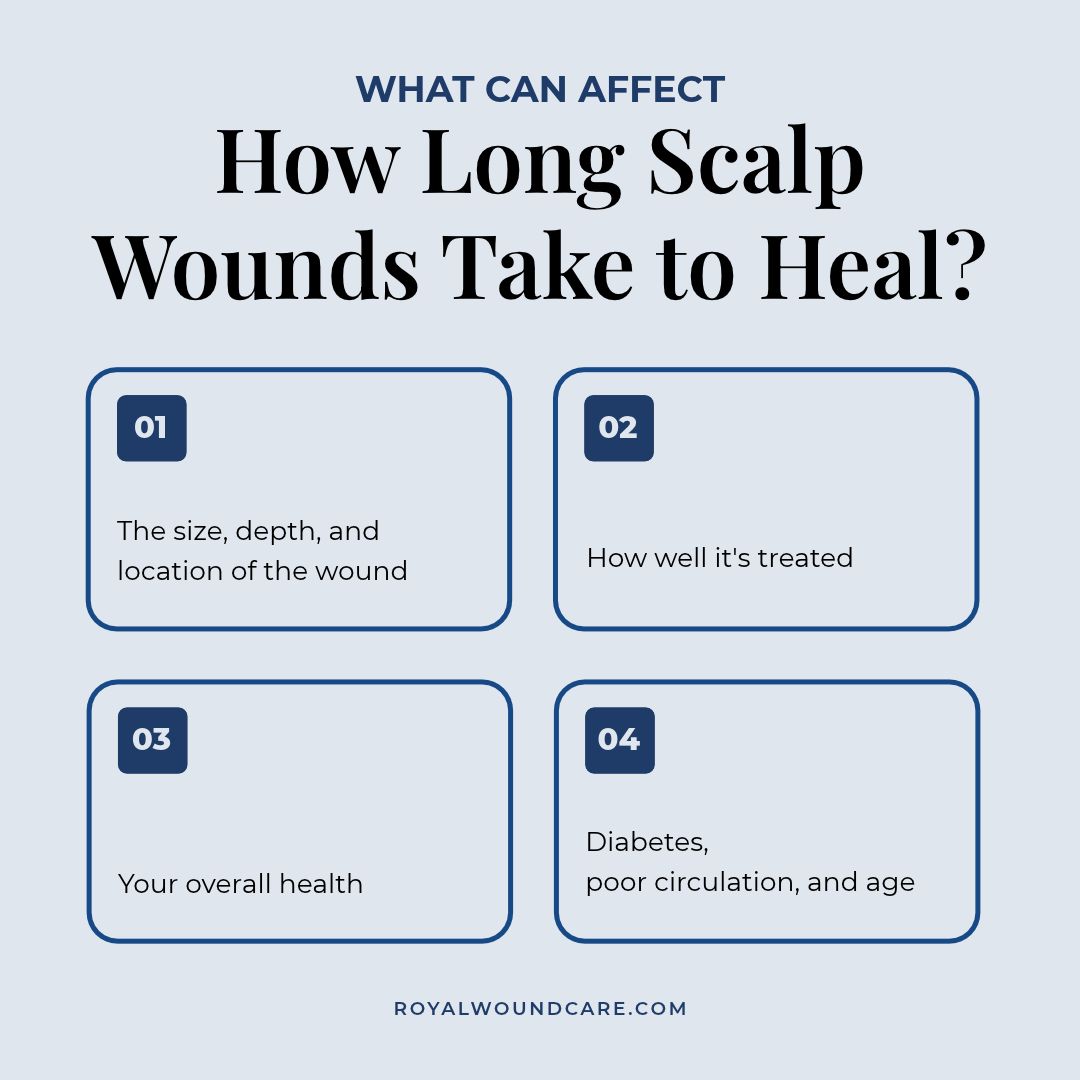
Scalp wounds heal at different speeds, and there's no single timeline that fits every injury. Healing time depends on the size, depth, and location of the wound, along with how well it's treated and your overall health. A small, clean scalp cut often closes quickly, while a deeper laceration or one that needs stitches or staples takes longer to fully mend.
Here’s what’s important for every patient to understand: Every wound moves through the same underlying stages of wound healing. Your body first works to stop the bleeding and manage inflammation before building new tissue and gradually strengthening the repaired area. How quickly you move through these stages can vary, which is why two scalp wounds may have very different healing timelines.
That's also why we remind our patients that factors like diabetes, poor circulation, and age can lead to slow healing. Rather than treating recovery as a universal timeline, it’s important to work with your wound care specialist to create a personalized recovery plan.
Reach out to Royal Wound Care for any concerns regarding scalp wounds.
Whenever you’re injured, a small amount of blood often feels manageable and easy to handle quickly. Scalp cuts, however, because they often bleed so much, can feel intimidating. However, now you know what steps to take for at-home care and what warrants a professional’s opinion. Our hope is that through this advice, you’re able to approach recovery calmly, clearly, and with confidence.
Royal Wound Care, one of the nation’s few board-certified wound care clinics, proudly serves patients throughout the greater San Fernando Valley. Our physician-led clinic leads with compassion and education regardless of what injury you visit us with. Contact the Royal Wound Care team to schedule an appointment; we’re here for you when you need it most.
Beyond treating patients, Royal Wound Care offers professional partnership opportunities and advanced educational opportunities for nurses and certified healthcare professionals. Together, we can help raise the standard of wound care.
This article is for educational purposes only and is not a substitute for professional medical evaluation. Always consult a qualified healthcare provider for diagnosis and treatment of any wound.
Dr. Moaddel, Royal Wound Care

WEST HILLS
7230 Medical Center Dr. Suite 100
West Hills, CA 91307
(818)–660–2977
BEVERLY HILLS
9735 Wilshare Blvd #210B
Beverly Hills, CA 90212
(818)–660–2977
Request an Appointment at a Royal Wound Care Facility near you.
Royal Wound Care is the expert in wound healing. Our board-certified wound care specialists are ready to help you begin your healing journey. Click the button below to request an appointment at a Wound Care Center near you—no referral needed
© 2025 Royal Wound Care, LLC. All rights reserved.
site by Growth Partners Marketing