
Royal Wound Care was founded with a commitment to advancing the standard of wound care.
Royal Wound Care is a dedicated wound care center located in West Hills, California, specializing in advanced, comprehensive wound treatment. Founded by Dr. Moaddel, Royal Wound Care was born from his commitment to improve the way patients experience wound care. After witnessing the need for more compassionate, personalized care, Dr. Moaddel opened his own center to ensure that every patient receives the attention and expertise they deserve.
After witnessing the shortcomings in traditional wound care settings, Dr. Moaddel set out to create a better experience—one where patients receive the focused, attentive care they truly deserve. That vision became Royal Wound Care.

Our Mission
To deliver exceptional, accessible wound care tailored to the individual—whether in our state of-the-art clinic, at a skilled nursing facility, or in the comfort of a patient’s home. We treat the wound, but we also care for the whole person.
Why Choose Royal Wound Care?
Ongoing Education & Certification
For staff, families, and partner facilities, including wound in-services and professional training opportunities

Expert-Led Care by Board-Certified Providers
With years of hands-on experience managing chronic and complex wounds

Advanced Modalities
Including negative pressure therapy, mist ultrasound, debridement, Doppler studies, grafts, and more

Survey-Ready Documentation
That keeps facilities compliant and families informed

Truly Personalized Care Plans
Tailored to each patient’s condition, lifestyle, and healing goals

Mobile Services That Come to You
Care delivered at home, in clinics, or within partner facilities

A Team That Cares And The Results To Prove It
At Royal Wound Care, we deliver results that consistently outperform the national average. Our advanced healing process combines evidence-based treatments, personalized care plans, and direct physician oversight to ensure optimal outcomes. Unlike many clinics, every patient is managed by a board-certified wound care physician who evaluates their condition and customizes treatment from day one.
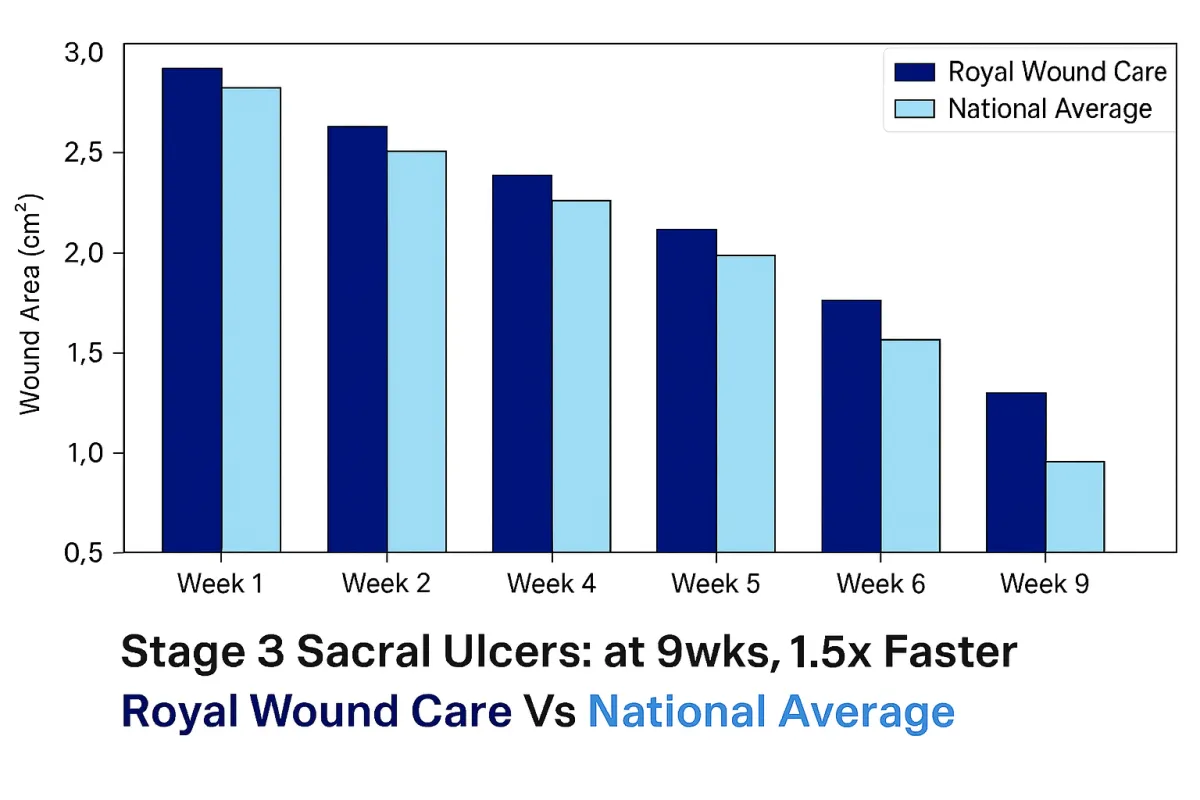
Our Stage 3 Sacral ulcer graph demonstrates how our approach leads to significantly faster healing compared to the national average. While traditional care results in gradual wound size reduction over several months, patients treated at Royal Wound Care experience more rapid progress through targeted therapies, aggressive infection control, and ongoing physician-directed adjustments to their care plan. Our proactive methods allow us to close even complex wounds weeks earlier than national trends, improving patient mobility, reducing pain, and preventing further complications.
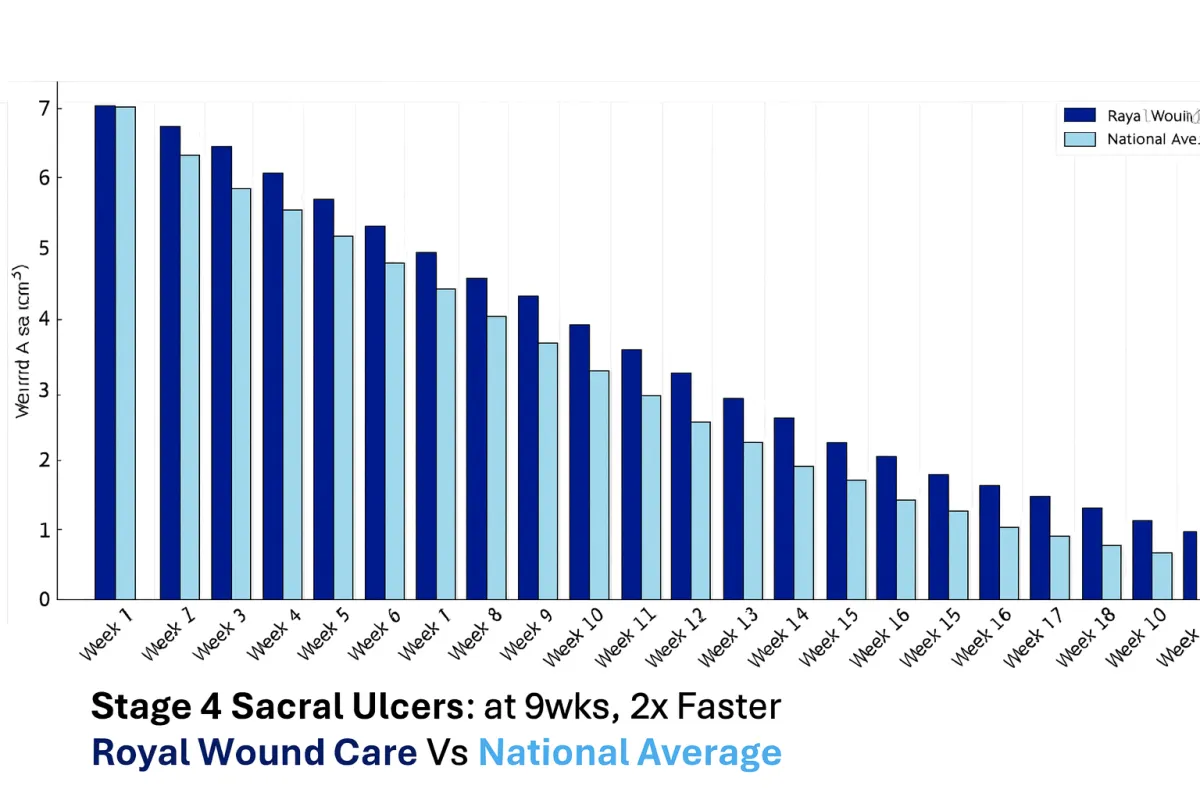
Stage 4 sacral ulcers are among the most complex wounds to treat, yet our outcomes set us apart. Patients at Royal Wound Care heal twice as fast as the national average by leveraging advanced biologic grafts, comprehensive infection management, and customized care protocols. These results highlight our proactive, physician-led care model, allowing us to manage even the most challenging cases successfully while improving long-term patient outcomes.
What Our Partners Experience
86% lower infection rates

47% faster healing compared to others

88% fewer wound-related rehospitalizations

58% faster pressure ulcer healing times

Ready to Heal with Royal Wound Care?
5 Dissolvable Stitches Healing Stages: Timeline and Recovery
5 Dissolvable Stitches Healing Stages: Timeline and Recovery
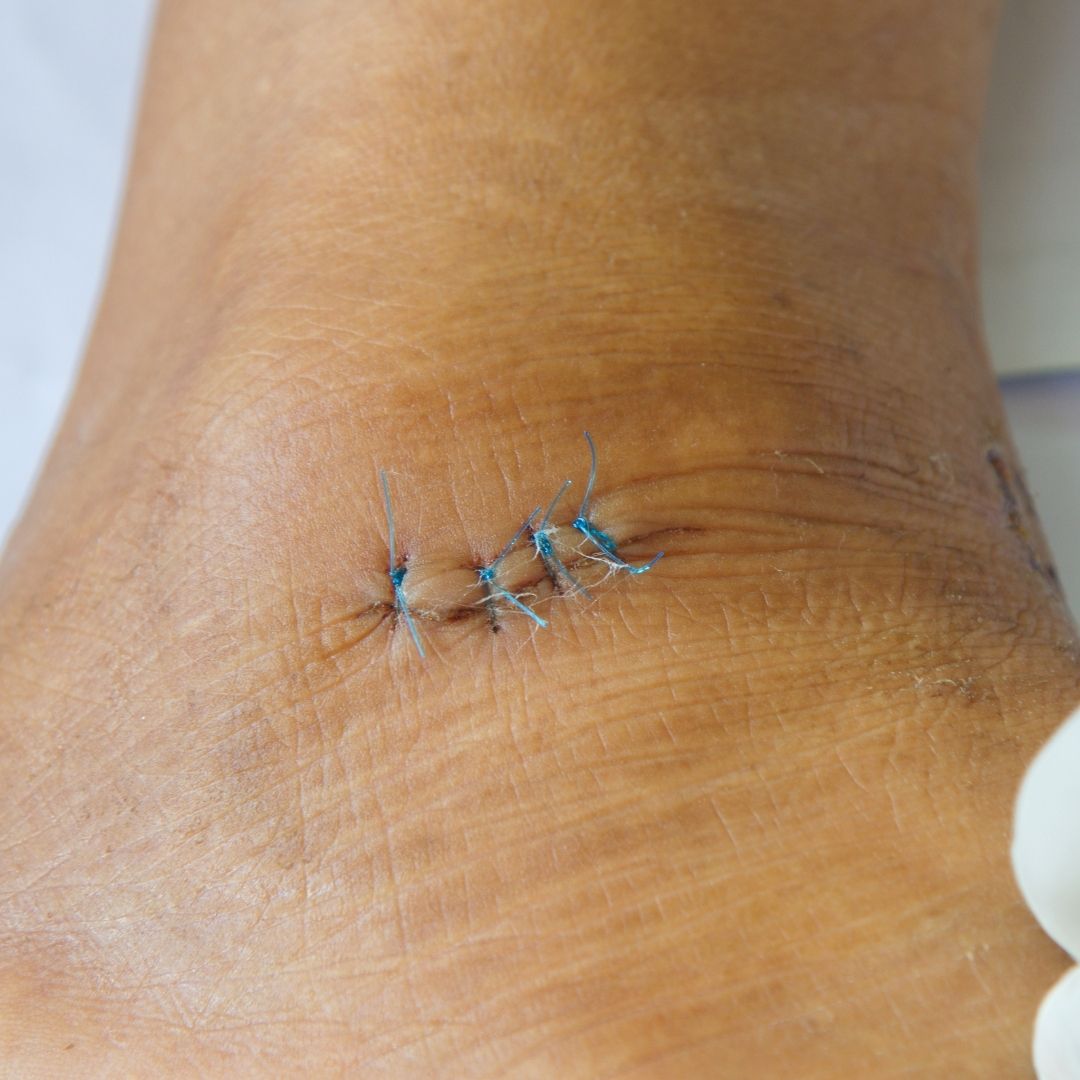
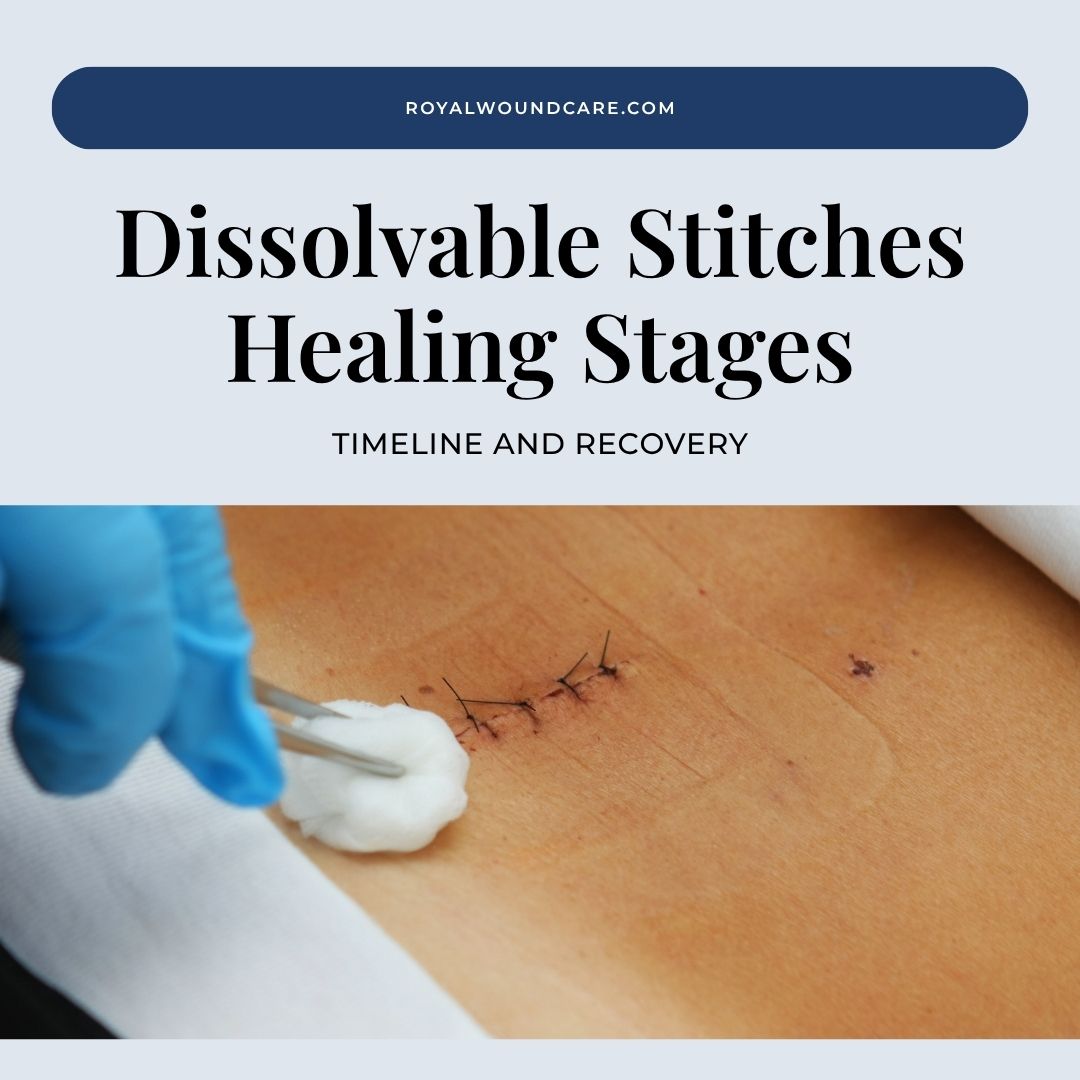
After a surgical procedure, many patients receive dissolvable stitches, also called absorbable sutures or absorbable stitches. Designed to break down on their own, dissolvable stitches follow distinct healing stages, with each stage accompanied by specific signs and physical changes.
Unlike the information we discussed in our post about when to take stitches out, dissolvable stitches don’t require manual removal. Instead, they break down naturally over the span of weeks with little to no discomfort. However, for patients who don’t know what to expect, this process can feel confusing—or even intimidating.
To better understand the process, we created a patient-focused guide on the healing stages of dissolvable stitches. We will discuss what dissolvable stitches are, what they’re made of, how long they take to dissolve, and what you can expect during each stage.
At Royal Wound Care, one of the nation’s few board-certified wound care clinics, we’re committed to serving the San Fernando Valley with compassionate, personalized treatment. And that starts with helping you understand every step of your care.
5 Dissolvable Stitches Healing Stages: Timeline and Recovery
Healing with dissolvable stitches is a gradual process. While timelines can vary depending on the type of stitches you receive and the suture material, it’s important to know what is normal—and what may be a cause for concern.
However, dissolvable stitches are increasingly common in healthcare settings, often used to treat a broad range of injuries. In fact, research found that absorbable stitches can reduce the risk of wound dehiscence compared to non-absorbable stitches. Although surgical procedures and aftercare can feel intimidating, understanding what to expect and how to care for your stitches can make a significant difference in your recovery.
Below, we will discuss factors to consider during the healing process. More specifically, we will explain what each stage of healing looks like, how to notice signs of infection, and how to encourage quicker, safer healing.
Related: How Long Does It Take for a Wound to Heal?
What Are Dissolvable Stitches?
Dissolvable stitches are absorbable sutures that naturally break down in the body over time, eliminating the need for removal. In most cases, doctors use dissolvable sutures after surgery, dental procedures, or to help close deep wounds. Because they don’t require professional removal, they’re ideal for the following reasons:
Offer a lower risk of infection compared to non-absorbable stitches
Allow for delicate procedures by minimizing skin trauma
Eliminate the need for removal in hard-to-reach or sensitive areas
Dissolvable stitches help hold tissue together during the early stages of healing, then gradually dissolve as the body repairs itself. Ultimately, this reduces the need for follow-up appointments, which can be especially challenging for pediatric patients, those with thin skin, or individuals who live far from the facility.
Related: Wound Care for Elderly Thin Skin
What Are Dissolvable Stitches Made Of?
Synthetic Suture Materials
Synthetic dissolvable stitches are artificial, synthetic polymers that hold tissues together during healing. Over time, the water in the body’s tissues slowly breaks down the polymer chains through a process known as hydrolysis. Common synthetic dissolvable suture materials consist of:
Polyglactin 910 (Vicryl): Best for facial and hand lacerations
Polyglycolic Acid (PGA): High tensile strength, ideal for general, cosmetic, and tissue surgery
Poliglecaprone 25 (Monocryl): A monofilament used to close skin
Polydioxanone (PDS): A monofilament ideal for deeper soft tissues
Many physicians increasingly prefer synthetic dissolvable stitches, as hydrolysis offers a more predictable healing timeline. Additionally, modern synthetics generally trigger less inflammation, making them best for both patient comfort and recovery.
Natural Suture Materials
Natural dissolvable stitches are made from natural, organic proteins used to close tissues inside the body. The body dissolves natural stitches through enzymatic degradation, a process in which the immune system gradually breaks down the suture material as healing progresses. Common natural dissolvable suture materials consist of:
Plain Gut: Made from twisted collagen strands from beef or sheep intestines, ideal in oral surgery or superficial skin closures
Chromic Gut: While similar to plain gut sutures, chromic gut is treated with chromic acid salts to resist enzymes. Ideal for dental and general surgery as well as gastrointestinal and urological procedures
Reconstituted Collagen: Derived from processed collagen, best for oral surgery, pediatric patients, tension-free closures, and superficial wounds
Because natural dissolvable stitches absorb so rapidly, they can often trigger a more intense inflammation response. However, this doesn’t make them less safe—healthcare professionals will select the most appropriate suture material based on wound type, location, and overall patient needs.
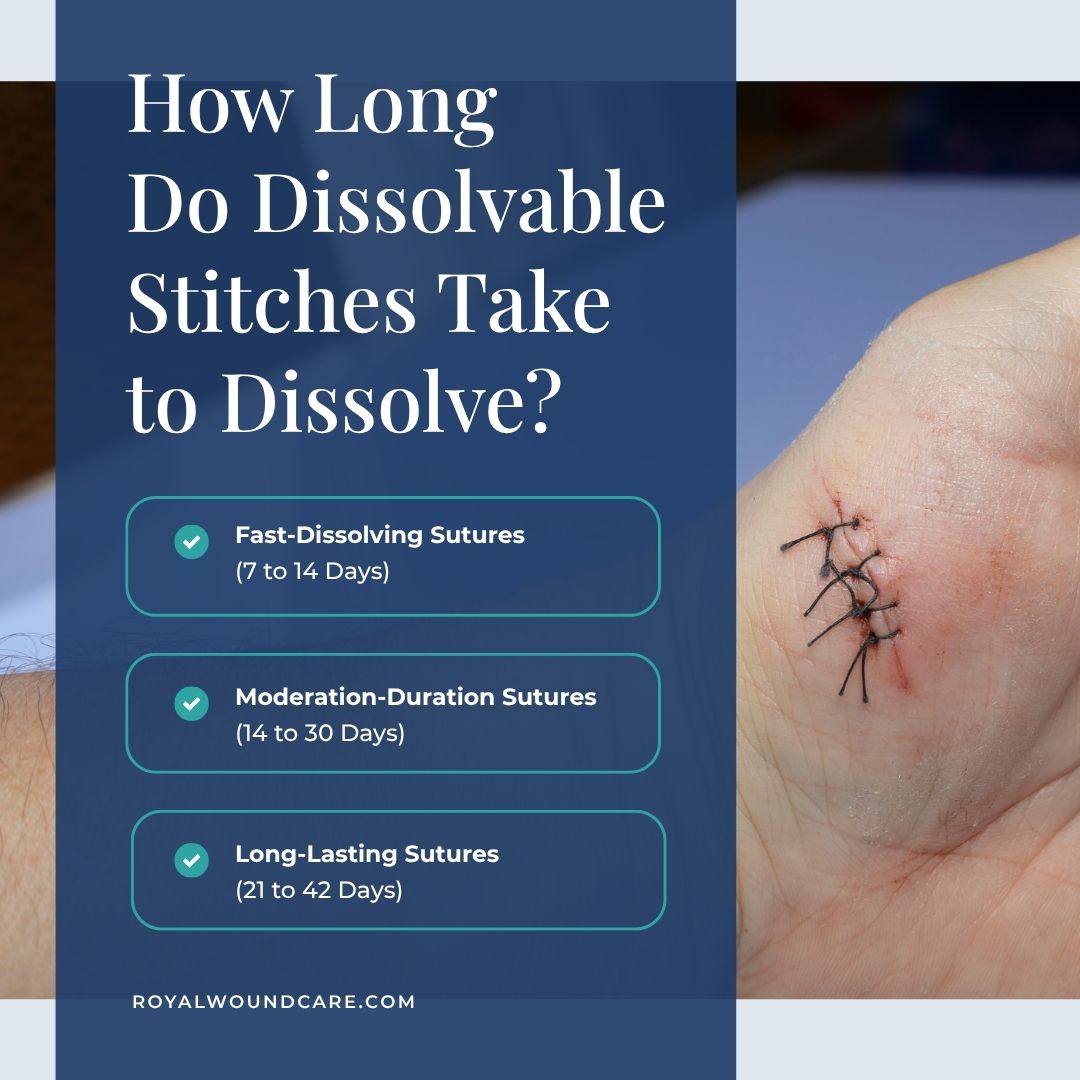
How Long Do Dissolvable Stitches Take to Dissolve?
Fast-Dissolving Sutures (7 to 14 Days)
Fast-dissolving stitches, used for superficial wounds and surgical incisions, begin to break down within 7 to 14 days (1–2 weeks). Designed to lose tensile strength and break down rapidly, specialists often use them in tissues that heal more quickly.
More specifically, two common fast-dissolving sutures are plain gut and polyglactin 910 (Vicryl). Both generally lose tensile strength within the first week, meaning they stop providing significant wound support even if the suture remains in place slightly longer.
Moderation-Duration Sutures (14 to 30 Days)
Moderate-duration stitches are primarily ideal for deeper or moderate-tension wounds, where patients require longer-lasting support during the healing process. These sutures maintain tensile strength for several weeks, helping keep wound edges secure as new tissue forms.
Unlike fast-dissolving stitches, they provide more sustained structural support before breaking down as the wound continues to heal. Two common moderate-duration stitches include chromic gut and polyglycolic acid (PGA). Both are designed to maintain support longer than fast-dissolving options, often retaining tensile strength for 3 to 5 weeks before absorption.
Long-Lasting Sutures (21 to 42 Days)
Long-lasting stitches provide long-term structural support, such as closing deep tissue wounds or surgical incisions. These sutures maintain tensile strength for a longer period, helping stabilize tissue as the body undergoes a more complex healing process.
Two common long-lasting sutures include poliglecaprone 25 (Monocryl) and polydioxanone (PDS). Both materials can retain strength for several weeks, with some continuing to provide internal support even as the sutures gradually dissolve. In many cases, full absorption may take several weeks to months, depending on the type of stitches and wound location.
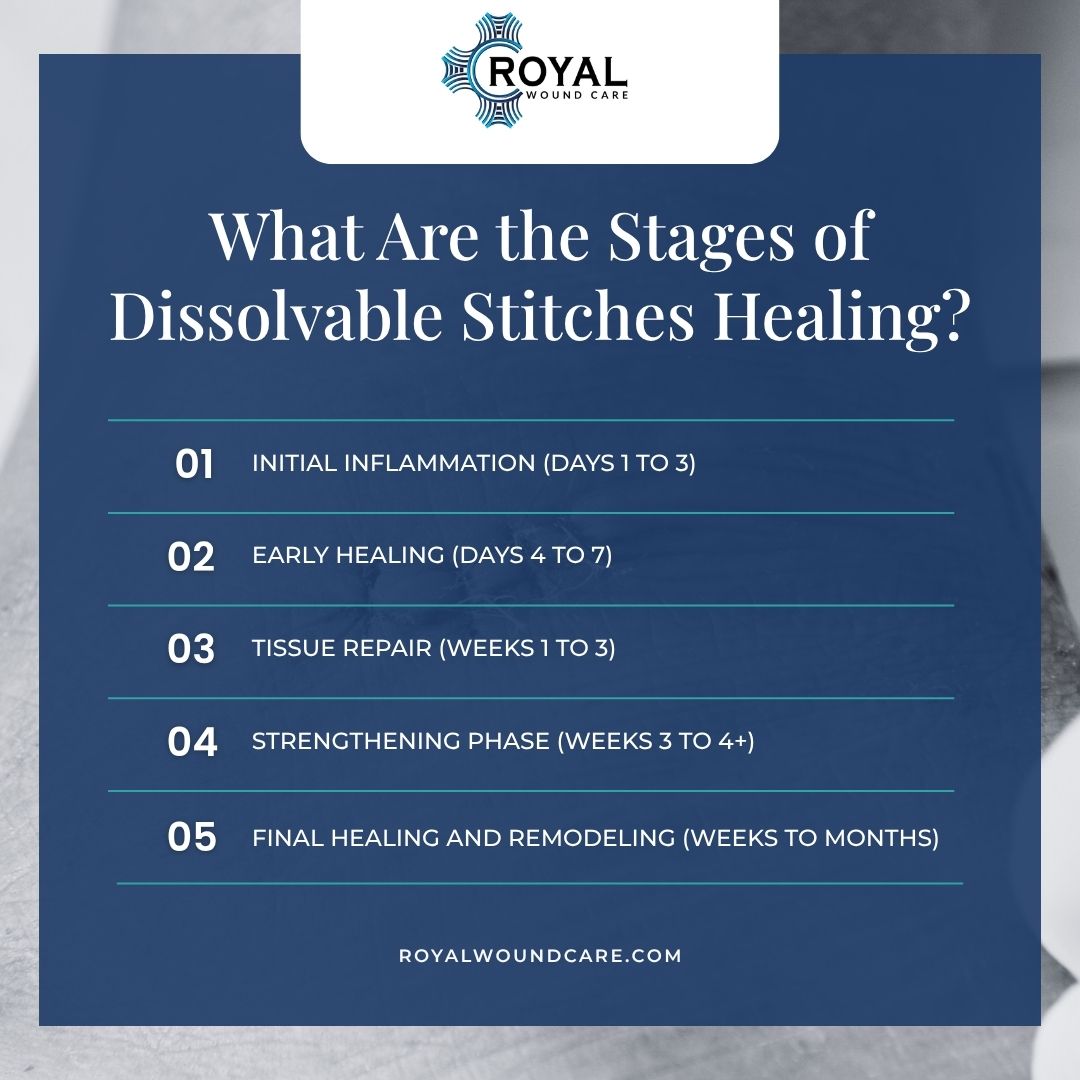
What Are the Stages of Dissolvable Stitches Healing?
Stage 1: Initial Inflammation (Days 1 to 3)
Within the first few days of receiving dissolvable stitches, the body immediately begins protecting the wound. You may notice a small amount of clear or slightly yellow fluid—this is completely normal. This is serous drainage, and it’s the body’s way of delivering nutrients to the wound.
Additionally, you may experience mild swelling, warmth, and pain or soreness. This is not something to be particularly concerned about just yet; it’s a natural inflammatory response to the injury.
Stage 2: Early Healing (Days 4 to 7)
Following the inflammation stage, the body transitions into early healing. During this, you may notice that swelling begins to decrease and the edges slowly begin to close. Additionally, while the suture is dissolving, you may experience mild itchiness. It’s crucial to continue following your care instructions to maintain a healthy, optimal healing process.
Avoid itching, scratching, tugging, or pulling at the stitches. The skin and tissues are particularly sensitive as the wound heals, as any disruption can lead to wound dehiscence.
Stage 3: Tissue Repair (Weeks 1 to 3)
Within the early weeks, new tissue begins to form, and the wound becomes more stable—a phase known as proliferation. Fibroblasts drive the formation of granulation tissue and blood vessels, producing collagen that serves as a scaffold for tissue growth. During this stage, skin may look pink, red, and slightly moist—this is normal.
Additionally, the stitches may begin to loosen or dissolve. While you may not feel soreness or tenderness by this point, the skin is still sensitive. Proper care plays a crucial role in ensuring the stitches don’t come out prematurely.
Stage 4: Strengthening Phase (Weeks 3 to 4+)
By weeks 3 and 4, the wound transitions from active repair to remodeling. You may experience a “mountain top” as the scar forms, and any bruising should begin to fade significantly. For internal dissolvable stitches specifically, small pieces of strands may push their way through the surface—also known as “spitting sutures.”
This is not a sign of infection, but a common experience during healing. If you’re concerned, do not hesitate to call your physician! They can provide guidance and ensure your recovery is progressing as expected.
Related: When to See a Wound Care Specialist
Stage 5: Final Healing and Remodeling (Weeks to Months)
Even after the stitches are gone, internal healing continues. The body will continue producing collagen, creating new tissues and strengthening old tissue. Additionally, while it may take several months, the scar will gradually fade and flatten. Use SPF on any recently healed wounds, as sunlight may impact pigmentation.
Signs of Stitches Dissolving Properly
After receiving dissolvable stitches, here are common signs to look for that ensure proper healing:
Gradual reduction in redness and swelling
No increasing pain
Wound edges staying closed
Minimal clear drainage
Thread fraying or falling out
Slight protrusion of stitches
During healing, it is entirely normal for dissolvable stitches to turn a lighter color, fall out, or even feel slightly itchy. Some patients also experience minor irritation or tingling. Stitches shouldn't, however, cause significant pain.
Dissolvable Stitches Signs of Infection
There are various telltale signs that indicate your stitches might be infected. If you’re questioning, look for symptoms such as:
Increased redness, swelling, or warmth after a few days
Pus or foul-smelling discharge
Fever or worsening pain
Stitches coming apart too early
Thick, noticeable discharge
While not always a cause for concern, it’s important to monitor slow-healing wounds closely. If there has been no improvement 1–2 weeks after receiving stitches, this may indicate an underlying issue worth discussing with a doctor.
Additionally, in most cases, infections typically develop within 3 to 7 days following surgery. However, this isn’t the case for all patients. If you are experiencing any of the symptoms even after the 3–7 day mark, we encourage you to contact the Royal Wound Care team. Additionally, for those in West Hills, Woodland Hills, Canoga Park, Calabasas, or the San Fernando Valley, you can also use our online form to request an appointment.
How to Dissolve Dissolvable Stitches Faster
You cannot necessarily accelerate the rate at which stitches dissolve. And, in most cases, trying to do so may interfere with the healing process. You can, however, support the body’s natural absorption process and reduce the risk of complications.
Keep Area Clean and Dry as Directed
Proper wound care is essential, especially in the early weeks of healing. Make sure to gently clean the wound with the prescribed antibiotic ointment and antimicrobial cleaning agents. Unless directed otherwise, avoid cleaning the wound with harsh antiseptics, such as alcohol or hydrogen peroxide, as they can reduce fibroblast viability and negatively affect tissue repair.
After cleaning, make sure you pat the wound dry rather than rub or drag it. Aggressive movement may further irritate the area, causing reinjury.
Follow Aftercare Instructions Strictly
Your provider’s care instructions are tailored to your specific wound. And while general timelines like this can serve as a supportive resource, it’s important to follow your physician’s guidance for the most accurate and effective healing. This is essential for preventing complications and supporting efficient healing.
Related: Royal Wound Care at Home: A Nurse’s Step-by-Step Checklist
Eat a Nutrient-Rich Diet
A patient’s diet plays a crucial role in the overall healing process. More specifically, research shows that malnutrition is associated with increased complications and infections. The body needs adequate protein, vitamins, and minerals to repair tissue, as these nutrients act as the building blocks for reducing inflammation and strengthening the immune system.
Related: Nutrition and Wound Healing: What to Eat for Faster Healing
Avoid Picking or Pulling Stitches
Resist the urge to pull, tug, pick at, or itch dissolvable stitches. While potentially uncomfortable, premature removal can disrupt the healing process and increase the risk of infection, scarring, or complications. If your stitches are causing significant pain or irritation, contact your physician for further guidance.
Understanding the healing stages of dissolvable stitches can help you feel more confident in your recovery.
For those who have never had dissolvable stitches, healing timelines can feel confusing. However, recovery is generally simple, straightforward, and safe. By following proper care instructions and understanding what to expect, you can feel confident throughout healing—and know when you may need professional assistance.
At Royal Wound Care, we’re proud to serve the San Fernando Valley with a patient-first approach rooted in compassion, clinical expertise, and evidence-based care. From your initial visit through every stage of recovery, our goal is to deliver treatment that’s both personalized and adaptable.
For SNFs and independent nurses, we also offer educational resources and collaborative partnership opportunities. With board-certified leadership, our approach is designed to support improved healing outcomes, reduce infection risk, and minimize wound-related hospitalizations—enhancing patient care at every step.

WEST HILLS
7230 Medical Center Dr. Suite 100
West Hills, CA 91307
(818)–660–2977
BEVERLY HILLS
9735 Wilshare Blvd #210B
Beverly Hills, CA 90212
(818)–660–2977
Request an Appointment at a Royal Wound Care Facility near you.
Royal Wound Care is the expert in wound healing. Our board-certified wound care specialists are ready to help you begin your healing journey. Click the button below to request an appointment at a Wound Care Center near you—no referral needed
© 2025 Royal Wound Care, LLC. All rights reserved.
site by Growth Partners Marketing