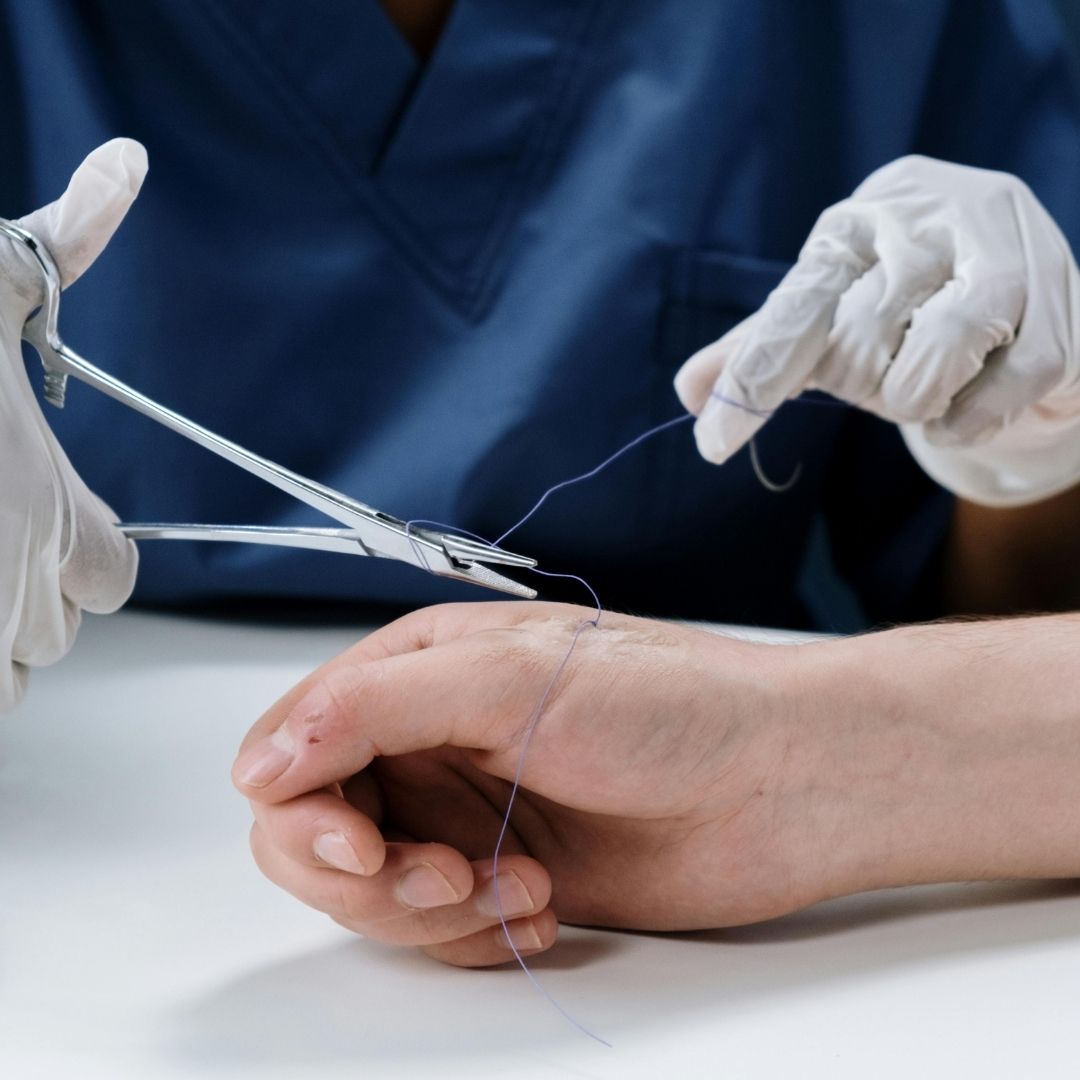
When Does a Wound Need Stitches
When Does a Wound Need Stitches? A Wound Care Guide
Whenever you get a cut, gash, or laceration, it’s natural to wonder how severe it is and whether it’s something you can treat at home. The truth is, an injury doesn’t have to look dramatic to need medical attention. Some wounds may seem relatively small at first but are deeper than they appear, some have jagged edges, and some continue bleeding despite basic first aid.
Knowing what to look for can help decide when a clean bandage and home care may be enough, or when you need the wound evaluated by a healthcare provider. While depth matters, so does the location of the injury, the type of wound, how much it’s bleeding, and whether deeper tissue or structures may be involved.
At Royal Wound Care, whether treating patients in our West Hills office or supporting home health agencies to provide board-certified assistance, we regularly treat and evaluate wounds of all different severities. That’s why below, we’re walking through some of the same characteristics clinicians consider when determining whether a wound may need stitches or another form of specialized treatment.
Our goal is that by the end, you feel calm, confident, and clear when approaching healing.
When Does a Wound Need Stitches? A Wound Care Guide
Whether a wound needs stitches depends on more than its size. How deep a wound is, where it’s located, how the edges are forming, and the way an injury happened can all help determine how it should be treated.
As we mentioned earlier, a cut may look small on the surface but extend into deeper tissue. Similarly, a minor wound may have difficulty closing because of where it’s located, which we actually discussed in our article on treating scalp wounds.
For that reason, appearance alone isn’t always enough to judge the severity of a wound. If you’re unsure how deep an injury is, if deeper tissue is involved, or whether it can safely heal without professional closure, it’s worth having it looked at by a professional.
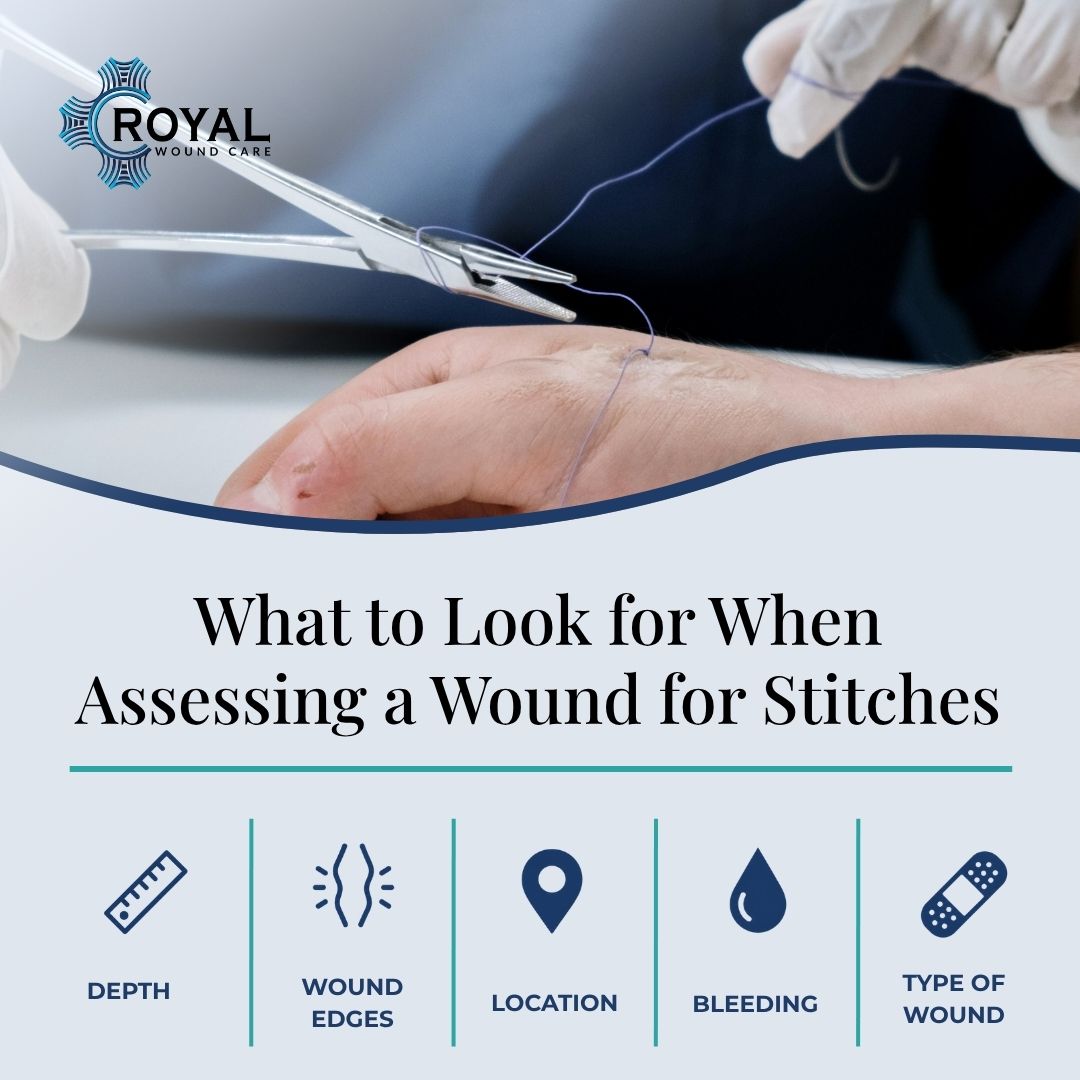
What to Look for When Assessing a Wound for Stitches
There are a few characteristics you can look for when deciding whether a wound should be evaluated for stitches. These aren’t meant to help diagnose the injury yourself, but they can help you recognize when a wound may need more than a clean bandage and basic first aid.
Depth
Look at how far the wound extends beneath the surface of the skin. Deep wounds are more likely to involve multiple layers of tissue and may require stitches or another method of closure. If you can see yellow fatty tissue, muscle, or other structures beneath the skin, the wound should be evaluated by a medical professional.
Wound Edges
Pay attention to how the sides of the cut naturally sit. Jagged edges or edges that gape open rather than resting together can make it harder for the wound to close properly on its own. Also, avoid repeatedly pulling the edges of the wound together to test whether they’ll stay closed. A certified wound care specialist can determine whether adhesive strips, stitches, liquid stitches, or another form of treatment is an appropriate approach.
Location
Where the wound is located matters, particularly if it's in an area that moves frequently. Cuts over joints, for example, can be pulled apart every time you bend or move it, while injuries to the hands may involve tendons, nerves, or other important structures. Facial wounds also deserve careful attention because proper alignment of the wound edges can be especially important to reduce scarring.
Bleeding
Some bleeding is completely normal after getting injured, but it should gradually slow with firm, direct pressure. To test this, apply pressure with clean gauze or a clean bandage without repeatedly lifting it to check the wound. If bleeding continues after about 15 minutes, becomes heavier, or begins squirting, seek prompt medical care.
Type of Wound
How the injury happened can tell a healthcare professional a lot about what may be going on beneath the skin. A clean cut from a sharp object is different from an injury caused by crushing, tearing, a bit, or a puncture. The type of wound can also affect the risk of contamination and whether closing the wound immediately is an appropriate approach.
How Deep of a Wound Needs Stitches
There’s no exact depth at which every wound needs stitches. You may see a quarter inch used as a general guideline, but clinicians don’t make the decision based on measurement alone.
A deeper cut becomes more concerning when the tissue beneath the skin is visible or when there’s a possibility that other structures have been injured. Depending on the location of the wound, this can include muscles, tendons, nerves, or blood vessels.
That’s one reason deep cuts should be professionally assessed rather than treated at home based on depth alone. A provider can determine how far the injury extends, check the function and sensation around the area, and decide whether stitches or another treatment is appropriate.
If you find that you need absorbable stitches, knowing what to expect during the dissolvable stitches healing stages can help you care for the area as it heals.
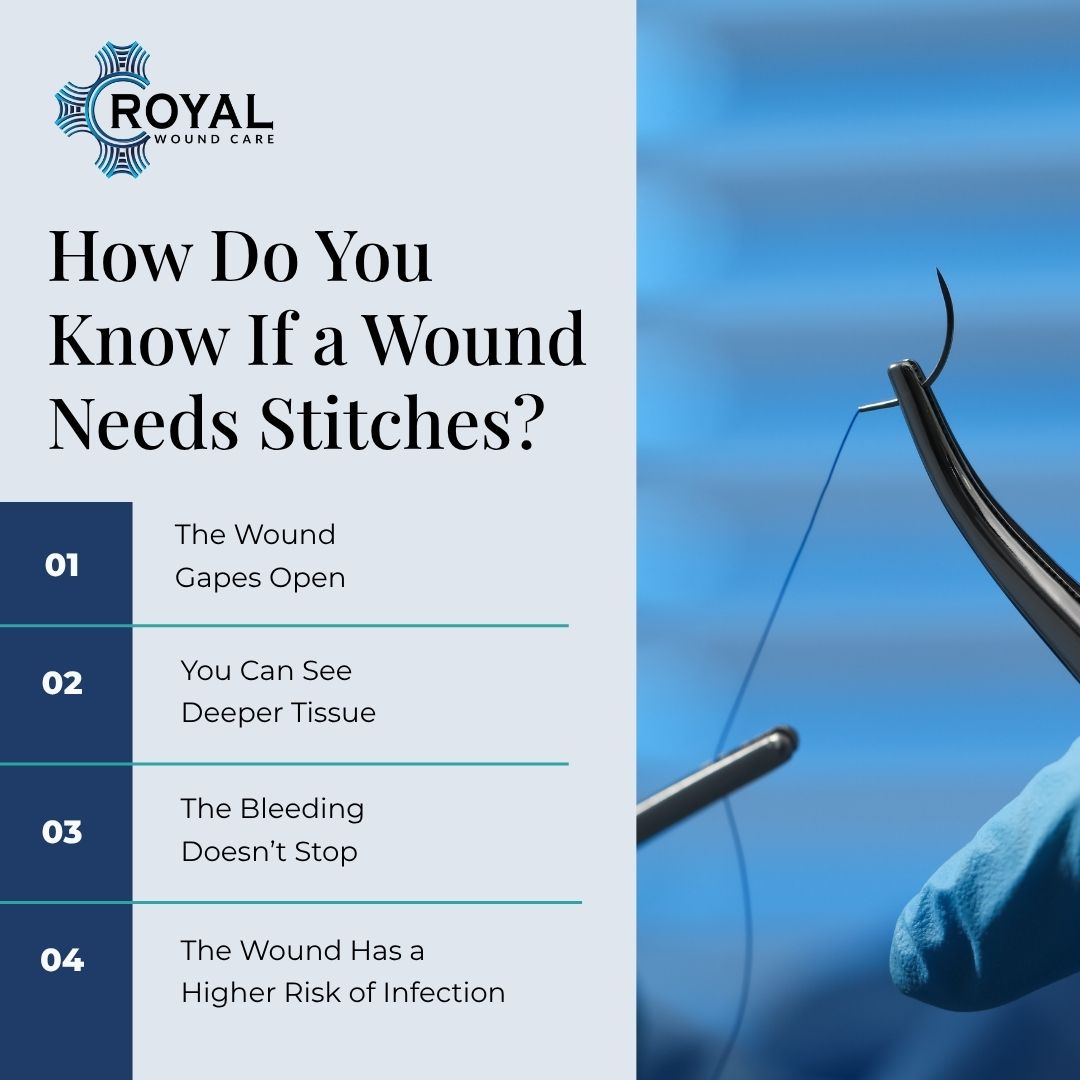
How Do You Know If a Wound Needs Stitches?
You can’t always tell for certain whether a cut needs stitches without a medical evaluation, but there are several signs that a wound may need professional closure or further treatment. Here’s what to keep an eye on:
The Wound Gapes Open
If the sides of a cut naturally pull apart and the wound continues to gape open, stitches may be needed to hold the edges in the proper position while the tissue heals. This is especially important where movement continuously places tension on the wound, risking reinjury or slowing the healing.
You Can See Deeper Tissue
Visible fat, muscle, tendon, or other tissue beneath the skin is a reason enough to have the injury looked at. Even when the opening doesn’t look particularly large, exposed deeper tissue indicates that the wound extends beyond the superficial layers of the skin, and may delay healing without the proper care.
The Bleeding Doesn’t Stop
If you’ve continued to apply pressure for about 10–15 minutes and can’t stop the bleeding yourself, we recommend seeking medical attention promptly. Heavy bleeding, blood that spurts from a wound, dizziness, or weakness can indicate significant blood loss, artery damage, or a lack of oxygen.
The Wound Has a Higher Risk of Infection
Some injuries need professional care because of how they happened rather than because they obviously need stitches. Bites, puncture wounds, and dirty wounds, for example, can introduce bacteria deeper into the tissue, and the risk of infection increases depending on the level of contamination.
Additionally, a wound with a higher infection risk isn’t automatically a good candidate for stitches. In some cases, closing a contaminated wound could trap bacteria inside. This is why it’s important to have high-risk injuries examined by a professional; they’re able to determine the proper approach to successful healing.
If you’re already noticing increased redness, warmth, swelling, drainage, or worsening pain, our guide on how to tell if a wound is infected can be a helpful resource in determining what your next steps should be.
What Types of Wounds Need Stitches
Stitches are commonly used for deep cuts and lacerations, but the decision to close a wound depends on the depth, location, cause, and condition. Some injuries may need another type of closure, while others are intentionally left open because closing them could increase the risk of complications.
Here’s what this looks like in practice:
Deep Cuts and Lacerations
Deep cuts are more likely to need stitches when they extend through multiple layers of skin, expose deeper tissue, or have edges that won’t stay together naturally. When appropriate, closing the wound can keep the edges aligned and may help minimize scars later.
Puncture Wounds
A wound that stays open or has irregular edges may have difficulty closing without stitches or adhesive tape. However, while it’s important to clean the wound at home, these wounds should ultimately be evaluated to determine whether the tissue can be safely brought together and which closure method is most appropriate.
Wounds Over High-Tension Areas
Movement can repeatedly place tension on an open wound. For example, cuts over the knees, elbows, fingers, and other frequently moving areas may need closure or additional support to keep the wound edges aligned. This is important for helping an injury to heal faster and avoid reinjury later.
Related: When to Remove Stitches
Facial Wounds
Cuts on the face often deserve professional evaluation because both function and appearance can be important considerations. Careful wound closure may help minimize scars, although no treatment can eliminate the possibility of scarring entirely.
Get Professional Wound Care in the San Fernando Valley
Some wounds close on their own with a clean bandage and a little time. Others need trained hands within the first 24 hours to close cleanly, prevent infection, and heal faster with less scarring. When you're not sure which one you're looking at, professional evaluation is always the safer choice.
At Royal Wound Care, our board-certified team cares for patients in our West Hills clinic and across Woodland Hills, Canoga Park, Calabasas, and Chatsworth. If you have a wound that concerns you, book a wound care visit with our West Hills clinic and let our team assess it properly.
Beyond caring for patients, we also strive to educate the future generation of wound care professionals. Learn more by exploring our professional partnership opportunities and advanced educational opportunities for nurses and certified healthcare professionals.
By Dr. Moaddel, Royal Wound Care
