What Is Debriding of a Wound? Removing Damaged Tissue
What Is Debriding of a Wound? Removing Damaged Tissue
If you've been told your wound needs "cleaning out" beyond a simple rinse and a fresh bandage, you're probably wondering what that actually means and whether it's serious. Some wounds heal easily with basic care. Others stall because dead or damaged tissue is sitting in the wound bed.
That stalled tissue is what wound care providers look for. When we assess a wound, we're checking the depth, the edges, the color of the tissue, and whether anything in the wound bed is non-viable. With the accumulation of significant amounts of damaged tissue, the body's natural healing process becomes insufficient. Additionally, the build-up of necrotic tissue places considerable demand on the wound and slows healing. When that happens, cleaning and covering alone won't cut it.
At Royal Wound Care, we regularly treat chronic, non-healing wounds across the San Fernando Valley, from our clinic in West Hills to bedside care in skilled nursing facilities and patients' homes. That's why we want you to understand what happens when a wound needs more than a dressing change. Below, we'll explain what debridement is, why providers recommend it, the different techniques we use, whether it's ever safe to try at home, and how to care for your wound afterward.
What Is Debriding of a Wound? Removing Damaged Tissue
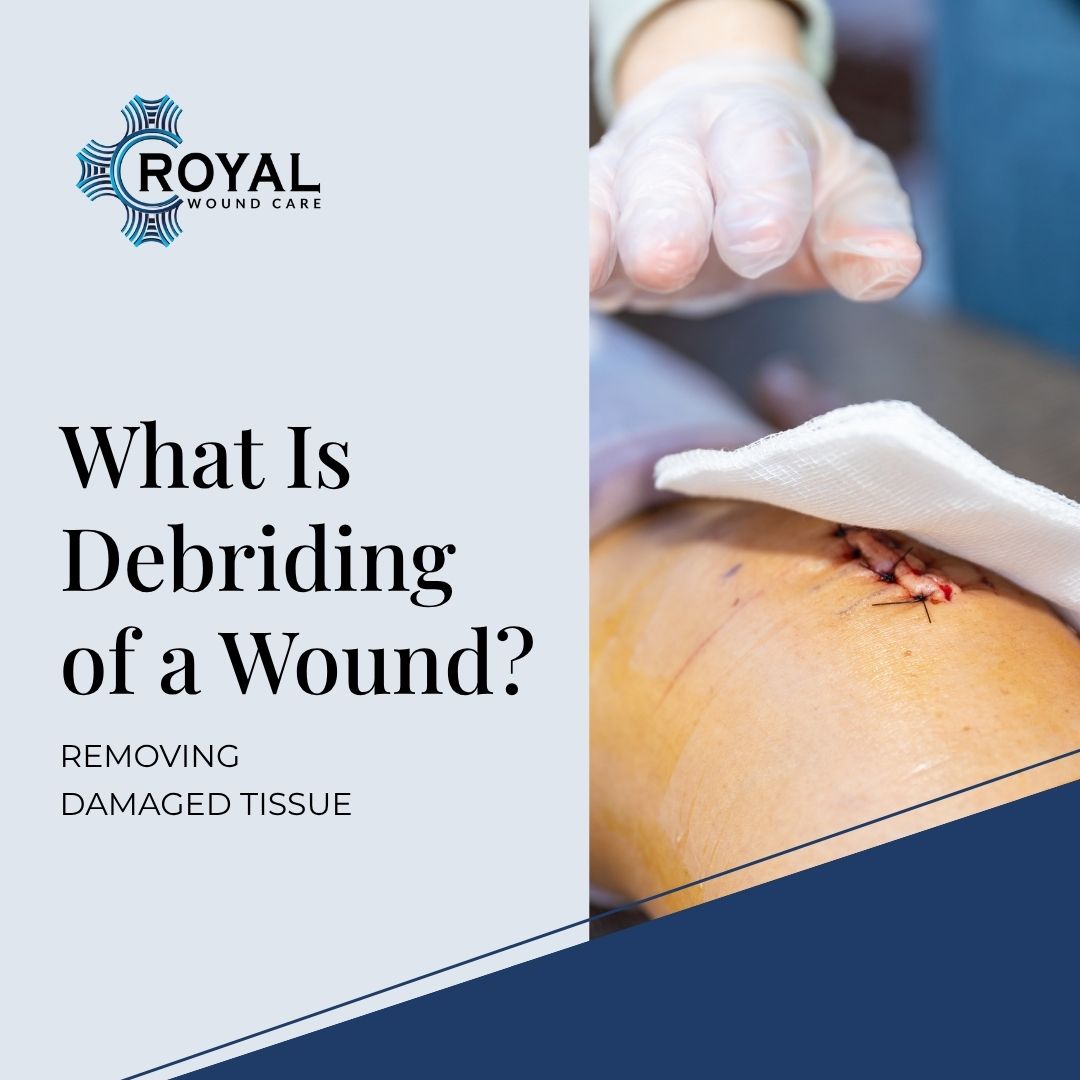
Wound debridement is the process of removing dead, damaged, or unhealthy tissue from a wound to support healing. Put simply, it clears away tissue that can no longer recover so the body can focus on building new, healthy tissue in its place.
When a wound is small and clean, your body handles debridement on its own. But in a chronic wound or a more complex injury, dead tissue accumulates faster than the body can clear it. This then blocks the growth of healthy tissue and creates a home for bacteria. Because devitalised tissue supports the growth of bacteria, the presence of necrotic tissue places the patient at risk for wound infection.
When the body can’t remove the tissue effectively on its own, a healthcare professional may need to intervene. There are several ways to debride a wound, but the appropriate approach depends on factors such as the type and amount of unhealthy tissue, the wound’s depth and location, the presence of biofilm, and the patient’s overall health.
Some methods encourage the body to gradually break down dead tissue, while others remove it directly. Because choosing the proper method depends on assessing the wound and distinguishing healthy tissue from tissue that needs to be removed, debridement should always be performed by trained healthcare professionals.
What Is the Purpose of Debridement in Wound Care?
Debridement isn't just cleaning up a wound. Each reason a provider recommends it connects directly to giving your wound a real chance to close. Here are the main purposes and why they matter.
Removing Dead and Unhealthy Tissue That Blocks Healing
The first job of debridement is to remove dead tissue that a wound can't clear on its own. Necrotic tissue is devitalized tissue, and its accumulation can result in a prolonged inflammatory response and mechanical obstruction of the wound contraction process, preventing wounds from healing.
Reducing the Risk of Infection
Dead tissue is fuel for bacteria, so leaving it in place can increase the risk of infection. Using external measures to remove the necrotic tissue and foreign matter reduces the volume of pathogenic microbes present in the wound, which controls and potentially prevents wound infections, particularly in a deteriorating wound.
Related: How to Know If a Wound Is Infected
Encouraging the Growth of Healthy Tissue
Once the dead and infected tissue is gone, your wound can start rebuilding. Removing necrotic tissue helps to restore circulation at the wound site, as adequate oxygen delivery to the wound is critical to healing. Ultimately, better blood flow and oxygen support the growth of healthy tissue at the wound base and edges.
Allowing a Clearer Wound Assessment
Debridement also helps your provider see what's really going on. A clean wound bed means we can measure depth accurately, spot hidden problems, and choose the right dressings and next steps for your unique treatment plan.
When Is Debridement of a Wound Necessary?
Not every wound needs debridement. Providers generally recommend it when a wound is stuck in the inflammatory stage, when dead tissue or slough is present, or when there are signs of infection that non-viable tissue may be feeding.
Some of the most common wound cases that may call for debridement include:
Diabetic foot ulcers, where non-viable tissue often builds up and delays closure
Pressure ulcers with dead tissue or leathery eschar in the wound bed
Venous and arterial ulcers on the legs that have stalled and won't progress
Any chronic wound that hasn't improved with standard care
Wounds with infected tissue, slough, or contamination that raise the risk of the wound worsening
That said, debridement isn't right for every wound. Poorly vascularized and ischemic wounds, for example, don’t always react well to debridement techniques. This is one more reason a trained provider should make this call. If your wound fits any of these situations, it's worth having a board-certified wound care specialist take a look.
Related: When to See a Wound Care Specialist
How Is Wound Debridement Done?
There isn't one single way to debride a wound. The method depends on how much dead tissue is present, whether the wound is infected, how much discomfort you can tolerate, and your overall condition.
For wound care clinicians, selecting the appropriate debridement method depends on wound characteristics, infection status, perfusion, patient comorbidities, and care setting. Here are the techniques we use most often.
Sharp Debridement
Sharp debridement, also known as surgical debridement, utilizes a sharp object such as a scalpel, scissors, or other instrument to cut dead tissue from a wound. This process is relatively quick and selective, as specialists want to ensure they don’t cause additional damage to healthy or healing tissue.
It's the fastest option and is often chosen when there's a lot of necrotic or infected tissue. Because it can be uncomfortable, your provider may numb the area first.
Enzymatic Debridement
Enzymatic debridement uses a prescription topical proteolytic agent to selectively break down necrotic tissue. These enzymes target and break down the structural proteins holding dead tissue together, all without damaging healthy, living tissue.
This debridement method works more gradually than sharp debridement and can be a good fit when a slower, selective method makes sense for your wound and comfort.
Mechanical Debridement
Mechanical debridement uses physical force to lift dead tissue away from the wound bed. This technique includes wet to dry dressings, irrigation, and similar methods. More specifically, a provider will place wet-to-dry dressing on the wound, allow it to dry and stick to the tissue, then pull it off.
Modern wound care providers now prefer other methods, as mechanical debridement can potentially damage both dead and healthy tissue.
Related: How to Remove Gauze Stuck to Wound Without Pain
Autolytic Debridement
Autolytic debridement is a natural process by which the body's own phagocytic cells and proteolytic enzymes break down necrotic tissue. Fortunately, this process is highly selective, so only necrotic tissue is affected.
For autolytic debridement to work, the wound needs to remain moist. Healthcare providers can create this environment with appropriate wound dressings, allowing the body to gradually soften and break down the dead tissue while protecting the healthy tissue underneath.
Because the process relies on the body’s own healing mechanisms, autolytic debridement is one of the gentler approaches. However, it also works more slowly than other approaches and is best suited for noninfected wounds.
Can You Debride a Wound at Home?
Wound debridement should generally not be attempted at home without guidance from a qualified healthcare provider. It may look like you're simply removing scabby or dead tissue, but the line between viable tissue and non-viable tissue isn't always straightforward.
Attempting it yourself can damage healthy tissue and set your healing back. Even trained clinicians face this challenge. Additionally, doing it yourself can also introduce bacteria, increase the risk of infection, and delay healing.
What you can do at home is support healing between visits: keep the wound clean and covered as instructed, manage your dressings gently, and watch for changes. Our guides on wound care at home and proper skin prep for wound care walk you through what to do, what to look for, and when to reach out to qualified professionals.
How to Care for Wound After Debridement
Good aftercare protects the progress made during debridement and keeps your wound moving toward healing. A freshly debrided wound is more receptive to care, so what you do next genuinely matters. Here's how to support recovery.:
Follow Your Provider's Instructions Exactly
Your care plan is built for your specific wound, so follow it closely. That includes how and when to change dressings, what products to use, and any activity or offloading guidance. Cleaning the wound as directed and using the exact dressings recommended keeps the wound bed in the condition it needs to heal.
Keep the Wound Properly Managed and Protected
After debridement, the wound needs the right moisture balance and a clean, protected environment. Keeping the dressing intact and changing it on schedule helps guard the new tissue and lowers the chance that the wound worsens between appointments.
Monitor for Changes and Warning Signs
Keep an eye on your wound day to day. Increased redness, warmth, swelling, odor, more drainage, or new pain can signal a problem that needs prompt attention. Catching these early means we can step in before a small issue becomes a serious one, so contact your provider if anything changes.
Related: What Does a Healing Wound Smell Like? Understanding Odors
Attend Every Follow-Up Appointment
Debridement often isn't a one-time event. Many wounds need repeat or maintenance debridement over time to keep healing on track. Showing up for follow-ups lets your provider reassess the wound bed and adjust your plan.
Getting Expert Wound Debridement In West Hills and the San Fernando Valley
Debridement can make the difference between a wound that lingers for months and one that finally heals, but it works best in trained hands. At Royal Wound Care, our board-certified wound care specialist, Dr. Moaddel, brings a diverse background across general surgery, family medicine, and cosmetic surgery, and a holistic approach that treats both your wound and the health concerns affecting your recovery.
Whether you're managing diabetic foot ulcers, a pressure ulcer, or a chronic wound that just won't close, we deliver advanced wound care wherever you are. This includes our West Hills clinic, in skilled nursing facilities, and in patients' homes across Woodland Hills, Canoga Park, Calabasas, Chatsworth, and the wider San Fernando Valley. To have your wound evaluated by a board-certified specialist, schedule an appointment at Royal Wound Care today.
Additionally, Royal Wound Care offers professional partnership opportunities and advanced educational opportunities for nurses and certified healthcare professionals. Together, we can create a higher standard for wound care.
Dr. Moaddel, Royal Wound Care
This article is for educational purposes only and is not a substitute for professional medical evaluation, diagnosis, or treatment. Please see a qualified healthcare provider to assess your wound.
