
Royal Wound Care is the nation’s leading provider of advanced wound care.
Royal Wound Care is a dedicated wound care center located in West Hills, California, specializing in advanced, comprehensive wound treatment. Founded by Dr. Moaddel, Royal Wound Care was born from his commitment to improve the way patients experience wound care. After witnessing the need for more compassionate, personalized care, Dr. Moaddel opened his own center to ensure that every patient receives the attention and expertise they deserve.
After witnessing the shortcomings in traditional wound care settings, Dr. Moaddel set out to create a better experience—one where patients receive the focused, attentive care they truly deserve. That vision became Royal Wound Care.

Our Mission
To deliver exceptional, accessible wound care tailored to the individual—whether in our state of-the-art clinic, at a skilled nursing facility, or in the comfort of a patient’s home. We treat the wound, but we also care for the whole person.
Why Choose Royal Wound Care?
Ongoing Education & Certification
For staff, families, and partner facilities, including wound in-services and professional training opportunities

Expert-Led Care by Board-Certified Providers
With years of hands-on experience managing chronic and complex wounds

Advanced Modalities
Including negative pressure therapy, mist ultrasound, debridement, Doppler studies, grafts, and more

Survey-Ready Documentation
That keeps facilities compliant and families informed

Truly Personalized Care Plans
Tailored to each patient’s condition, lifestyle, and healing goals

Mobile Services That Come to You
Care delivered at home, in clinics, or within partner facilities

A Team That Cares And The Results To Prove It
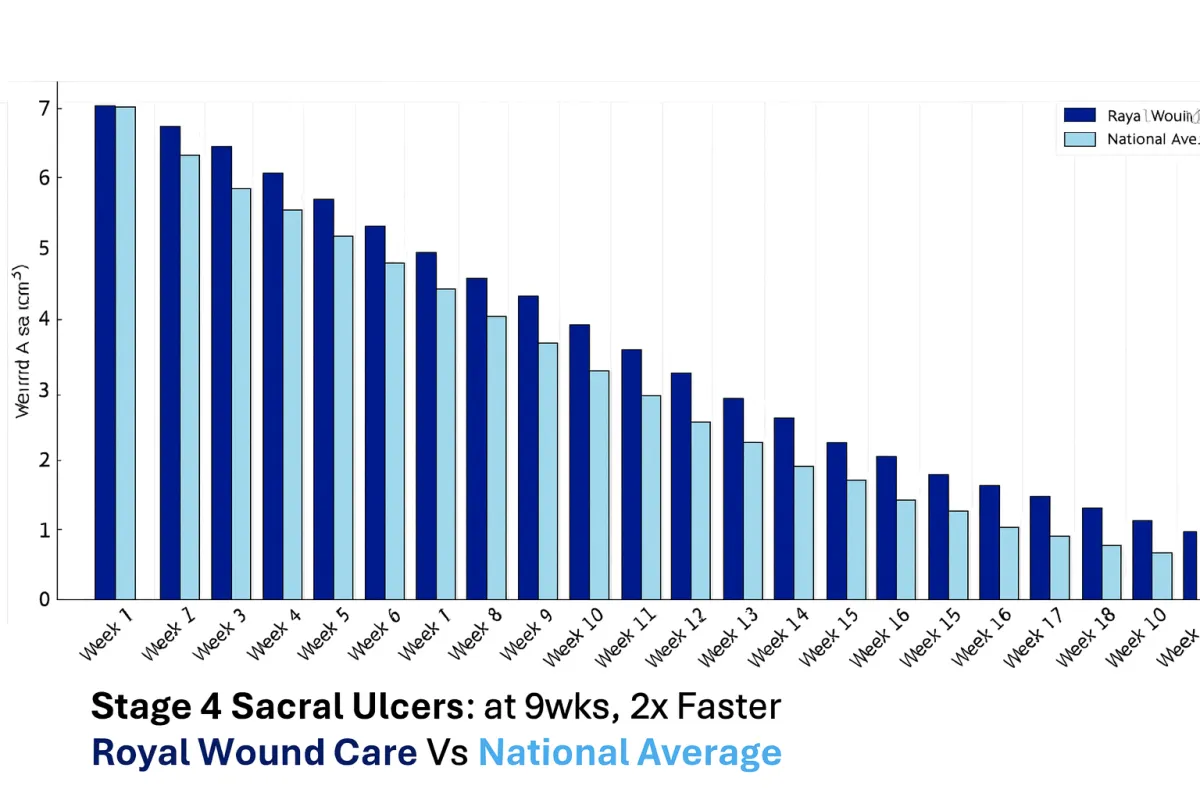
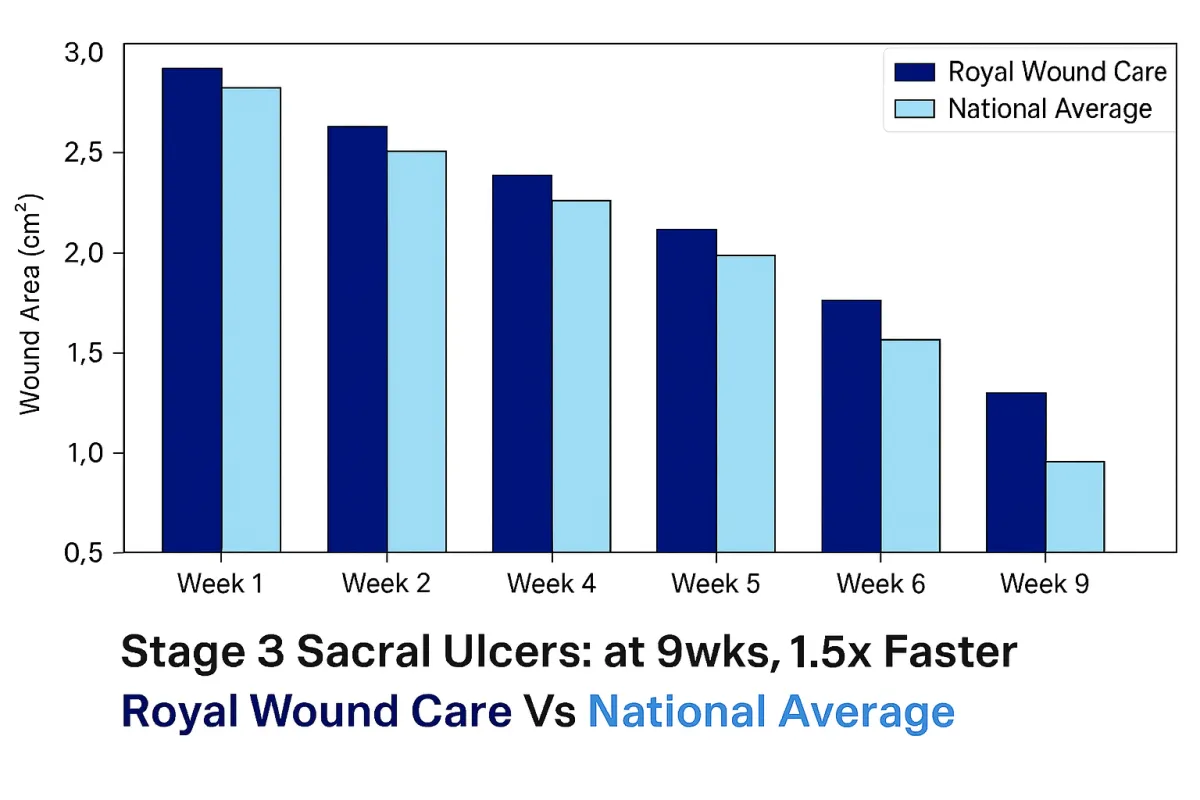
At Royal Wound Care, we deliver results that consistently outperform the national average. Our advanced healing process combines evidence-based treatments, personalized care plans, and direct physician oversight to ensure optimal outcomes. Unlike many clinics, every patient is managed by a board-certified wound care physician who evaluates their condition and customizes treatment from day one.
Our Stage 3 Sacral ulcer graph demonstrates how our approach leads to significantly faster healing compared to the national average. While traditional care results in gradual wound size reduction over several months, patients treated at Royal Wound Care experience more rapid progress through targeted therapies, aggressive infection control, and ongoing physician-directed adjustments to their care plan. Our proactive methods allow us to close even complex wounds weeks earlier than national trends, improving patient mobility, reducing pain, and preventing further complications.
Stage 4 sacral ulcers are among the most complex wounds to treat, yet our outcomes set us apart. Patients at Royal Wound Care heal twice as fast as the national average by leveraging advanced biologic grafts, comprehensive infection management, and customized care protocols. These results highlight our proactive, physician-led care model, allowing us to manage even the most challenging cases successfully while improving long-term patient outcomes.
What Our Partners Experience
86% lower infection rates

47% faster healing compared to others

88% fewer wound-related rehospitalizations

58% faster pressure ulcer healing times

Ready to Heal with Royal Wound Care?
Wound Care Training for Nurses: Courses and Certifications
Wound Care Training for Nurses: Courses and Certifications
Wound care is one of the most rewarding and impactful pathways in modern healthcare—especially for registered nurses. This role is about more than simply changing dressings and treating minor cuts. Nurses who specialize in wound management play an important role in preventing avoidable hospitalizations and improving patients’ quality of life.
However, the field requires extensive expertise, compassion, and ongoing education—making proper wound care training for nurses essential. This is why Royal Wound Care, a national provider of advanced wound care services, offers specialized training and certification programs to support nurses at every stage of their careers.
In light of this, today’s post explores wound care training for nurses. We will discuss how to become a wound care nurse and discuss valuable courses available for those looking to advance their career. Together, we can redefine patient care and improve healing outcomes.

Wound Care Training for Nurses: Courses and Certifications
From caring for chronic wounds to advising patients on the relationship between nutrition and wound healing, there are many moving parts to optimal healing. This is why proper credentials matter—they show a true commitment to clinical expertise. However, understanding available opportunities is the first and most important step.
In this guide, we’ll walk through everything nurses need to know about entering the wound care specialty. We’ll discuss what the credentials entail and provide a step-by-step guide to becoming a certified wound care nurse. Most importantly, we’ll outline the courses nurses should consider as wound care continues to evolve.
What Is Wound Care for Nurses?
Wound care for nurses focuses on the prevention, assessment, treatment, and management of wounds across all phases of healing. Nurses will evaluate the wound, clean the area, select the proper dressing, and devise a treatment plan unique to each individual.
Although many wounds are common, every patient is different. With proper education, nurses will be able to successfully manage cases from complex venous ulcers to minor lacerations. Ultimately, though, the goal as a wound care specialist is to reduce pain, prevent life-threatening complications, and improve outcomes.
Additionally, because the field of wound care is constantly evolving, continuing education is essential. This allows healthcare professionals to stay informed about best practices, advanced solutions, new techniques, and evidence-based treatment approaches.
Related: “How Long Does It Take for a Wound to Heal? What Every Nurse and Patient Should Know.”

How to Become a Wound Care Nurse
Step 1: Earn a Nursing Degree and Licensure
First and foremost, nurses should earn their Bachelor of Science in Nursing (BSN). A degree in nursing acts as the foundation for the career, providing broader education in research, healthcare, and leadership.
After earning their degree, nurses should then pass the National Council Licensure Examination for Registered Nurses (NCLEX-RN) to receive official licensure as a Registered Nurse (RN). In addition to obtaining proper nursing credentials, working as an RN is necessary to gain practical, hands-on experience.
Step 2: Gain Clinical Nursing Experience
When planning to enter the wound care field, hands-on experience isn’t recommended—it’s required. Nurses will encounter various injuries, from surgical incisions to severe infections. Understanding how to properly clean, dress, and care for different injuries makes all the difference in healing and long-term recovery.
When beginning this journey, working in settings where wound management is common provides invaluable experience. There, nurses can build clinical judgment, enhance prevention skills, and become familiar with best practices more efficiently.
Related: A Nurse’s Step-by-Step Checklist
Step 3: Complete Specialized Wound Care Training
While working in medical-surgical units, long-term care facilities, or rehabilitation centers is an excellent introduction to wound management, formal wound care training is non-negotiable. Wound care training programs provide specialized knowledge and structured education that equip nurses to assess, treat, and manage wounds.
More specifically, these programs offer a level of technical education that isn’t always provided in general studies. Nurses continue to learn about evidence-based practices, clinical judgment, regulatory compliance, risk management, overall cost reduction. Not only does this build clinical competence, but it also strengthens nurses credentials.
Related: Why Wound Care?
Step 4: Pursue Wound Care Certification
While wound care certifications aren’t always required, they demonstrate deeper expertise and strong commitment to the speciality. First, they enhance professional competence and offer a competitive edge. This unlocks opportunities in areas such as wound ostomy care, leadership, and consulting that would otherwise be unavailable.
Additionally, proper wound care certifications validate a nurse’s expert knowledge. Lower infection rates, faster healing, lower readmissions, and higher-quality of care are just a few examples of the measurable impact specialized wound care training can have.
Step 5: Commit to Continuing Education
Wound healing and management are not linear or static. Because of this, the field is constantly evolving, driving the demand for innovation and efficiency. This creates a surge of technological advances, digital tools, and advanced therapies available within the field. Additionally, it requires a shift in care settings that require consistent education.
Nurses who commit to continued education through workshops, conferences, and courses can provide the highest standard of care. This is what moves the needle, making wound healing more accessible and successful.
Evidence-based practices and cutting-edge therapies are the backbone of Royal Wound Care—and our courses demonstrate this.

Wound Care Courses for Nurses
Wound Care Nurse Certification (WCN-C)
The Wound Care Nurse Certification (WCN-C) course, offered by Royal Wound Care, is one of the most recognized courses in wound care nursing. This national premier training program lays the framework for the basic educational needs of licensed nurses in various clinical settings.
More specifically, the WCN-C course offers a comprehensive overview of what a licensed nurse in the Wound Care Specialty can expect from the role. Course objectives include:
Anatomy and physiology of the skin
Phases of wound healing
Fundamentals of wound care, wound identification, and wound management
Properties and uses of wound care dressings
Types, properties, and uses of wound debridement
Assessment, documentation, infection control, and monitoring related to the scope of practice
Hands-on skills lab including Negative Pressure Wound Therapy, compression therapy, aseptic dressing changes, and circulation assessment
This level of expertise provides a thorough, practical review of core wound care concepts. Additionally, the hands-on skills training ensures nurses are prepared for real-world clinical challenges. This eight (8) hour program can be taken online or in-person, with online attendees completing hands-on competencies under the supervision of a qualified preceptor.
Finally, participants who complete the program receive CEU credits, which they may apply toward license renewal requirements. This is valid for 2 years upon completion. While this course builds confidence, competence, and improved patient outcomes for RNs, all medical professionals within the industry are welcome to enroll.
Nursing Educational Credits (CNE)
Royal Wound Care also offers nursing educational credits (CNE) that are accredited by various recognized nursing boards. These credits are approved for continuing education units (CEUs), which many states require to maintain licensure.
The CNE course at Royal Wound Care covers similar foundational and advanced topics to the WCN-C. This includes wound assessment, infection control, and documentation, with a focus on enhancing clinical expertise and confidence. Not only will this course improve patient outcomes, but it will also meet professional continuing education requirements.
Medical Education Credit (CME)
Although the focus remains on nursing education, wound care programs, such as those at Royal Wound Care, also offer medical education credits (CMEs). These credits support broader interdisciplinary learning for physicians desiring a deeper focus on medical science and treatments.
The course at Royal Wound Care provides valuable insight into the clinical reasoning and evidence-based practices used in the field. This information proves to be essential for nurses collaborating with healthcare teams or looking to advance their careers.
Additional Wound Care Training Opportunities
While the courses and certifications offered at Royal Wound care are thorough and informative, many nurses also pursue additional certifications. Doing so broadens their knowledge, qualifications, and ability to help patients to the best of their ability.
Examples include:
Certified Wound Ostomy Continence Nurse (CWOCN): Advanced specialized knowledge in managing complex wounds, fecal or urinary incontinence, and stomas
Diabetic Wound Certification (DWC): Provides expertise in diabetic foot care, including prevention, management, and patient education
Foot Care Certification: Designed to improve outcomes and healing for both complex and minor foot conditions and injuries
Additional post-baccalaureate and speciality programs are often offered through professional nursing organizations. These options can be particularly useful for nurses who plan to pursue further leadership roles within wound care teams.
Proper wound care training for nurses is essential for delivering safe, evidence-based care and improving patient outcomes.
Wound management requires precision, dedication, and a high level of expertise. At the same time, there is nothing more rewarding than improving a patient’s quality of life. With proper training, nurses can advance their careers and gain the expertise needed to bridge the gap between healing and accessibility.
At Royal Wound Care, our highly-trained team prioritizes ongoing training, expert-led care, advanced modalities, and personalized care plans. Through mobile wound care, in-clinic wound care services, and in-home health care, we’re here to help patients at any point of their healing journey. If you or a loved one is navigating wound care, you don’t have to do it alone—contact Royal Wound Care.
In addition to educational opportunities, SNFs and independent nurses can greatly benefit from our professional partnerships. Our partners experience faster healing times, lower infection rates, fewer wound-related hospitalizations, and lower facility costs. Learn more about why you should partner with Royal Wound Care to bring expert bedside wound management to your facility!

WEST HILLS
7230 Medical Center Dr. Suite 100
West Hills, CA 91307
(818)–660–2977
BEVERLY HILLS
9735 Wilshare Blvd #210B
Beverly Hills, CA 90212
(818)–660–2977
Request an Appointment at a Royal Wound Care Facility near you.
Royal Wound Care is the expert in wound healing. Our board-certified wound care specialists are ready to help you begin your healing journey. Click the button below to request an appointment at a Wound Care Center near you—no referral needed
© 2025 Royal Wound Care, LLC. All rights reserved.
site by Growth Partners Marketing