When to Stop using Santyl on Wound: A Wound Care Guide
When to Stop using Santyl on Wound: A Wound Care Guide
If you’re dealing with wounds like diabetic foot ulcers or severe burns, chances are you’re using Santyl (collagenese). This prescription ointment is used for enzymatic debridement, which just means it helps remove dead tissue and keep the wound clean. If you’ve been using it for a while, you’re probably also wondering when you can stop applying it and how to tell if it’s actually doing its job.
At Royal Wound Care, our board-certified team regularly uses debridement to help chronic and non-healing wounds heal more quickly. While there’s no universal timeline for how long a patient should be using Santyl, there are a few signs your injury is ready to move onto the next treatment.
This is why we created the guide: to help patients and caregivers understand how this medication works, how to tell it’s doing it’s job, and how to know when it’s time to stop using it. By the end, our hope is that you feel confident making decisions about your wound care management plan.
This is educational information, not medical advice. Because Santyl is one of many prescription drugs where a provider must guide treatment, any decision to stop should always be made with your health care provider.
When to Stop Using Santyl on Wound
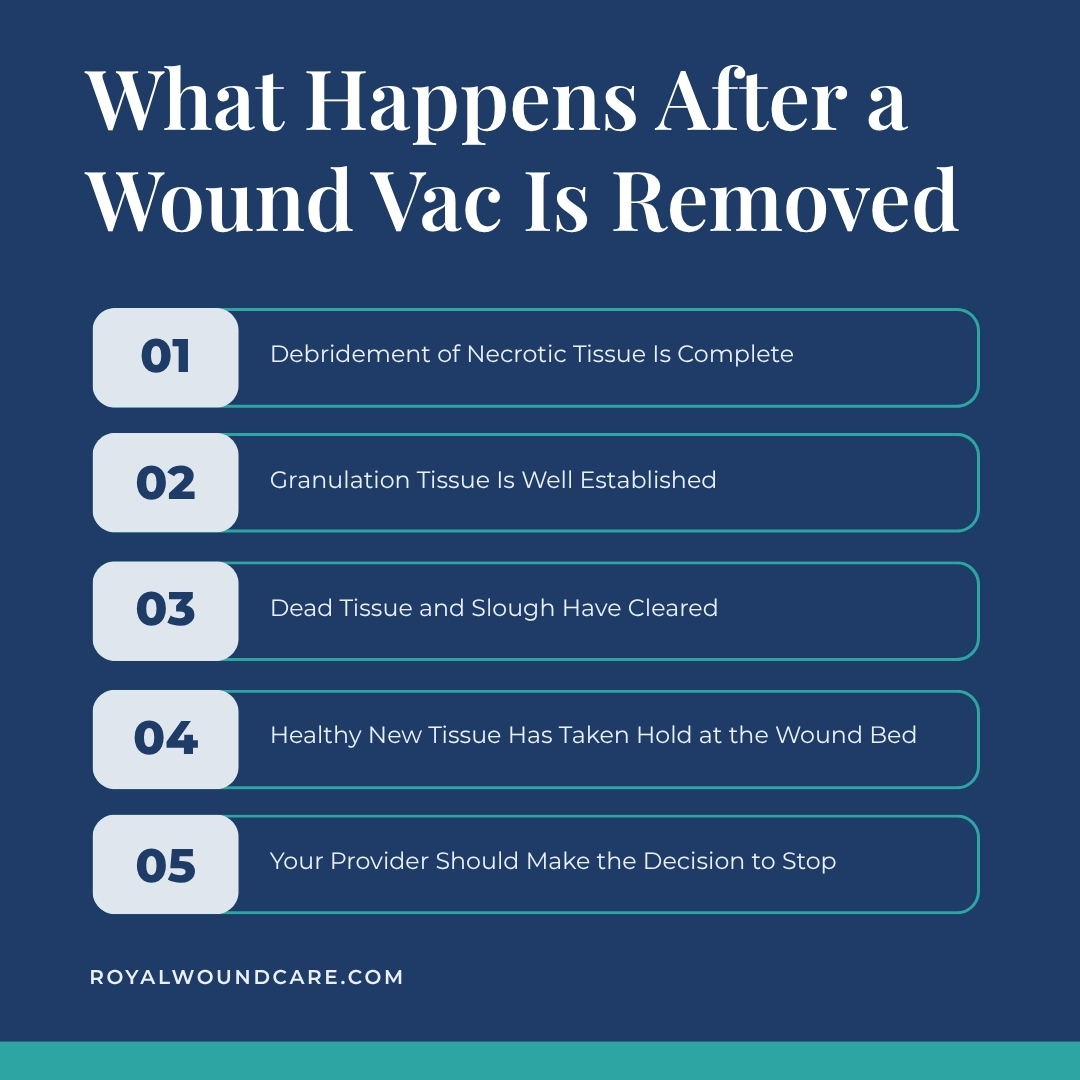
You should stop using Collagenase Santyl Ointment when the wound is free of necrotic tissue and slough and healthy granulation tissue has formed. What makes this decision tricky is that healing doesn’t look the same for every patient. It's a clinical judgment a provider makes by looking at the wound over time, considering its size, depth, the amount of dead tissue remaining, and how the surrounding skin is doing. A wound that looks healed may still have areas of dead tissue that need attention.
In short: even when a wound appears to be healing properly, don't stop Santyl on your own. Because it's a prescription treatment, your provider should be the one to decide whether you need to continue or discontinue the medicine. If you think you're ready to stop, that's a great reason to check in, not a reason to set the tube aside.
How Do You Know Collagenase Santyl Is Working?
As Santyl works to remove dead tissue, you may start noticing changes in how your wound looks. And these are changes that you can learn to recognize! Rather than focusing on one sign, pay attention to how your wound changes over time. Your provider can help you understand what those changes mean and whether your treatment is working.
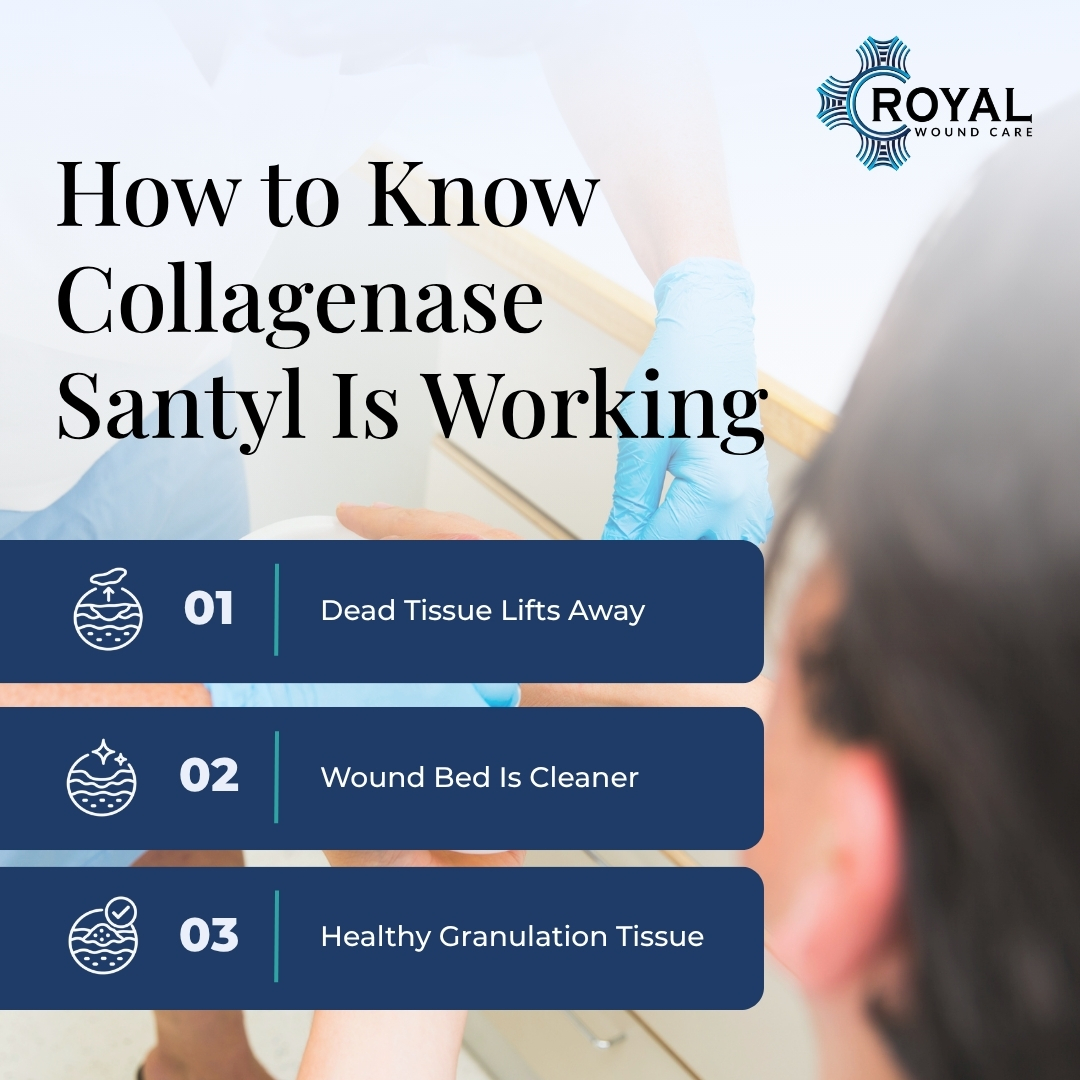
Dead tissue Lifts Away
The first thing you'll often notice is that dead tissue and slough begin to loosen and lift from the wound. Collagenase works selectively. It specifically targets devitalized tissue without disrupting healthy skin.
Debridement, which is the process of removing dead, damaged, or infected tissue, is critical for clinicians to assess. This helps them understand where your wound is in the healing process and prepare the wound bed for advanced treatments and active healing.
As that barrier of dead tissue clears, your provider can actually see and assess the wound better.
Wound Bed Is Cleaner
As the slough and eschar break down or lift, the wound bed becomes easier to see. Healthy skin may look bright red or pink, which is a good sign that blood vessels and collagen are forming. It may also have a thin or light pink border on the edges of the wound, which can indicate new skin cell growth.
That clearer view is an important part of wound assessment. Once the dead tissue is gone, your care team can judge the true depth of the wound and decide what the next phase of treatment should be.
Healthy Granulation Tissue
The goal of wound care is seeing that healthy granulation tissue, which is the pinkish-red tissue that forms on the surface of a wound. It's made up of tiny new blood vessels (capillaries), fibroblasts, and immune cells, and it's a strong indicator that the wound is moving in the right direction.
Once the dead tissue is gone and healthy granulation tissue has formed, your provider will typically assess whether it’s time to stop using Santyl.
How Long Do You Use Santyl?
There's no universal timeline for when it’s time to stop using Santyl. How long you do use the medication really depends on the type of wound, its size, and how it responds to treatment.
Enzymatic debriding agents like Santyl work as alternatives for removing necrotic material from injuries like pressure ulcers, vascular ulcers, and severe burns. It’s applied topically, typically once daily, and the course continues only as long as there's dead tissue to debride.
But a small pressure ulcer is much different from a severely burned area. They require different treatment plans and, in most cases, different timelines for using Santyl. This is something we’ve discussed before, which you can read more about in “What Is Debriding for a Wound?”
What determines whether you should continue using Santyl isn't a specific date on the calendar. Instead, it's regular professional wound assessment. Your provider watches how the wound is responding and adjusts the plan accordingly. If weeks pass and the wound isn't improving as expected, that's a signal to reassess the approach.
How to Use Santyl safely
Safe use starts with following your provider's directions and the product label exactly. We’ll talk about both the label directions and potential provider-specific instructions below.
Apply as Directed by Provider
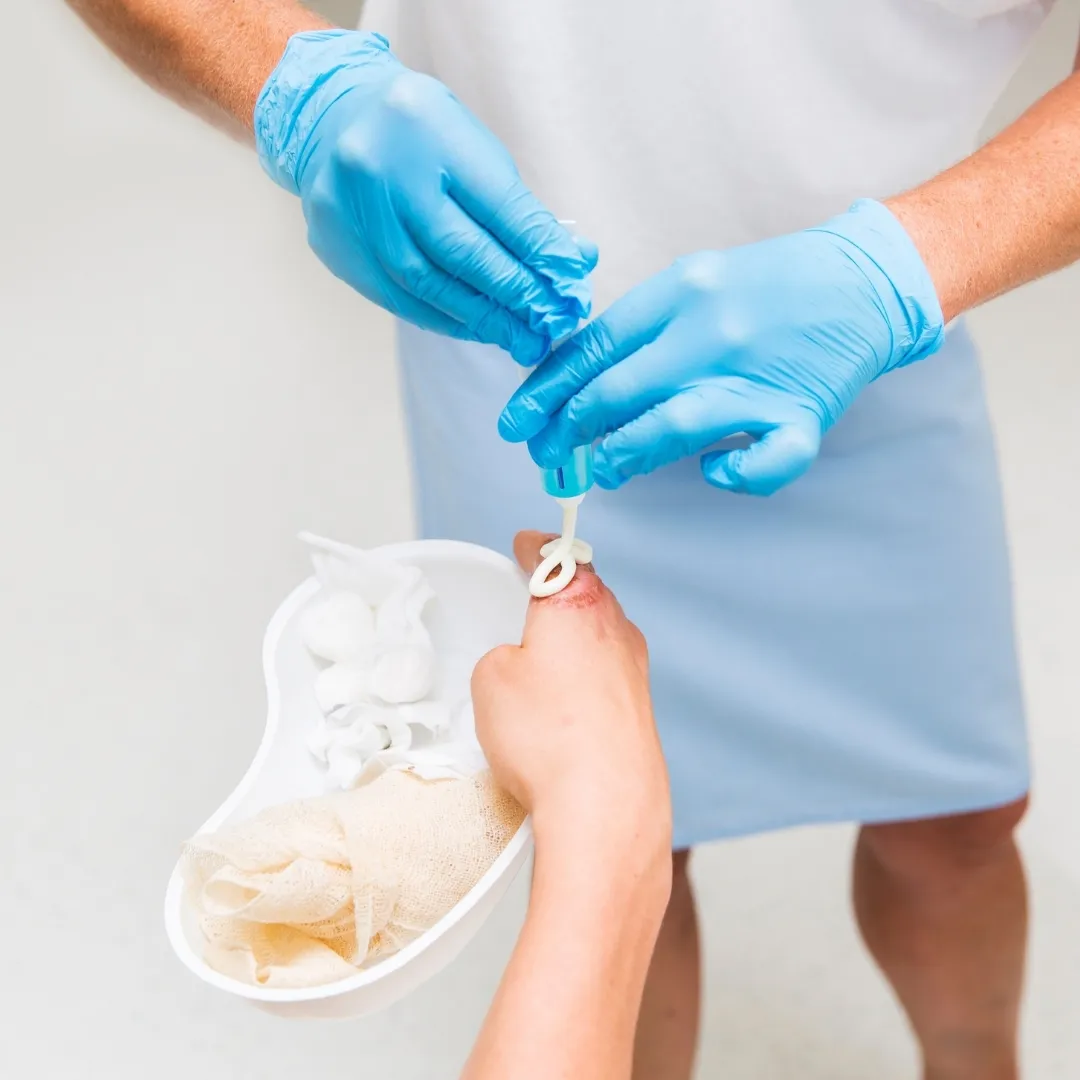
It’s important that you use this medicine only as directed. Avoid using more of it, using it more often, and using it for a longer time than your doctor ordered. If you use it for too long, it can actually do more harm than good and increase the risk of complications. Clean the wound gently with sterile saline or mild soap and water, then apply Santyl as your provider instructed.
If you’re not sure whether you missed a step, our guide on skin prep for wound care can be a helpful resource as you care for your wound.
Cover It Correctly
You can apply Collagenase Santyl Ointment directly to the wound, or you could apply it to a sterile gauze pad. Specific applications can vary by patient and provider. Regardless, in many cases, you’ll want to cover it with the appropriate dressing. This helps protect the healing tissue and make sure debris and bacteria don’t disrupt the process.
Follow Up If You Miss Application
If you do forget or miss an application, apply it when you remember. If it’s almost time for your next dose, skip the missed dose and go back to your regular dosing schedule. Don't double up to make up for a missed application.
Keep Out of Reach of Children
Just like with all other prescription medications, store Santyl in a safe place where children can’t easily get to it. You’ll also want to make sure to protect the tube from high heat, humidity, or direct sunlight, and always close the cap tightly. This keeps the ointment as effective as possible.
Use Topical Antibiotic Only If Prescribed
When you’re dealing with a complex wound or even a potential infection, it’s easy to think that applying a bunch of topical antibiotics can help with healing. However, this is something you’ll want to double check with your health care provider. If you are prescribed a topical antibiotic, apply it to the wound prior to the application of Collagenase Santyl Ointment.
One important reminder: certain antiseptics interfere with how Santyl works. The enzymatic activity can also be negatively affected by certain detergents and heavy metal ions. Make sure to discuss this with your provider before you consider using harsh antiseptics.
Santyl Side Effects and When to Call Your Provider
Santyl is generally well tolerated when used as directed. But like all prescription drugs, it can cause side effects. Knowing what's normal and what warrants a conversation with your provider helps you act quickly if something isn't right.
Possible side effects include:
Mild irritation, redness, or a burning feeling at or around the wound area. You may experience occasional slight redness if you Santyl outside of the wound area.
Signs of an allergic reaction, which should be reported right away. This can include skin rash, itching, hives, or swelling of the face, lips, tongue, or throat. If you have any concerning symptoms, stop and contact a health care provider.
Irritated Wound Bed, if your wound begins to look worse, smell bad, has colored discharge or more discharge, or increases in size, contact your care team. You may have an infection or need a change in your treatment.
Dealing with a potential complication can be overwhelming, especially if you’re not sure what to look for. Our guide on how to know if a wound is infected walks you through the warning signs in detail.
Santyl is a prescription medication, so your provider should guide its use from start to finish. To report side effects, talk with your prescriber or pharmacist. They can also help you report side effects to the FDA through its MedWatch program. When in doubt, it's always better to ask than to wait.
When to See a Wound Care Professional
Any decision about starting, continuing, or stopping Santyl should be discussed with your wound care provider. They can assess your wound and determine whether you’re ready for the next step in treatment, which is exactly what a specialist is trained to provide. And if you feel like your wound isn’t healing the way it should, reach out to your provider. They’re there to help.
Royal Wound Care offers board-certified wound care across West Hills, Woodland Hills, Canoga Park, Calabasas, Chatsworth, and the wider San Fernando Valley. Whether in our clinic, in skilled nursing facilities, or in patients' homes, our goal is to meet our patients where they’re comfortable. Dr. Moaddel brings a background across general surgery, family medicine, and cosmetic surgery to wound care, which means we look at both the wound and the broader health concerns affecting your recovery.
If you're unsure whether it's time to adjust your Santyl treatment, don't navigate it alone. Book an appointment with our wound care team and we'll help you find the right next step.
For nurses and clinical teams who want to deepen their wound care skills, we offer advanced education opportunities in both certifications and credits. And if you’re interested in reducing hospitalizations and improving outcomes, consider partnering with Royal Wound Care.
This article is for educational purposes only and is not a substitute for professional medical advice, diagnosis, or treatment. Santyl is a prescription medication; always follow your provider's instructions and consult your health care provider before starting, continuing, or stopping any treatment.
Written by Dr. Moaddel, Royal Wound Care
