How Long Can Xeroform Gauze Stay On A Wound
How Long Can Xeroform Gauze Stay on a Wound Without Being Changed?
When managing a wound, one of the first questions patients have is about how long they should keep medicated gauze on for. Xeroform is one type of wound dressing that may be used to protect the area as it heals, and knowing when to change it is an important part of caring for the wound properly.
However, there isn’t one standard schedule for all patients. How long Xeroform can stay in place depends on a handful of factors, including the type of wound, how much drainage there is, and the healthcare provider’s instructions.
At Royal Wound Care, we regularly help patients throughout the San Fernando Valley understand how to safely care for wounds at home. That’s exactly why we created this guide! Below, we’ll discuss what Xeroform gauze is, how it’s used, what can affect how often it needs to be changed, and when to talk to a healthcare professional about a current wound care routine.
How Long Can Xeroform Gauze Stay On A Wound? A Provider’s Overview
There isn’t one set amount of time that Xeroform should stay on every wound. How much the wound is draining, where it is, what type of wound you’re treating, and how well it’s healing can all make a difference.
In many cases, Xeroform dressings can stay in place for 1 to 3 days. But that doesn’t mean everyone using Xeroform should automatically change it on day 3. If the dressing becomes saturated, discolored, or is no longer staying in place, it may need to be changed sooner.
Think of 1–3 days as an estimated starting point, not a rule. The wound itself matters, too. A surgical incision with very little drainage isn’t going to have the same dressing needs as a wound producing a lot of exudate. This is why specific instructions from a wound care specialist may look a lot different from the general recommendations you find online.
There are also times where xeroform is purposely left on for a little longer. For certain skin grafts, a provider may leave it in place for up to 5 days. Some burns in children may be left alone for even longer until the wound heals underneath and the dressing starts to come off on its own.
So, if your provider has told you to leave Xeroform in place longer than a day or two, don’t assume that you need to remove it simply because you’ve reached a certain number of days. Follow the dressing schedule they gave you, and contact them if you’re ever unsure whether it’s time for a change.
What Is Xeroform Gauze?
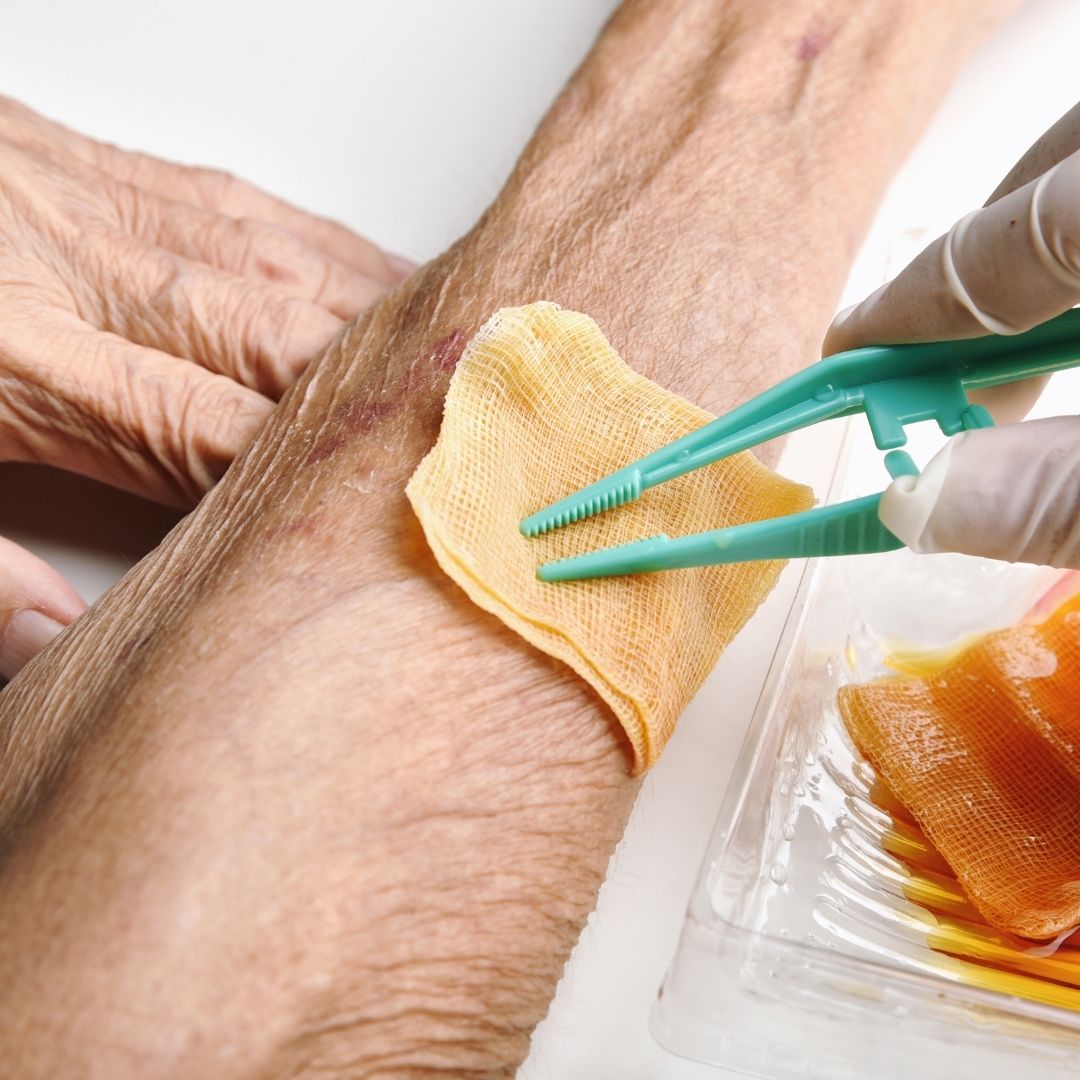
Xeroform gauze is a fine-mesh, non-adherent dressing that’s placed directly over a wound. Unlike some adherent dressings, it’s designed to protect the area without sticking to the wound, which can help make dressing changes easier on sensitive skin or newly healing tissues.
Xeroform petrolatum gauze dressings contain petrolatum and 3% bismuth tribromophenate. The petrolatum helps maintain a moist wound environment, while bismuth tribromophenate helps reduce odor. Together, these features help create a protective healing environment that supports the natural wound healing process.
Because the gauze is soft and flexible, it can also easily fit different body contours. This makes Xeroform useful in areas that may be difficult to cover with other types of dressings, such as the elbows, knees, or feet.
Xerform may be used for donor sites, skin graft sites, surgical incisions, lacerations, and certain burns and abrasions. Depending on the wound type and the amount of drainage, a secondary dressing may be placed over the Xeroform to help hold it in place and manage exudate.
While Xeroform has several advantages, including its cost effectiveness, it isn’t the appropriate dressing for every patient. Heavily exudating wounds or draining wounds, for example, may require a different approach. Your provider will ultimately determine whether Xeroform is appropriate, how often it should be changed, and how you should clean a wound between dressing changes.
Related: How to Remove Gauze Stuck to Wound Without Pain
What Is in Xeroform Gauze?
As a patient, we understand how knowing what’s in your dressing can help you better understand why it’s such an important part of the healing process. Here’s what Xeroform petrolatum gauze dressings contain:
Fine mesh gauze. Xeroform is made with a soft, fine mesh that allows wound drainage to pass through the dressing. A secondary dressing placed on top can then absorb excess fluid, helping keep it from collecting against the wound.
USP petrolatum. The petrolatum helps keep the dressing moist, minimizing the risk that the dressing sticks to the wound. This works particularly well in commonly hard-to-cover places, such as joints and creases.
3% bismuth tribromophenate. Xeroform contains bismuth tribromophenate, an antimicrobial agent that can help reduce the risk of wound infection. It helps control odor while maintaining a moist environment that supports healing.
These components explain why Xeroform dressings are such a common choice within wound care. They deliver mild antimicrobial protection and a moist healing environment in one thin, conformable layer.
How Long Does Xeroform Gauze Stay on Wounds?
For most everyday wounds, you can often leave Xeroform on a wound for 1–3 days. But the timeline largely depends on the wound and the provider’s specific instructions.
In most cases, Xeroform gauze can remain on a wound for 1 to 3 days before needing to be changed. Because Xeroform doesn't actively absorb fluid, the surrounding secondary dressing is the layer that often determines when it’s time to change dressings.
As a wound begins to heal and produce less fluid, the dressing can often stay on for even longer. As we mentioned earlier, in some skin graft and burn protocols, providers intentionally leave Xeroform in place as a "stick-down" layer for several days so it can act as a scaffold for new skin.
What Can Affect Xeroform Dressing Change Timing?
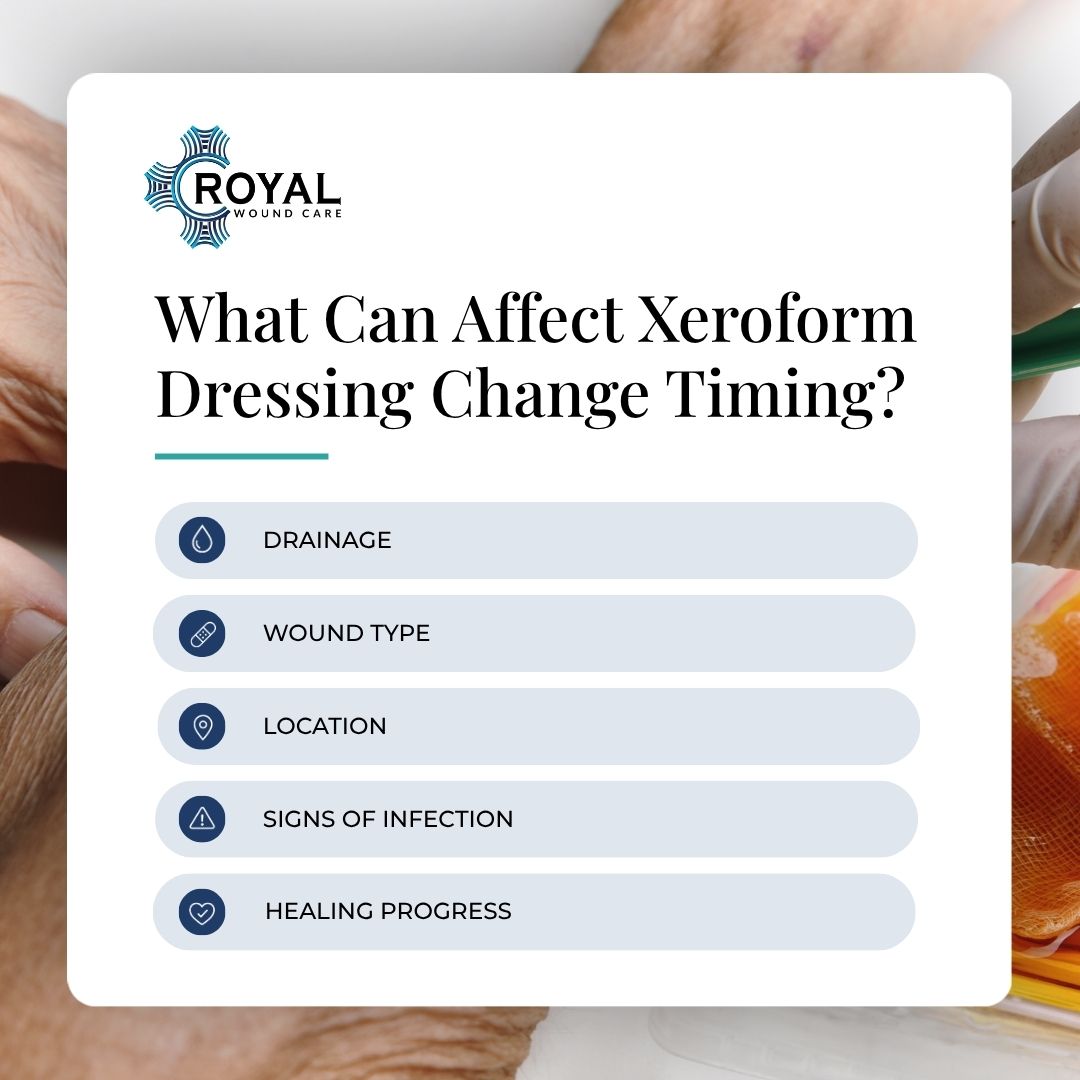
No two wounds heal on the same schedule, so several factors can influence the timeline. Here's what can impact how often you’ll need a fresh dressing and why each factor matters for the decision to keep or replace it:
Drainage
The amount of fluid your wound produces is one of the most important factors when it comes to dressing changes. Xeroform is best suited for low to moderate exudate wounds, and if drainage increases, the dressing may become saturated more quickly and should be changed sooner to prevent maceration.
If you're dealing with persistent wound exudate, our guide on how to stop a wound from weeping clear liquid walks through what that drainage means.
Wound Type
How long Xeroform should stay in place can depend on the wound you’re treating. A minor burn, surgical incision, skin graft site, and donor site may each require a different approach to dressing changes. Your healthcare provider will recommend a schedule based on the type of wound, how it’s healing, and whether there are any complications that need closer attention.
Location
Where the wound is actually located on the body plays an important role on dressing timelines. Areas exposed to friction or movement, such as joints, may require more frequent dressing changes due to shifting or contamination. This is because a wound dressing over a moving joint is generally harder to keep clean and secure than on a flat, protected surface.
Signs Of Infection
If you’re dealing with an infection, chances are your provider will prioritize healing the infection before they consider general Xeroform timelines. Even though this type of primary dressing can stay on the skin for several days, factors such as excess drainage, increased pain, significant swelling, and a foul odor can all require a quicker adjustment.
Additionally, if you’re reading this as a patient caring for their wound at home, an infection may deserve a closer look by a healthcare professional. If you’re not sure whether you fall into this category, our guide on when to see a wound care specialist can help.
Healing Progress
As the wound improves, the timing becomes a little more flexible. During healing specifically, Xerform can stay in place considerably longer, even up to a few weeks. When you (or your provider) begins to notice a dry and pink wound bed or closed edges, it’s a positive sign that the injury may not require a dressing anymore.

How to Apply Xeroform Gauze So It Stays n Wounds
Applying the dressing well is what keeps it in place between changes and protects the environment underneath. Here’s a general guide on applying Xeroform, but remember to always follow specified instructions:
Wash Your Hands
Before touching the area, always make sure to wash your hands with antibacterial soap and water. Wounds, especially those with exposed tissue, are particularly sensitive to outside factors. A thorough handwash ensures that you’re not transferring over any dirt, debris, or bacteria into the injury.
Prepare The Wound
Cleaning the wound is essential for placing any dressing on top of the injury. In many cases, this may require you to clean it with antibacterial soap and water, a saline solution, or apply a prescribed antimicrobial ointment. Unless specifically advised by your healthcare provider, avoid harsh antiseptics such as hydrogen peroxide and alcohol. This can reduce the viability of fibroblasts which may slow healing.
Place The Xeroform
Once you’ve cleaned the wound, make sure it’s completely dry before placing the Xeroform on so it sticks well. Pick the appropriate size, remove the protective paper with gloves, and cover the wound surface entirely. Gently smooth it so it matches the body contours without air bubbles, gaps, or bunching.
Add A Secondary Dressing
Xeroform generally acts as the primary dressing, so if a wound is experiencing significant drainage, it may need an additional (secondary) dressing. After placing the Xeroform on your wound, hold it in place with a dry bandage such as a gauze wrap or a gauze pad and tape.
Then, pick the right size of the secondary dressing and gently place it on top, smoothing it over as you did before.
One caution worth knowing: Don't seal a truly occlusive cover over Xeroform, because trapping too much moisture can macerate the surrounding skin.
Follow Your Schedule
Make sure that you follow the dressing change schedule your provider gave you. If you haven’t seen a provider or simply need a reminder for what to keep an eye on, change the dressing if it becomes loose, saturated, or the wound begins to show signs of an infection. That's your cue to reassess.
Get Expert Wound Care In West Hills
Xeroform gauze is a reliable, comfortable option for keeping many wounds moist and protected, but the right schedule is always specific to your wound. If you're unsure whether your wound is healing normally, especially if you have diabetes or a chronic, non-healing wound, please have it assessed.
Our board-certified team at Royal Wound Care treats patients throughout West Hills, Woodland Hills, Canoga Park, Calabasas, and the greater San Fernando Valley, both in our clinic and at the bedside in skilled nursing facilities and homes. To have your wound evaluated and get a dressing plan built around your healing, book an appointment with Royal Wound Care. We’re always here to help.
For licensed nurses and clinical teams who want to sharpen their dressing-selection and wound care skills, our advanced education courses offer nationally recognized training, CEUs, and hands-on practice. And for those interested in enhancing their facility with lower costs, reduced hospitalizations, and board-certified wound care, learn more about partnering with Royal Wound Care today.
Educational content only. This information is not a substitute for professional medical evaluation, diagnosis, or treatment. Always consult your healthcare provider about your specific wound and any dressing or medication questions.
Dr. Moaddel
Royal Wound Care
