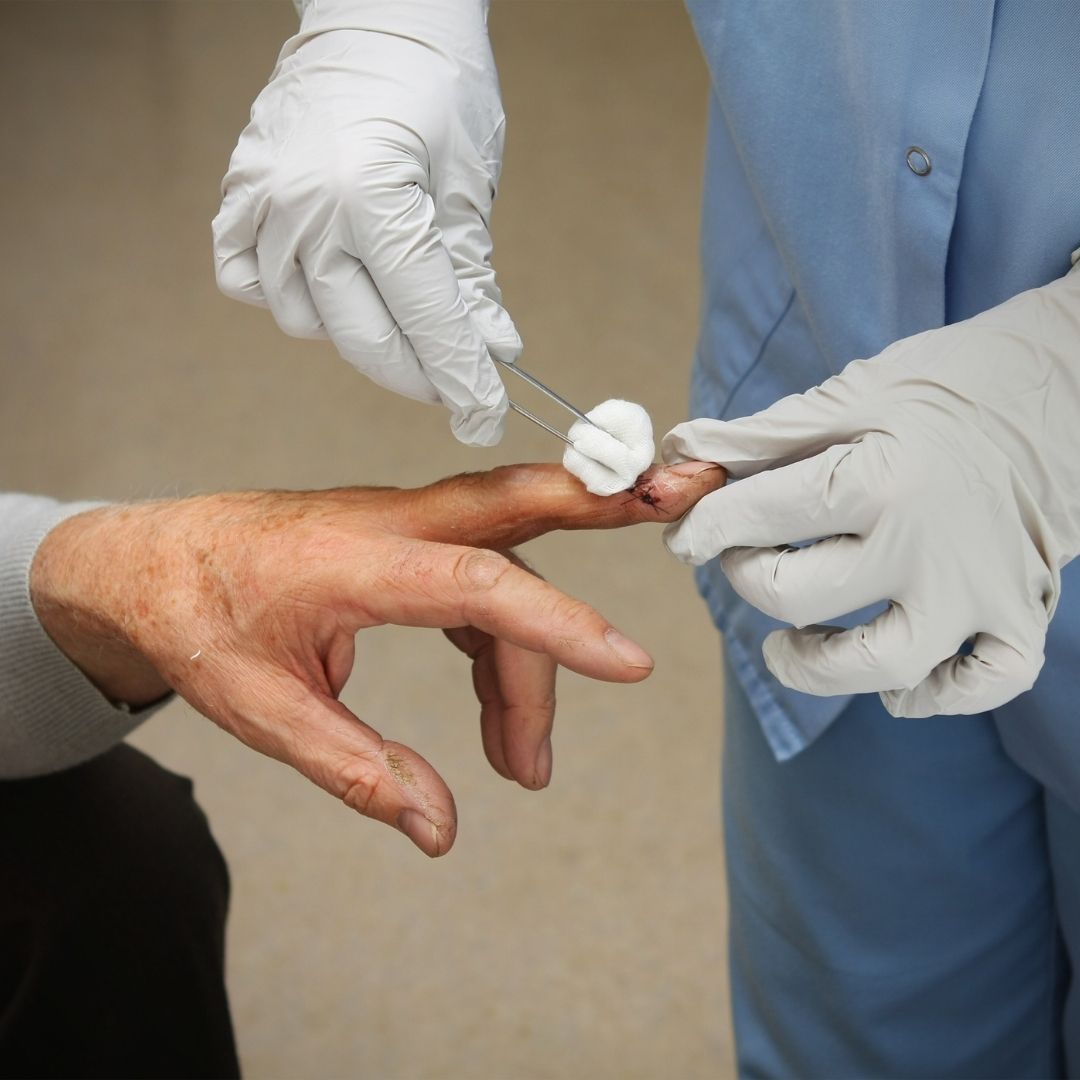
Does Salt Water Heal Wounds
Does Salt Water Heals Wounds? Wound Care Specialists Explain
Salt water has been used to clean cuts and scrapes for generations. You may have even soaked a cut in it before or mixed up salt and water at home when you didn’t have anything else around. So, there’s a reason people ask whether salt water can do more than clean a wound and actually help it heal.
The answer gets a little more specific once we start talking about wound care. There’s a difference between homemade salt water and the sterile saline solution used in medical settings. There’s also a difference between cleaning a wound and healing one.
At Royal Wound Care, we treat everything from new injuries to wounds that have struggled to heal for weeks or months. We’re going to break down where salt water can be useful, when it isn’t enough, and what you should know before using it on a wound at home.
Does Salt Water Heals Wounds? What You Need to Know
Not on its own. Salt water can be useful for cleaning a wound, but the actual healing happens inside your body. A saline rise can help wash away dirt, dried blood, and other material sitting on the wound. Once the area is clean, your body still has to repair the damaged tissue.
That’s also why cleaning a wound and healing one aren’t the same thing. Cleaning is something you do to the wound. Healing is what happens afterward. New tissue has to form, the edges may need to close, and your skin has to rebuild itself. Depending on the injury, that can take days, weeks, or much longer.
For a small cut or scrape, keeping the area clean may be all the help it needs. Other wounds are more complicated. A deep cut may need stitches, an infected wound may need treatment, and a chronic wound may have an underlying reason it isn’t closing. No amount of salt water can fix those problems alone.
If you’re wondering what happens after the initial cleaning, we explain the stages and different timelines in our guide: “How Long Do Wounds Take to Heal?”
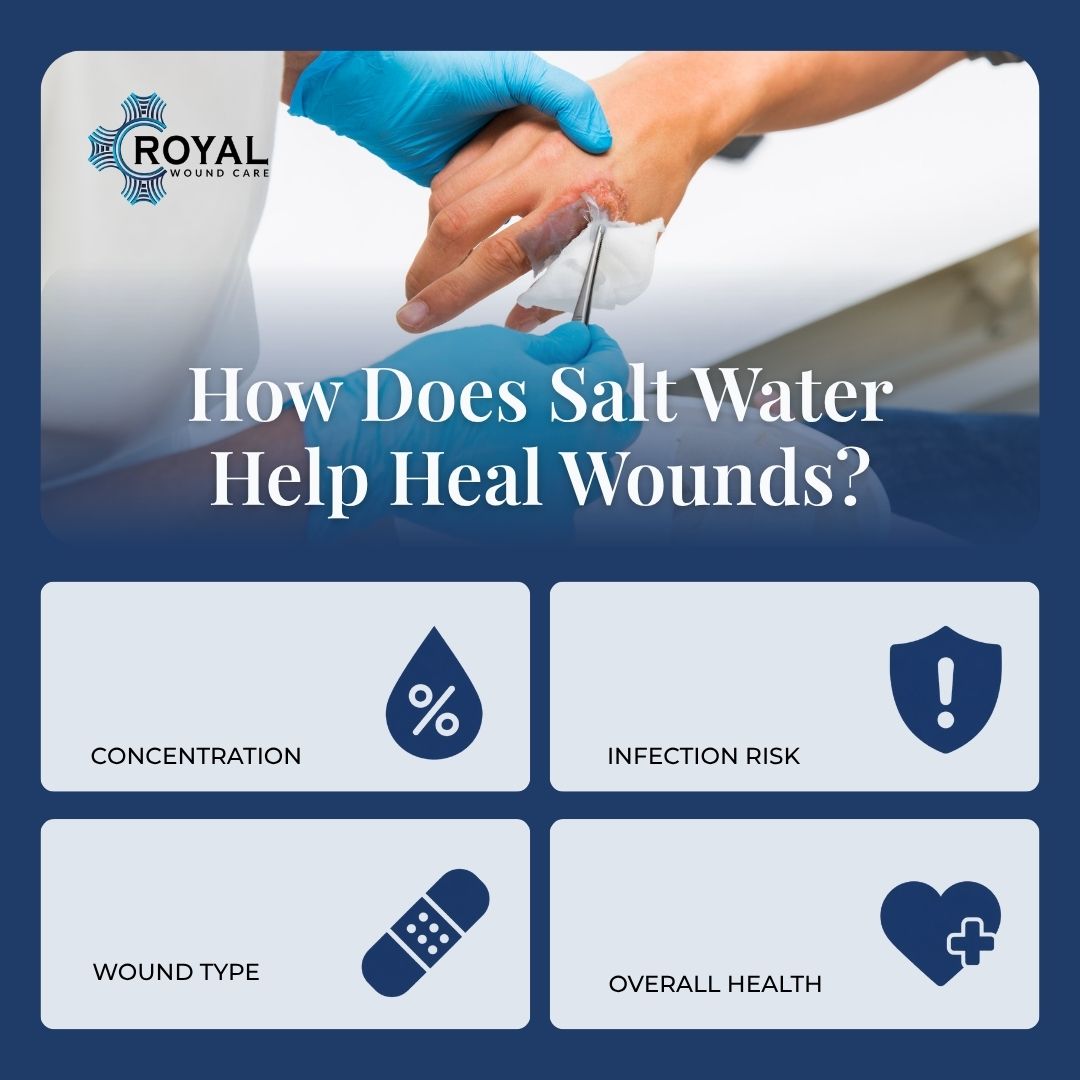
How Does Salt Water Help Heal Wounds?
In general, salt water has a supporting role in healing. It can help clean wounds without the harshness of some antiseptics, but whether saline is appropriate depends on what kind of wound you’re dealing with.
Concentration
In medical settings, we typically use normal saline, which contains 0.9% sodium chloride. That number matters because pouring very salt water over a wound isn’t the same thing as rinsing it with properly prepared saline. Normal saline is used because it can flush the area without being harsh on healing tissue.
Wound Type
A scrape on your knee and a deep puncture wound need very different care. The same goes for surgical incisions, animal bites, burns, and chronic ulcers. Saline may be perfectly reasonable for rinsing one wound and nowhere near enough for another.
Infection Risk
If there’s dirt or debris in a wound, rinsing it away is extremely helpful. But once you’re seeing increased redness, warmth, swelling, pain, pus, or other signs of infection, the question is no longer simply how to clean it. It’s important that you get the wound evaluated by a medical professional.
Overall Health
At Royal Wound Care, we also look at the person, not just the wound. Diabetes, circulation problems, and other health issues can affect how well wounds heal. A cut that would be relatively straightforward for one person may need a closer look in someone whose body already has a harder time healing.
How to Make Salt Water for Wounds
If you’re making salt water at home, don’t just eyeball the amount of salt. A homemade saline solution should be measured carefully, and you’ll want to keep everything as clean as possible while you make it.
Start With Clean Water
Use distilled or sterile water if you have it. If not, boil tap water first and let it cool before making the solution. Starting with clean water is especially important when you’re planning to put it on broken skin.
Measure the Salt
Add about one teaspoon of salt to a pint of water and stir until the salt dissolves. More salt isn’t necessarily better here. You’re trying to make a mild saline rise rather than a concentrated salt water mixture.
You may see recipes for other types of saline that include baking soda, particularly for nasal irrigation. You don’t need to add it when you’re making a basic wound rinse unless your medical provider has told you otherwise.
Let It Cool
If you ended up boiling the water, give it time to cool before using it. Test the temperature first rather than finding out on an open cut that it’s still too warm.
Make a Fresh Batch
Homemade saline doesn’t stay sterile simply because it’s sitting in a clean container. Store the leftover solution in a covered container and replace it within 24 hours.
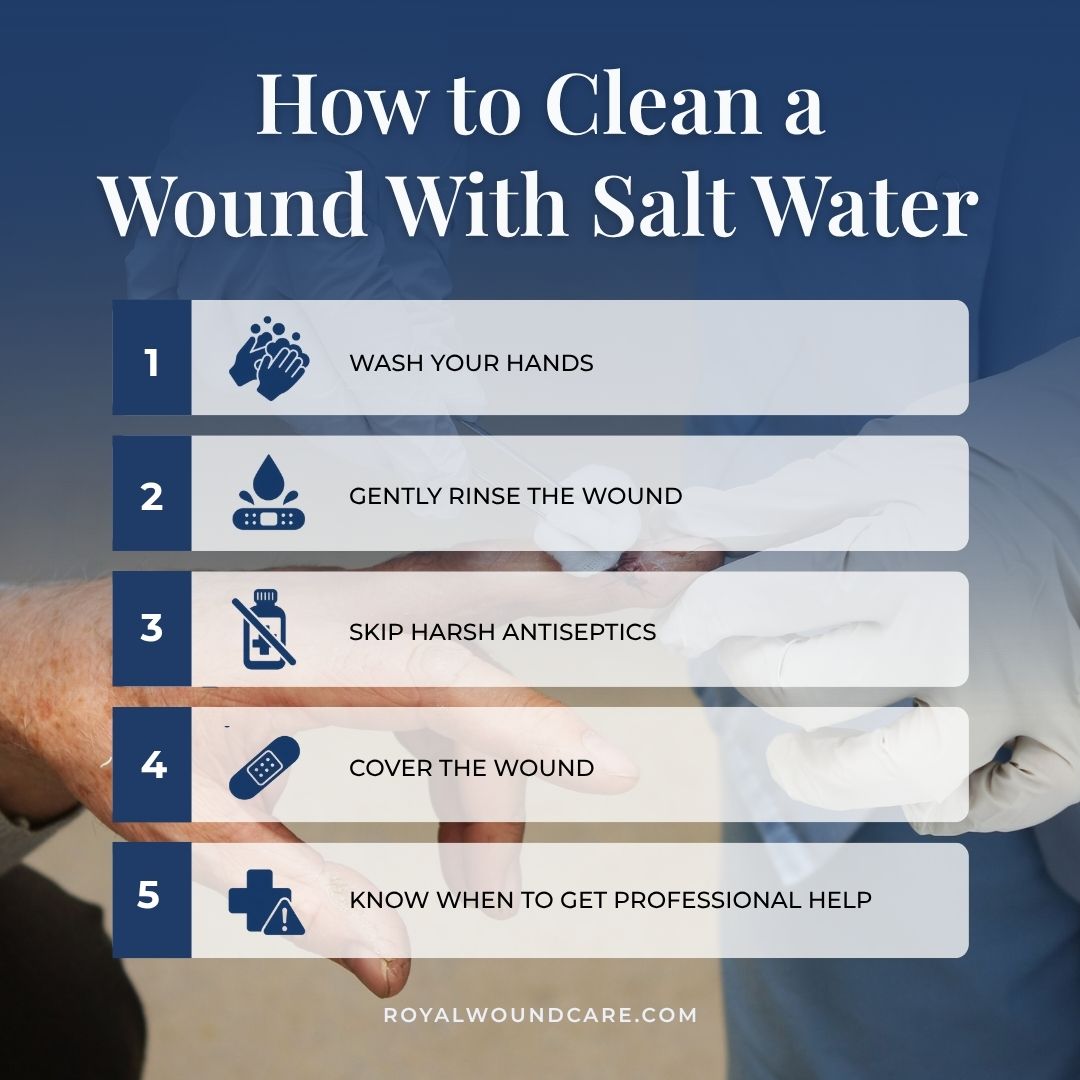
How to Clean a Wound With Salt Water
Once the saline is ready, you don’t need to do much with it. The goal is to rinse the wound, not scrub it until it feels clean. Here’s a simple step-by-step guide for cleaning a wound with salt water at home:
Wash Your Hands
Wash your hands with soap and water before touching the wound or anything that may come in contact with it. If you have clean disposable gloves, you can wear those, too.
Gently Rinse the Wound
Pour the saline solution over the wound or use gentle pressure to flush the area. Give the liquid a chance to carry away anything loose rather than picking or scrubbing at the wound. Scrubbing can irritate tissue that’s already been trying to heal.
Also, saline isn’t your only opinion for every minor cut or scrape. If it’s not a serious injury, clean tap water can also be a safe option.
Skip Harsh Antiseptics
Hydrogen peroxide and rubbing alcohol are two products many of us grew up seeing in the medicine cabinet, so reaching for it can feel like the obvious next step. But that familiar fizz doesn’t mean the wound is healing better. Hydrogen peroxide can damage fibroblasts, which are the cells involved in building new tissue during the healing process.
For routine cleaning, stick with gentler options rather than repeatedly pouring harsh antiseptics into the wound. We go more into detail about preparing the area in our guide to skin prep for wound care.
Cover the Wound
Once the area is clean, gently pat the surrounding skin dry and apply the dressing recommended for the wound. Try not to disturb the wound itself more than you need to. If gauze sticks later, putting it off can hurt and may disturb the new tissue underneath.
Our guide on how to remove gauze stuck to wounds explains what to do instead.
Know When to Get Professional Help
Cleaning isn’t the end of wound care. Keep an eye on the area afterward. Increasing redness, swelling, warmth, drainage, worsening pain, or a wound that isn’t getting better over time deserves a closer look.
How Long to Soak Wound in Salt Water
For most wounds, rinsing is a better approach than soaking. A gentle rinse lets the saline move across the wound and carry away loose debris without leaving the surrounding skin sitting in water.
There are times when a short soak may be useful, such as loosening debris or helping with a dressing that’s stuck to the wound. But there isn’t one set amount of time that works for every injury. What you’re soaking matters. A small scrape is very different from a surgical incision, deep wound, burn, or chronic ulcer.
Leaving a wound submerged for too long can also soften the skin and tissue around it, which isn’t something you want to try and solve by adding more salt or soaking for longer. If a provider has given you instructions for soaking or dressing changes, always follow those closely.
You may already use saline for things like nasal irrigation or rinsing contact lenses, but an open wound is a different situation. If you’re unsure whether your wound should be soaked in the first place, ask your provider. This is especially important if the wound is deep, isn’t improving, or you’re worried about the risk of infection.
When to See a Board-Certified Wound Care Specialist
Salt water is a reasonable way to keep a minor wound clean, but it can't heal a wound that needs professional medical care, and it can't tell you when something more serious is happening. That's where we come in.
Royal Wound Care provides board-certified wound care in our West Hills clinic and at the bedside in skilled nursing facilities and patients' homes across the San Fernando Valley. If you have a wound that isn't healing, keeps reopening, or shows signs of infection, don't wait it out at home. Book an appointment with our wound care team, where our board-certified providers take a personalized, compassionate approach to each injury.
Are you a nurse or clinical team looking to sharpen your skills? Explore our advanced education opportunities, including our nationally recognized Wound Care Nurse Certification (WCN-C) course offers CEUs, re-certification, and hands-on training. And for those looking to reduce facility costs, lower infection rates, and improve healing times, consider partnering with Royal Wound Care today.
This article is for educational purposes only and isn't a substitute for professional medical evaluation. If you're managing a wound, especially one that involves possible infection, please see a qualified provider for assessment.
Written by Dr. Moaddel, Royal Wound Care
